

Why the Window Sticker Matters Before You Negotiate
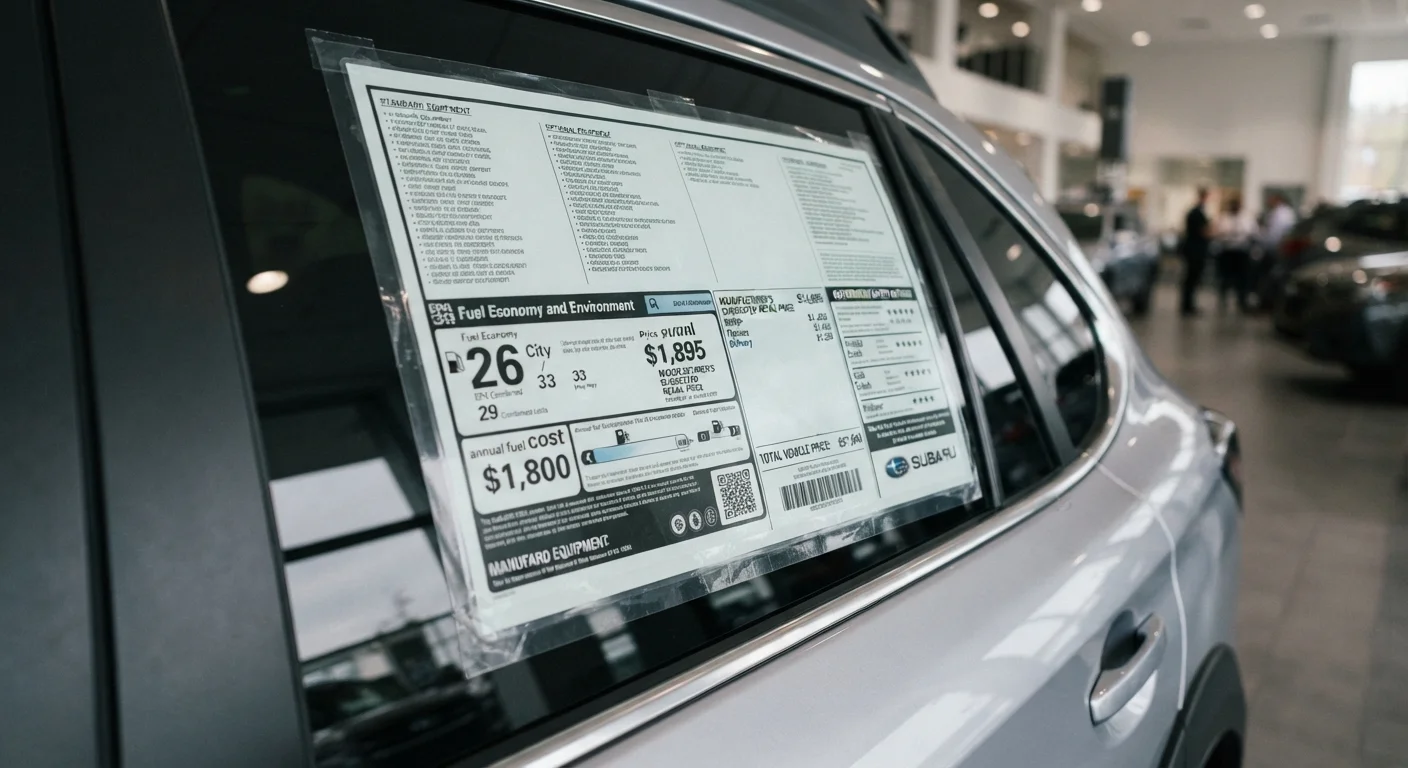
Walking onto a dealership lot without understanding the window sticker is like reading a contract without knowing what the clauses mean. The Monroney sticker is the most standardized piece of consumer information in the entire car-buying process - and most buyers glance at it rather than read it. Every section is there for a reason, and each one affects how much you'll spend, both at signing and over the life of the vehicle.
The sticker doesn't tell you everything about total ownership cost - for that, see our guide on the true cost of owning a car - but it is the logical starting point for any informed purchase conversation.
1958
Year window sticker disclosure became federal law
The Automobile Information Disclosure Act, passed in 1958, made the Monroney sticker a legal requirement on all new passenger vehicles sold in the US.
~$1,000-$1,800
Typical destination charge range for new vehicles
Destination fees vary by manufacturer and vehicle type; trucks and larger vehicles generally carry higher charges than compact cars.
5 stars
Maximum NHTSA overall safety rating
NHTSA's 5-star safety rating system evaluates frontal crash, side crash, and rollover resistance separately, with an overall score calculated from the results.
Breaking Down Each Section of the Sticker
Base Price and Options
The sticker lists the base MSRP - what the vehicle costs in its most stripped-down trim - followed by individually priced optional packages and features. These line items add up quickly. A navigation package, a premium audio system, or a towing package each carry their own price, and together they can push the total well above the base figure advertised online or in a commercial.
Destination and Delivery Charge
Every sticker includes a destination charge, sometimes called a freight or delivery fee. This covers shipping the vehicle from the factory to the dealership and is set by the manufacturer - not the dealer. It is non-negotiable and identical for every buyer of that model regardless of which dealership they use. Expect this to range from several hundred to over a thousand dollars depending on the vehicle type.
Fuel Economy Estimates
The EPA fuel economy section displays city, highway, and combined miles-per-gallon (or MPGe for electric vehicles). These figures come from standardized laboratory tests and are most useful for comparing vehicles against each other, not for predicting your exact fill-up costs. The sticker also provides an annual fuel cost estimate based on national average fuel prices and assumed mileage - a useful ballpark, not a guarantee.
Safety and Emissions Information
Government crash test ratings from NHTSA (National Highway Traffic Safety Administration) appear on many stickers. These use a 5-star scale across categories like frontal crash, side crash, and rollover resistance. Emissions data is also disclosed, which becomes relevant if you live in a state with stricter emissions standards. Note that IIHS ratings, while equally respected, are published separately on the IIHS website rather than on the sticker itself.
Compare Stickers Before Visiting the Lot
Most manufacturers publish window sticker data on their websites using a vehicle's VIN or build configurator. Reviewing stickers in advance lets you identify which options you genuinely want versus those a dealer may present as standard. It also gives you a baseline for price discussions before any sales pressure enters the conversation.
What the Sticker Doesn't Show
The Monroney sticker is comprehensive, but it has clear limits. It does not include dealer documentation fees, state sales tax, title and registration costs, or any dealer-installed accessories listed on a separate supplemental sticker. Those additions can add hundreds to thousands of dollars to the out-the-door price. Our article on hidden fees of car ownership covers these costs in detail.
The sticker also says nothing about long-term maintenance costs, insurance premiums, or how quickly the vehicle depreciates. Understanding what it actually costs to own a car requires looking well beyond the dealership window.
Using the Sticker as a Negotiation Tool
Once you understand what each line means, the window sticker becomes a negotiation roadmap. The base MSRP and options packages are where you have the most room to work - you can decline optional add-ons you don't want or negotiate on the total vehicle price. The destination charge, as noted, is fixed. Any supplemental dealer sticker listing market adjustments or dealer add-ons is entirely negotiable.
Comparing stickers across trim levels of the same model - or across competing models - is one of the most practical ways to evaluate value before making any commitment. Print or photograph the sticker for any vehicle you're seriously considering, and use it as a reference when you sit down to discuss numbers.
This article provides general educational information about vehicle window stickers and is not a substitute for professional financial or legal advice. Prices, fees, and regulations vary by state, dealer, and vehicle. Always review the full out-the-door price and consult a licensed professional when needed.
Frequently Asked Questions
No. MSRP is the manufacturer's suggested retail price and is a starting point, not a final number. Dealers may sell above or below MSRP depending on market demand, inventory, and negotiation. Additional charges like destination fees, dealer add-ons, taxes, and registration fees are added separately.
No. Federal law under the Automobile Information Disclosure Act prohibits dealers from removing the Monroney sticker before the vehicle is sold. If a sticker is missing, that's a red flag worth asking about.
The destination charge covers the cost of transporting the vehicle from the manufacturer's plant to the dealership. It is set by the manufacturer, appears on every sticker, and is not negotiable - every buyer at every dealership pays the same destination fee for that model.
EPA estimates are produced under standardized laboratory conditions and serve as a useful comparison tool between models. Real-world fuel economy typically varies based on driving habits, terrain, climate, and vehicle load. Many drivers find their actual mileage falls somewhat below the EPA highway figure.
NHTSA (National Highway Traffic Safety Administration) is a federal agency that rates vehicles on a 1-5 star scale based on crash tests it conducts. IIHS (Insurance Institute for Highway Safety) is an independent, industry-funded organization that uses its own test protocols and rates vehicles Good, Acceptable, Marginal, or Poor. Both ratings are useful, but they test different crash scenarios.
The manufacturer's Monroney sticker does not include dealer-added fees or markups. However, dealers sometimes attach a supplemental sticker listing dealer-installed accessories or market adjustments. These are separate from the federal Monroney label and are negotiable.
The content on this site is for informational purposes only and is not a substitute for professional advice. Always consult a qualified professional for guidance specific to your situation.