

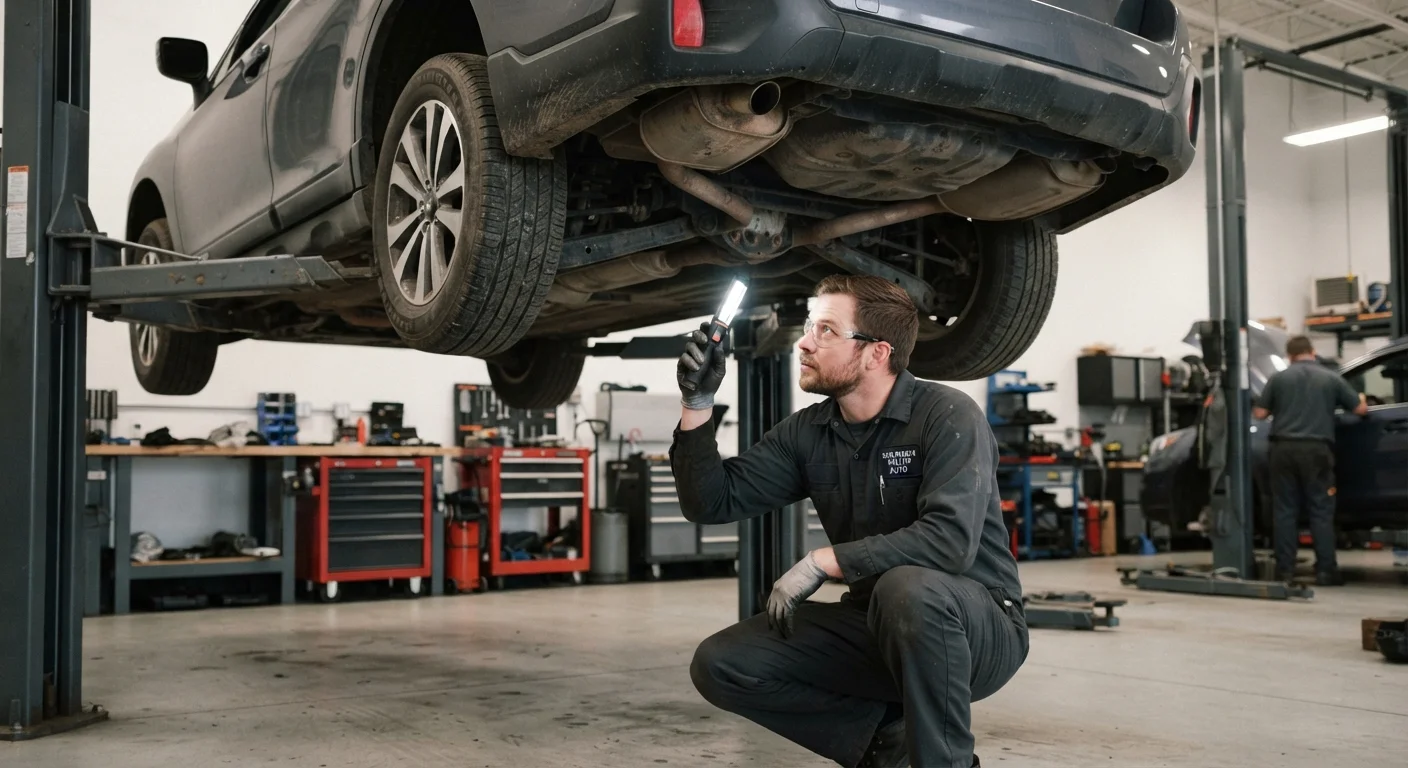
What a Mechanic Actually Looks At
A thorough pre-purchase inspection goes well beyond a visual walkaround. Here's what a qualified mechanic typically examines:
- Engine and drivetrain: Oil condition, coolant levels, belts, hoses, signs of leaks, and any evidence of overheating or recent repairs intended to mask problems.
- Transmission: Fluid condition, shifting behavior, and signs of slippage or delay - issues that can be expensive to repair.
- Brakes: Pad thickness, rotor condition, brake fluid quality, and whether the calipers are functioning properly.
- Suspension and steering: Worn bushings, ball joints, tie rods, and shock absorbers - components that affect ride quality and safety.
- Tires: Tread depth, uneven wear patterns (which can signal alignment or suspension issues), and sidewall condition.
- Electrical systems: Lights, power windows, HVAC, battery health, and - where possible - a diagnostic scan for stored fault codes.
- Body and frame: Signs of previous collision repair, rust, mismatched panel gaps, or repainted sections that could indicate hidden structural damage.
- Undercarriage: Frame integrity, exhaust system condition, and any rust or damage not visible from outside the vehicle.
The mechanic will typically lift the car on a hoist to inspect the undercarriage directly - a step no seller walkthrough or test drive can replicate. You'll receive a written report summarizing findings, often with photos.
PPI Scope Varies by Shop
Not all pre-purchase inspections are identical. Some shops offer basic checks while others provide comprehensive multi-point evaluations. Before booking, ask specifically what the inspection covers, whether a lift is included, and whether you'll receive a written report. Clarifying scope upfront prevents mismatched expectations.
Why Skipping It Is a Bigger Risk Than It Seems
A used car is not a commodity with a fixed, transparent condition. Two vehicles with the same year, make, model, and mileage can be in dramatically different states depending on how they were driven, maintained, and repaired. A vehicle history report - as useful as it is - only reflects what was officially reported. Unreported accidents, DIY repairs, and deferred maintenance won't appear in that document.
Common assumptions that cost car buyers include trusting that a clean-looking car has been well maintained, or that a low odometer reading means low wear. A PPI provides an objective, current-state assessment that no amount of seller disclosure fully replaces.
$100-$200
Typical PPI cost for most vehicles
Independent mechanics generally charge within this range for a standard pre-purchase inspection, with prices varying by location and vehicle type.
~$500+
Average unexpected repair on used vehicles
Consumer surveys and repair data consistently show that unplanned mechanical repairs on recently purchased used cars frequently exceed several hundred dollars in the first year.
The inspection also gives you negotiating leverage. If the mechanic finds that the car needs new brake rotors, a leaking rear main seal, or tires at the end of their life, you have documented evidence to either renegotiate the price or request that repairs be completed before purchase. That's a different conversation than asking a seller to discount based on your gut feeling.
For a broader view of where a PPI fits in the overall process, see our full car-buying walkthrough.
How to Get the Most Out of the Process
To make a PPI work for you, approach it with a plan rather than as a box to check:
- Choose your own mechanic. Select an independent, ASE-certified shop in the area where the vehicle is located. Do not use the selling dealer's service bay - you need an evaluator with no stake in the sale.
- Request a lift inspection. Confirm in advance that the shop can put the car on a hoist. A floor-level inspection misses critical undercarriage detail.
- Ask for a written report with photos. A verbal summary is not enough. Written documentation protects you and gives you something concrete to reference during negotiations.
- Pair it with a vehicle history report. The two tools answer different questions. Our guide to reading a vehicle history report explains what to look for in that document.
- Be present if possible. Some shops allow buyers to observe. Watching the mechanic work - and asking questions in real time - adds valuable context to the written findings.
Budget the Inspection Fee Into Your Car Search
If you're seriously evaluating multiple vehicles before deciding, plan to pay for a PPI on each finalist - not just the one you ultimately buy. The cost of inspecting two or three candidates is still far less than inheriting a hidden mechanical problem. Think of it as due diligence, not an added expense.
Once the inspection is complete and you're satisfied with the results, the next step is reviewing all the paperwork before you commit. Our pre-closing checklist for car buyers covers everything to verify before signing.
This article provides general educational information about vehicle purchasing and is not a substitute for professional mechanical advice. Conditions, costs, and findings vary by vehicle and inspector.
Frequently Asked Questions
Most independent mechanics charge between $100 and $200 for a PPI, though pricing varies by region and the scope of the inspection. Some specialty shops charge more for exotic or luxury vehicles. The fee is almost always paid by the buyer.
Yes. Any reputable seller - private party or dealer - should allow you to take the vehicle to an independent mechanic of your choosing. If a dealer refuses or creates obstacles, treat that as a warning sign and consider walking away.
No - they serve different purposes. A vehicle history report shows past events like accidents, title issues, and odometer readings, while a PPI reveals the car's current physical and mechanical condition. Using both together gives you the most complete picture.
You have options: negotiate a lower price to account for repair costs, ask the seller to fix identified issues before sale, or walk away entirely. The findings give you documented leverage that you wouldn't otherwise have.
It can be. CPO designations vary significantly by manufacturer and what they actually guarantee. An independent inspection adds a layer of verification beyond the manufacturer's own process. See our article on <a href="/cars-autos/buying-a-car/certified-pre-owned-programs-what-the-certification-actually-guarantees">what CPO certification actually guarantees</a> for more context.
Look for ASE-certified independent repair shops in the area where the car is located. Avoid using the selling dealership's service department - you need someone with no financial stake in the transaction.
The content on this site is for informational purposes only and is not a substitute for professional advice. Always consult a qualified professional for guidance specific to your situation.