

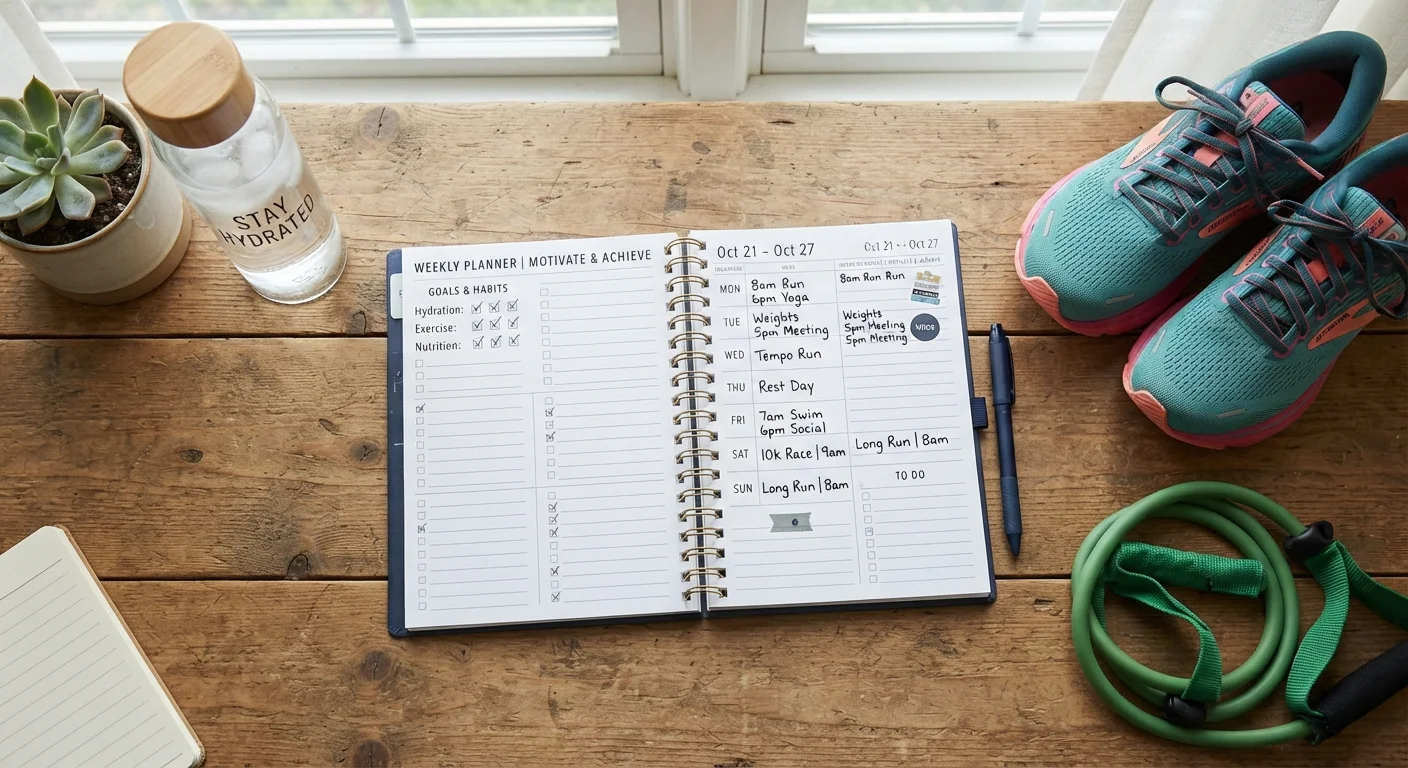
Why Most Exercise Plans Fall Apart
The most common reason workout schedules fail isn't lack of motivation - it's lack of fit. Plans built around aspirational versions of daily life (more free time, more energy, fewer competing demands) collapse the moment reality reasserts itself. A well-structured plan accounts for who you are right now, not who you intend to become.
Physical activity also has a meaningful relationship with mental health. Incorporating movement into a broader wellness routine can support mood, stress regulation, and sleep quality. If you're simultaneously working on mental well-being habits, see our guide to building a daily mental wellness routine for a complementary framework.
Consult a Professional Before Starting
If you have a chronic health condition, have been sedentary for an extended period, or are recovering from injury or illness, speak with a qualified healthcare provider before beginning a new exercise program. This article provides general educational guidance only and is not a substitute for personalized medical advice.
Before mapping out your schedule, gather the tools and information you'll need:
What you will need
Weekly calendar or planner
Used to map available time slots around work, family, and other commitments before assigning workouts.
Fitness tracking app or notebook
Used to log completed sessions, track progress, and identify patterns over time.
Heart rate monitor or smartwatch
Used to gauge exercise intensity and stay within appropriate effort zones during cardio sessions.
Building Your Schedule Step by Step
Audit your week before you plan a single workout
Open your calendar - not a fantasy version of it - and identify when you genuinely have 20 to 60 minutes available. Include travel time, family obligations, and your energy levels at different times of day. Most people have three to five realistic windows per week. That number is your starting point, not a goal to exceed.
Set a weekly movement target based on established guidelines
Current public health guidance - including recommendations from the U.S. Department of Health and Human Services - suggests that most adults aim for at least 150 minutes of moderate-intensity aerobic activity per week, or 75 minutes of vigorous activity, along with muscle-strengthening activities on two or more days. If you're starting from a low baseline, a reduced target is appropriate and can be built upon over time. Progress matters more than perfection.
Choose a balanced mix of activity types
Effective schedules typically blend three types of movement:
- Cardiovascular exercise - walking, cycling, swimming, jogging - to support heart and lung health
- Strength or resistance training - bodyweight exercises, free weights, resistance bands - to preserve muscle and bone density
- Mobility or flexibility work - stretching, yoga, foam rolling - to maintain range of motion and reduce injury risk
You do not need equal amounts of each. Weigh your goals: someone managing joint stiffness may prioritize mobility; someone building functional strength may lean toward resistance work.
Assign rest and active recovery days intentionally
Recovery is when adaptation actually occurs - muscles rebuild, the nervous system resets, and fatigue clears. Build at least one to two full rest days into your weekly structure. On lighter days, low-intensity movement such as walking or gentle stretching counts as active recovery and supports circulation without adding training stress. Exercising every day is not automatically better and carries real risks if recovery is neglected.
Draft your first week as a low-stakes experiment
Write out a specific plan - day, time, activity type, duration - and treat the first week as a trial run rather than a commitment. After seven days, review honestly: Which sessions happened? Which were skipped and why? Adjust the schedule to reflect what actually fits, not what felt motivating on paper. Iteration is part of the process.
Anchor Workouts to Existing Habits
Pairing exercise with something already in your routine - a morning coffee, a lunch break, or an evening commute - dramatically improves follow-through. Behavioral research consistently shows that habit stacking reduces the mental effort required to get started.
Avoid the 'All or Nothing' Trap
Jumping from no activity to six days of intense training in week one is one of the most common reasons people quit - or get hurt. Physical adaptation takes time. Ramp up gradually and treat early soreness as a signal to recover, not push harder.
This article is for general informational and educational purposes only and does not constitute medical advice. Always consult a qualified healthcare professional before beginning a new exercise program, particularly if you have existing health conditions or concerns.
The content on this site is for informational purposes only and is not a substitute for professional advice. Always consult a qualified professional for guidance specific to your situation.