

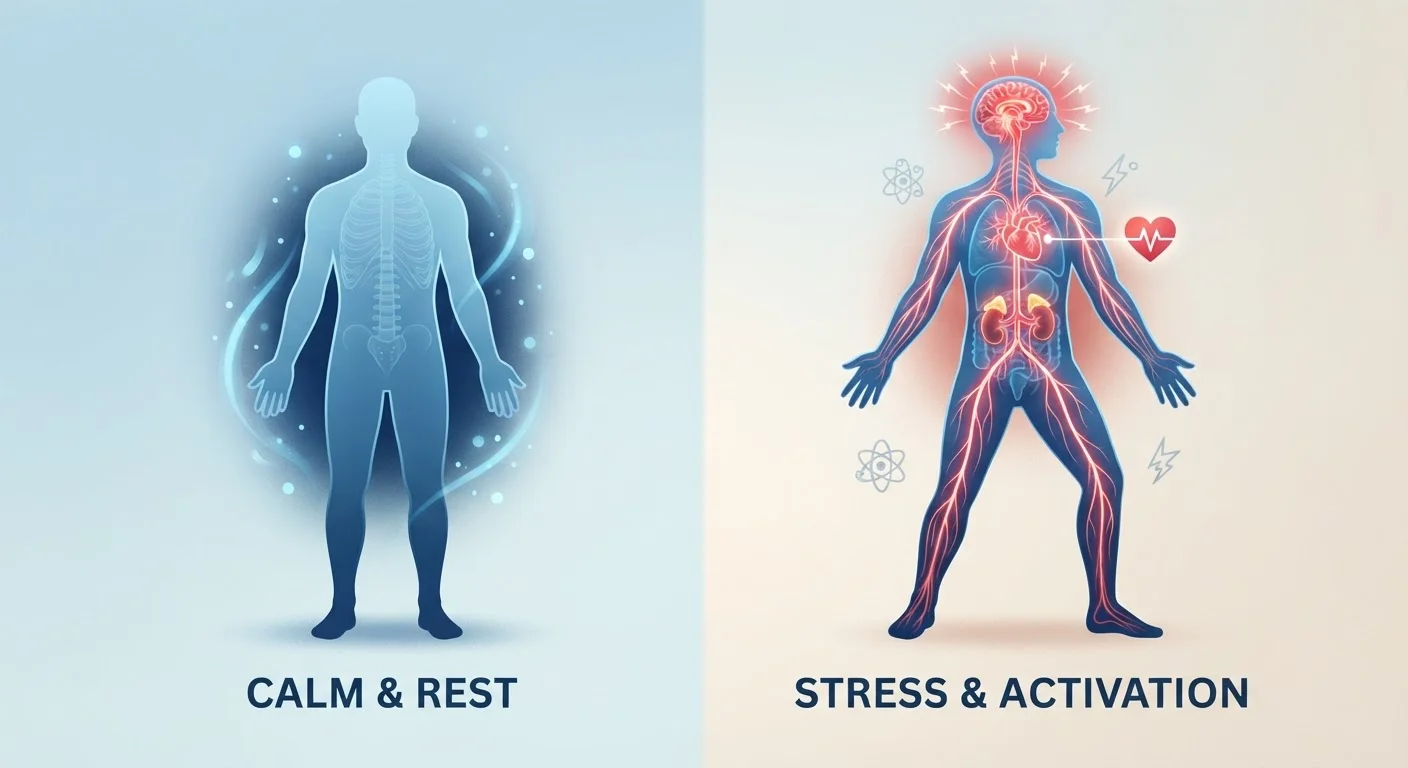
Your Body's Stress Response: Built for Sprints, Not Marathons
When you sense a threat — real or perceived — your brain's hypothalamus triggers what's commonly called the "fight-or-flight" response. Stress hormones, primarily adrenaline and cortisol, flood the bloodstream. Heart rate climbs. Breathing quickens. Digestion slows. Energy is diverted to muscles. This acute stress response is a well-designed survival mechanism.
The problem arises when that system never fully switches off. Modern stressors — financial pressure, relationship conflict, demanding work environments, chronic illness — rarely have a clear endpoint. The body's alarm system, designed for short-term emergencies, can become stuck in a semi-activated state for months or years. That sustained activation is where measurable harm begins.
Acute vs. Chronic Stress: An Important Distinction
Not all stress is harmful. Acute stress — the kind triggered by a deadline, a difficult conversation, or a sudden challenge — activates the stress response briefly and then resolves. This short-term activation can actually sharpen focus and performance. The health concerns documented in research relate specifically to stress that is prolonged and unrelenting. Distinguishing between the two helps avoid the misconception that all stress must be eliminated.
What Happens Inside the Body Under Prolonged Stress
Cortisol is central to understanding chronic stress biology. In the short term, it's useful — it regulates inflammation, mobilizes energy, and sharpens focus. But when cortisol remains elevated for extended periods, its effects shift from protective to disruptive.
75–90%
Doctor visits linked to stress-related conditions
The American Institute of Stress has cited estimates suggesting that the majority of primary care visits involve a stress-related component, reflecting how broadly chronic stress intersects with physical health.
2x
Elevated risk of cardiovascular events with chronic work stress
Multiple large-scale studies, including research published in The Lancet, have found that high job strain is associated with approximately double the risk of coronary heart disease compared to low-stress work conditions.
30%
Reduction in immune response documented under chronic stress
Research by psychologist Sheldon Cohen and colleagues has demonstrated measurable reductions in immune markers — including antibody production — in individuals under sustained psychological stress.
Immune function is one of the clearest targets. Research consistently shows that chronic stress suppresses the immune system's ability to respond to pathogens, potentially making the body more susceptible to infection and slower to heal. Cardiovascular effects are also well documented: sustained cortisol elevation contributes to higher resting blood pressure and increased inflammation in blood vessels, both of which are associated with long-term heart health risks.
The digestive system — sensitive to the nervous system's state — is frequently disrupted, with chronic stress linked to symptoms such as irritable bowel, nausea, and changes in appetite. Sleep, which is essential for nearly every restorative process in the body, is also impaired when the stress-response system remains activated into the night.
How Chronic Stress Reshapes the Brain
One of the more striking findings in stress research involves the brain itself. Prolonged cortisol exposure has been associated with structural changes in regions critical for memory and emotional regulation — particularly the hippocampus and prefrontal cortex. Studies using neuroimaging have observed reduced volume in the hippocampus in people experiencing long-term stress, which may help explain why chronic stress is often accompanied by difficulty concentrating, memory lapses, and heightened emotional reactivity.
The amygdala — the brain's threat-detection center — can become more reactive under chronic stress conditions, contributing to a heightened sense of anxiety and a reduced capacity to distinguish genuine danger from ordinary challenges. These aren't permanent, irreversible changes in all cases, but they underscore that chronic stress is not simply a psychological experience; it has a physical footprint in the brain.
“Stress is not just a psychological state. It is a biological event that alters gene expression, immune function, and brain architecture — and understanding it that way changes how we approach both prevention and care.”
— Robert Sapolsky, Neuroendocrinologist and author of research on stress biology
Recognizing the Physical Signals and Knowing When to Act
Chronic stress often announces itself through the body before the mind fully registers it. Common physical signals include persistent tension headaches, jaw clenching, disrupted sleep, frequent illness, low energy, and digestive discomfort. These symptoms are worth taking seriously — not as confirmation of disease, but as signals that the body's stress-regulation systems may need support.
Understanding this biology can also serve as a bridge toward help. Recognizing that your fatigue or recurring headaches may have a physiological basis — not just a personal failing — removes some of the stigma that can otherwise delay people from seeking support. If you're experiencing persistent physical or emotional symptoms you associate with ongoing stress, speaking with a qualified healthcare professional is an important step. They can assess what's happening and discuss appropriate options for your specific situation.
For those curious about where prolonged stress leads over time, understanding how stress becomes burnout can help clarify an important and often overlooked threshold. Additionally, research on how social isolation affects mental health highlights another biological pathway that intersects closely with chronic stress. And if you're exploring supportive behaviors, the relationship between physical activity and mood offers a grounded look at what movement can — and cannot — do.
Small Habits Can Support the Body's Recovery
While chronic stress has real physiological effects, the body also has meaningful capacity to regulate and recover — especially with consistent support. Prioritizing sleep, maintaining social connection, and finding ways to build predictable rest into demanding periods are behaviors linked to healthier stress-response patterns. These aren't cures, but they matter. Talk with a healthcare provider about what strategies make sense for your specific circumstances.
This article is for general informational purposes only and does not constitute medical advice. If you have concerns about stress-related symptoms or your health, please consult a qualified healthcare professional.
Frequently Asked Questions
Yes — chronic stress is associated with a range of physical health consequences, including weakened immune function, elevated blood pressure, digestive problems, and increased risk of cardiovascular disease. These aren't imagined symptoms; they reflect measurable biological changes. That said, stress is one factor among many, and individual responses vary considerably.
Everyday stress is typically short-lived and resolves once the triggering situation passes. Chronic stress persists for weeks or months, keeping the body's stress-response systems continuously activated. This sustained activation is what drives the more serious health consequences described in research.
Cortisol is essential for short-term stress management, but chronically elevated levels can suppress immune function, impair sleep, increase blood sugar, and contribute to weight changes. Research also suggests that prolonged cortisol elevation may affect memory and concentration by influencing brain structures like the hippocampus.
Yes. Chronic stress is closely linked to anxiety, depression, and burnout. The same biological pathways that affect the body — particularly the HPA axis and inflammatory processes — also influence mood regulation and cognitive function. Physical and mental health effects of chronic stress are intertwined, not separate.
If you're experiencing persistent physical symptoms — such as recurring headaches, sleep problems, digestive issues, or chest discomfort — alongside ongoing stress, it's worth discussing with a healthcare provider. A qualified professional can help determine whether stress is a contributing factor and what steps may be appropriate for your situation.
The content on this site is for informational purposes only and is not a substitute for professional advice. Always consult a qualified professional for guidance specific to your situation.