

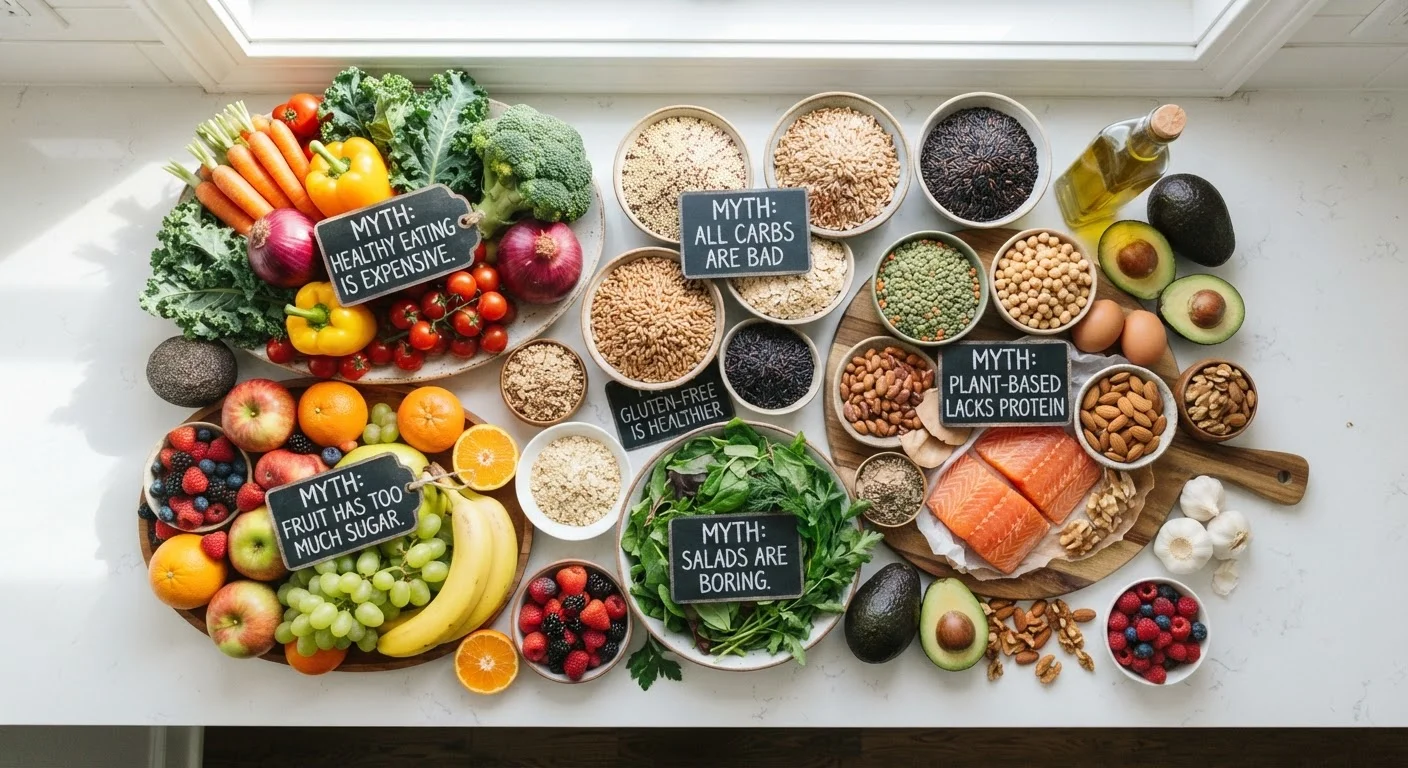
Why Nutrition Myths Are So Hard to Shake
Nutrition advice is everywhere — on social media feeds, product packaging, morning news segments, and well-meaning family dinner conversations. The problem is that a lot of it is simply wrong, or at best, a misreading of real science. Myths spread because they contain a kernel of plausibility, tap into existing anxieties about food, or get repeated often enough that they feel like common sense.
What follows is a myth-by-myth breakdown of some of the most durable misconceptions in American nutrition culture, corrected against the weight of current evidence. For deeper context on how all three macronutrients actually function in the body, see what macronutrients actually do inside your body.
Myth
Carbs make you fat, so cutting them is the fastest path to weight loss.
Fact
Weight change is driven primarily by overall calorie balance, not by any single macronutrient. Carbohydrates are the body's preferred energy source.
The idea that carbohydrates are uniquely fattening has persisted for decades, amplified by the popularity of low-carb diets. In reality, consuming more calories than you expend — from any macronutrient — leads to weight gain. Large-scale reviews, including analyses published in nutrition and obesity journals, have found that low-carb and low-fat diets produce similar long-term weight outcomes when total calories are matched. The quality of carbohydrates matters: whole grains, legumes, and vegetables carry fiber, micronutrients, and slower digestion rates. Highly processed, refined carbohydrates are worth limiting — but that's a different claim than "all carbs cause fat gain."
Myth
Detox cleanses and juice fasts reset your digestive system and remove toxins.
Fact
The body has no toxin "buildup" that cleanses can remove. The liver, kidneys, and digestive system continuously filter and eliminate waste products.
"Detox" is a marketing term, not a physiological process you can trigger with a juice regimen. Your liver metabolizes compounds for excretion, your kidneys filter blood continuously, and your gut microbiome plays a role in waste processing — all without commercial intervention. No rigorous clinical evidence supports the claim that commercially available cleanses remove specific toxins, improve organ function, or provide benefits beyond what a balanced diet already delivers. Some cleanses can cause electrolyte imbalances or interact with medications. If you feel better after a cleanse, it's more likely attributable to eating fewer ultra-processed foods temporarily than to any detoxifying mechanism.
Myth
Eating fat makes you fat — low-fat foods are always the healthier choice.
Fact
Dietary fat is essential for hormone production, vitamin absorption, and cell function. Low-fat products often replace fat with added sugar or refined starch.
The low-fat diet era of the 1980s and 1990s generated a generation of "fat-free" products that substituted fat with sugar, refined carbohydrates, and additives to restore palatability. Meanwhile, public health data showed obesity rates continuing to climb. Current nutrition science distinguishes meaningfully between fat types: unsaturated fats found in nuts, olive oil, and fatty fish are associated with cardiovascular benefit, while industrially produced trans fats (now largely removed from the U.S. food supply) were associated with harm. Saturated fat remains an area of ongoing research. Gram for gram, fat is calorie-dense, so portion awareness matters — but wholesale fat avoidance is not supported by the evidence.
Myth
Skipping meals, particularly breakfast, is an effective weight-loss strategy.
Fact
Meal timing effects on weight are modest and highly individual. Skipping meals can disrupt hunger hormones and lead to compensatory overeating later.
Intermittent fasting protocols — structured eating windows with defined fasting periods — have been studied with mixed but generally modest results for weight management. That's distinct from casually skipping breakfast or lunch, which research suggests can increase ghrelin (a hunger-signaling hormone) and reduce dietary control later in the day for many people. The oft-cited claim that breakfast "boosts metabolism" is also overstated; metabolic rate doesn't meaningfully spike from a morning meal. What matters more is overall eating patterns and food quality across the day. Individual responses to meal timing vary significantly, making blanket recommendations unreliable.
Myth
Organic produce is significantly more nutritious than conventionally grown food.
Fact
Most research finds no consistent, meaningful difference in the vitamin and mineral content of organic versus conventional produce.
Organic agriculture restricts certain synthetic pesticides and fertilizers, and there are legitimate environmental and farming-practice arguments for choosing organic. However, the nutritional equivalence question is more settled: systematic reviews, including a widely cited Stanford meta-analysis, found little significant difference in nutrient levels between organic and conventional foods. Some studies show marginally higher antioxidant levels in certain organic crops, but the clinical significance of those differences for human health remains unclear. Eating more fruits and vegetables — organic or conventional — is more important than which label they carry.
What the Evidence Actually Supports
Cutting through nutrition myths isn't about swapping one strict rule for another — it's about building a framework grounded in flexibility and evidence. Dietary patterns consistently associated with long-term health, such as the Mediterranean and DASH approaches, share common ground: they emphasize whole foods, variety, and moderation rather than elimination of entire food groups. For a closer look at how these approaches compare, see popular diet patterns compared.
80%
Adults exposed to conflicting nutrition advice
An Academy of Nutrition and Dietetics survey found roughly 8 in 10 Americans report confusion due to contradictory nutrition information from different sources.
$35B+
Annual U.S. diet industry revenue
The U.S. weight-loss and diet industry generates tens of billions of dollars annually, a commercial environment that incentivizes novel, attention-grabbing nutrition claims over settled evidence.
Rigid, all-or-nothing thinking about food — the same mindset that fuels most nutrition myths — is also what makes many diets unsustainable. Research consistently shows that severe restriction tends to backfire, both physiologically and behaviorally. Why crash diets tend to backfire explains the mechanics behind that pattern in detail. Building lasting habits matters more than any single food rule, and habits that support consistent, sustainable eating patterns offers practical, evidence-informed strategies for doing exactly that.
Don't Use Myths as a Substitute for Medical Guidance
Persistent nutrition myths can lead people to make significant dietary changes — sometimes eliminating entire food groups — without professional input. For individuals managing chronic conditions such as diabetes, kidney disease, or cardiovascular disease, such changes can have real health consequences. Always consult a registered dietitian or your healthcare provider before making major shifts to how you eat.
This article is for general informational and educational purposes only and is not a substitute for professional medical or dietary advice. Consult a registered dietitian or qualified healthcare provider before making significant changes to your diet.
The content on this site is for informational purposes only and is not a substitute for professional advice. Always consult a qualified professional for guidance specific to your situation.