

Why Organization Doesn't Have to Cost Anything
The home organization industry generates billions of dollars annually, largely by convincing households that the solution to clutter is more products. In reality, most disorganization stems from too much stuff and too few consistent habits — neither of which a new bin or basket fixes on its own.
The strategies below work with what most homes already contain. Whether you're managing a tight monthly budget or simply don't want to spend money on a problem that doesn't require it, these approaches address the root causes of household disorder rather than layering products on top of them. For households also working on the financial side of things, building savings habits on a limited income goes hand-in-hand with spending less on non-essentials like organizing supplies.
Declutter before you organize anything
Organizing items you no longer need wastes time and space. Before touching a single shelf or drawer, do a category-by-category pass through each room. Set up three zones: keep, donate, and discard. Be honest — if something hasn't been used in over a year and holds no practical or sentimental value, it's occupying space that useful items could fill.
A sustainable decluttering approach works better than a one-time purge because it builds the habit of making these decisions regularly, not just in a single stressful weekend.
Organizing things you no longer need wastes space — declutter first, always.
Repurpose containers and packaging you already have
Shoeboxes, glass jars, cereal boxes cut down and covered, egg cartons, and produce baskets all function as effective organizers for drawers, shelves, and pantries. A mason jar holds pens, rubber bands, or small hardware just as well as a store-bought desk organizer. Cardboard shoeboxes lined with paper work reliably as drawer dividers for socks, underwear, or office supplies.
Before discarding any sturdy container, consider whether it solves an existing organizational problem in your home. This habit alone can eliminate most of the perceived need for purchased storage products.
Mason jars, shoeboxes, and egg cartons solve the same problems as store-bought organizers.
Use vertical space and overlooked areas
Most households underuse the vertical dimension of their rooms. Stacking items, using the backs of cabinet doors with tension rods or over-door hooks already in the home, and utilizing wall space with existing shelves or ledges can dramatically increase usable storage without any cost.
Underbed space, the area above refrigerators, and the dead zone above closet rods are all commonly wasted. Flat storage boxes — or repurposed suitcases slid under a bed — work well for seasonal items, extra linens, or infrequently used gear. Most homes have more untapped storage than they realize — the key is identifying those spots systematically.
Vertical space and underbed areas are often completely unused — and completely free.
Group by category, not by room
One of the most common organizational mistakes is storing items wherever there happens to be space, rather than grouping them logically. When similar items are scattered across a home, you end up buying duplicates, losing things, and spending time searching. Instead, designate a single location for each category — batteries, first-aid supplies, craft materials, tools — and make sure every household member knows where that location is.
This system costs nothing to implement and prevents the slow drift back into disorder that defeats most organizational efforts within months.
Designating one location per category eliminates duplicates and the time lost searching.
Label everything clearly
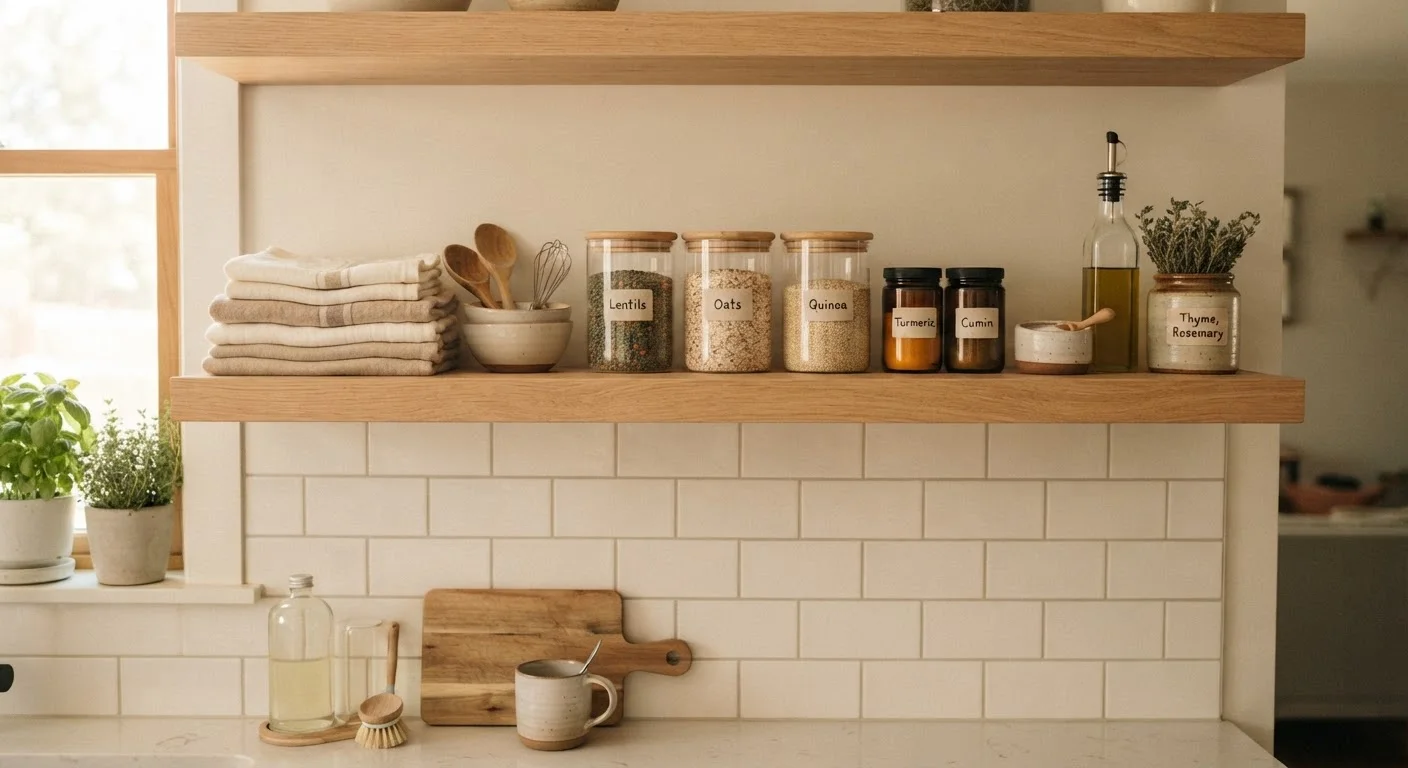
Labeling is one of the highest-return organizational habits, and it costs almost nothing. Masking tape and a marker work as well as a label maker for most household purposes. Label shelf sections, bins, drawer zones, and food storage containers. Labels serve two functions: they tell you where things belong, and they signal to everyone in the household that the system is intentional — making it easier for others to maintain it.
In pantries and food storage areas especially, clear labeling also reduces food waste by making expiration dates and contents visible at a glance.
Masking tape and a marker is all you need — labels make systems self-maintaining.
Build a 10-minute daily reset into your routine
No organizational system survives without maintenance, and maintenance doesn't have to mean weekend-long cleaning sessions. A consistent 10-minute reset at the end of each day — returning items to their designated spots, clearing countertops, and doing a quick visual scan of high-traffic areas — prevents the accumulation that leads to needing another overhaul.
Pairing this habit with something already in your routine (after dinner, before bed) makes it easier to sustain. Deciding whether a cleaning schedule or cleaning-as-you-go suits your household can help shape how you structure this daily habit.
A daily 10-minute reset prevents the slow accumulation that defeats most organizational systems.
Making It Stick Without Buying More
The hardest part of home organization isn't setting it up — it's maintaining it. Systems fail not because they're wrong, but because they aren't reinforced consistently. A few low-effort habits make the difference between a home that stays organized and one that reverts within weeks.
Start with one zone, not the whole house
Trying to organize an entire home at once is a reliable path to burnout and abandoned projects. Choose one drawer, one shelf, or one corner — apply the strategies, get it working, and let that success build momentum. Most households find that completing one visible zone motivates the next one naturally.
If your household shares space with others, aligning on which system to use matters as much as the system itself. Managing shared household responsibilities involves the same kind of clear communication and agreed-upon structure that keeps shared spaces functional. And once you have things organized, building a household inventory is a practical next step that takes your organization further — especially for insurance and emergency preparedness purposes.
Safe storage matters, too
When reorganizing cabinets and storage areas, pay attention to where household cleaning products and chemicals end up. Mixing or improperly storing common products can create hazardous situations. Safe chemical storage practices are worth reviewing before you consolidate cleaning supplies into a single area.
The content on this site is for informational purposes only and is not a substitute for professional advice. Always consult a qualified professional for guidance specific to your situation.