

When Your Bill Goes Up and Nothing Seems Different
It's a frustrating experience: your electricity or water bill arrives noticeably higher than last month, but you haven't changed your habits, added new appliances, or had anyone extra staying over. The temptation is to blame the utility company, and while rate increases do happen, they're rarely the whole story.
More often, the culprit is one of a handful of slow-developing household issues that don't announce themselves — degraded insulation, quietly failing appliances, or habits that seem neutral but quietly drain resources. Understanding where to look first can save you real money each month. If unexplained household costs are feeding into a broader budget strain, it may be worth reading about why monthly budgets often derail by week two as well.
Ignoring air leaks around doors, windows, and attic hatches.
Why it happens: Drafts are easy to overlook because they develop gradually and aren't always obvious without deliberate inspection.
Running appliances — especially dishwashers, washing machines, and dryers — with partial loads.
Why it happens: Convenience drives the habit; it feels easier to run a half-full dishwasher than to wait.
Neglecting HVAC filter changes, causing the system to overwork itself.
Why it happens: Filter replacement is easy to forget because there's no immediate visible symptom — until energy use climbs and air quality drops.
Leaving multiple devices plugged in and on standby around the clock.
Why it happens: Standby power draw is invisible and feels negligible per device, so most households don't account for its cumulative effect.
Not checking for running toilets or slow drips from faucets.
Why it happens: A toilet that runs intermittently or a faucet dripping slowly can go unnoticed for weeks, especially in less-used bathrooms.
Habits and Systems That Silently Drive Up Costs
Beyond the specific mistakes listed above, a few systemic patterns deserve attention. Phantom load — the electricity consumed by devices simply plugged in but not actively used — can account for a meaningful share of a home's energy use. Televisions, gaming consoles, chargers, and smart speakers all draw power continuously in standby mode.
~$100–$200
Annual phantom load cost per U.S. household
The U.S. Department of Energy estimates that standby power can account for 5–10% of a home's annual electricity use.
~13%
Of home energy use goes to water heating
According to the U.S. Energy Information Administration, water heating is typically the second-largest energy expense in American homes.
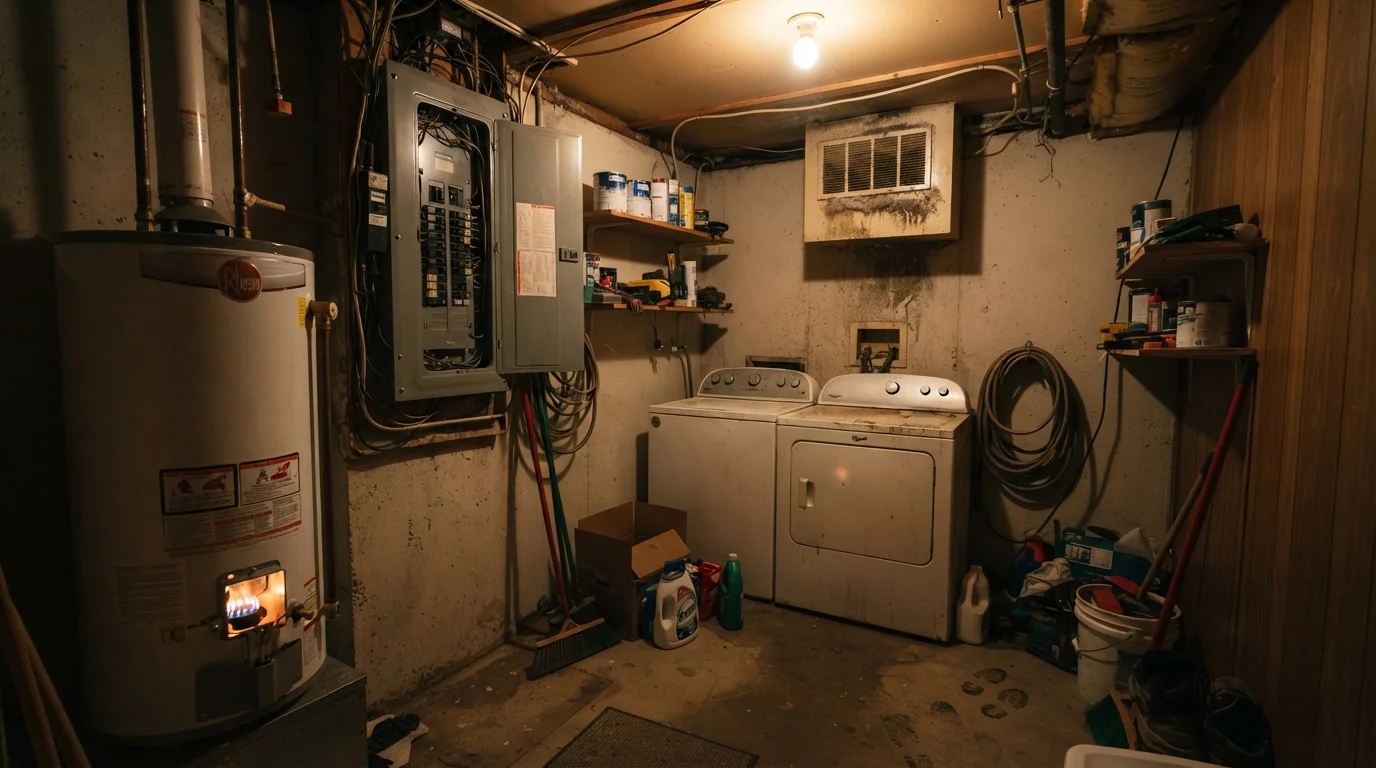
Water heating is another frequently overlooked expense. If your water heater is set above 120°F (49°C), it's working harder than necessary. Sediment buildup in the tank reduces efficiency over time, often without any visible sign. Flushing the tank annually is a straightforward maintenance step that many homeowners skip entirely.
It's also worth separating fact from fiction. Several common energy-saving assumptions — like the idea that leaving lights on is cheaper than switching them on and off repeatedly — don't hold up. The energy-saving myths that homeowners most often get wrong are worth reviewing before making decisions based on conventional wisdom.
Don't Overlook Your Water Meter
If you suspect a leak but can't locate it, turn off all water-using appliances and fixtures, then watch your water meter for movement. Any change in the reading indicates water is flowing somewhere it shouldn't be. Undetected leaks can add significantly to monthly bills before they become visible damage. Contact a licensed plumber if you can't identify the source.
Keeping appliances and home systems well-maintained is closely tied to how long they function efficiently. The same logic applies to personal electronics — maintenance habits that extend device lifespan often translate directly to lower replacement costs and more stable energy consumption. And if you're reviewing all the places your household money quietly disappears, avoidable banking fees are another category worth a close look.
The content on this site is for informational purposes only and is not a substitute for professional advice. Always consult a qualified professional for guidance specific to your situation.