

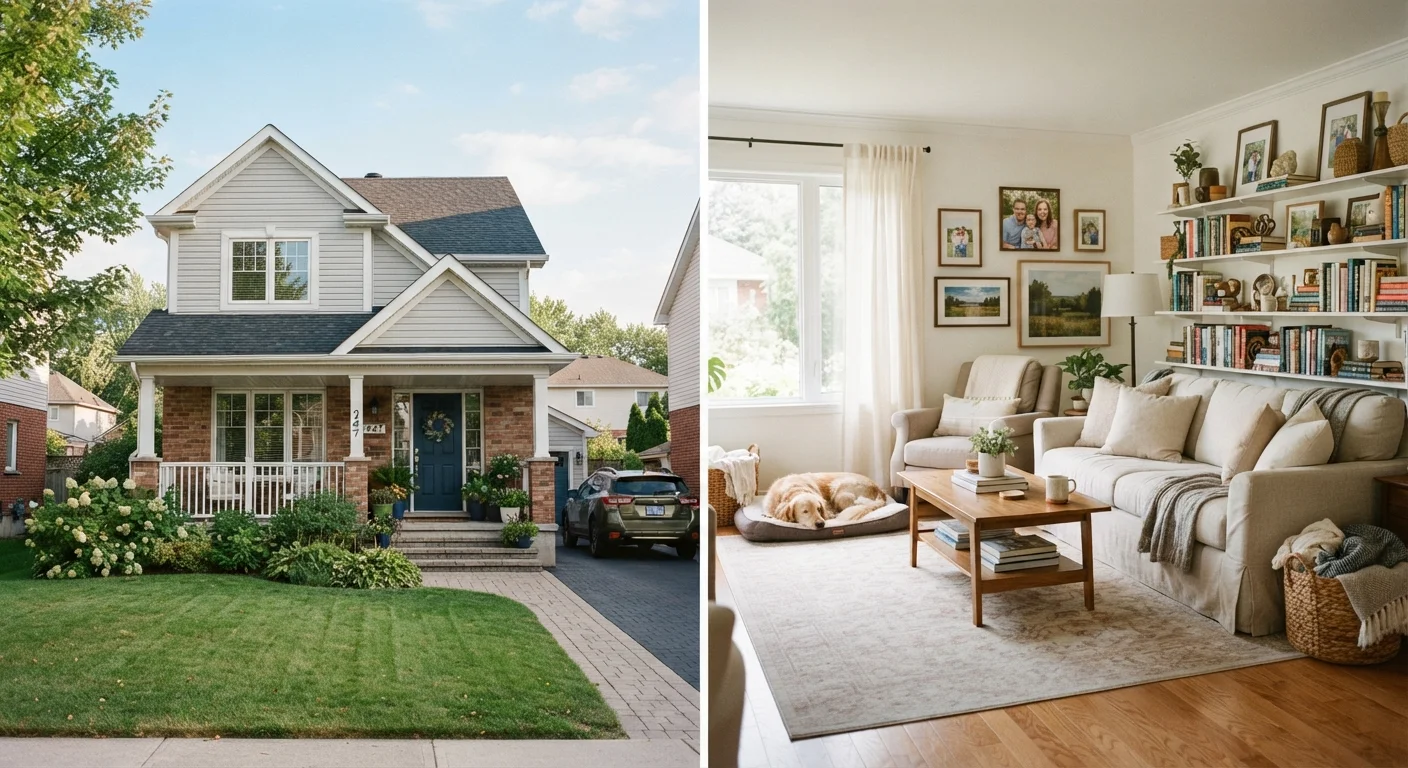
Option A
Dwelling Coverage
The structural shield for your home's physical framework.
Best for: Homeowners who need protection for the building itself — walls, roof, floors, and attached structures — against covered perils.
Option B
Personal Property Coverage
The safety net for everything you own inside the home.
Best for: Homeowners who want financial protection for furniture, electronics, clothing, and other belongings if they are damaged, destroyed, or stolen.
What Dwelling Coverage Actually Pays For
Dwelling coverage — sometimes listed as Coverage A on your policy declarations page — protects the physical structure of your home. That includes the walls, roof, foundation, floors, built-in appliances, attached garages, and permanently installed fixtures like cabinets and countertops.
When a covered peril — such as fire, windstorm, hail, lightning, or certain types of water damage — causes physical damage to the structure, dwelling coverage pays for repairs or, in a total loss, rebuilding. The key phrase here is covered peril: most standard homeowners policies are "named perils" or "open perils" policies, and not every cause of damage is covered. Flood and earthquake damage, for example, typically require separate policies entirely.
Your dwelling limit should reflect the estimated replacement cost of rebuilding your home from the ground up — not its market value. Land doesn't need to be rebuilt, and construction costs can differ sharply from sale prices. Underinsuring your dwelling is one of the most common and costly homeowners insurance mistakes. For a broader look at what homeowners policies do and don't include, see common myths about homeowners insurance coverage.
| Criterion | Dwelling Coverage | Personal Property Coverage |
|---|---|---|
| What it protects | Home's structure and attached fixtures | Belongings and personal possessions |
| Policy designation | Coverage A | Coverage C |
| Common covered perils | Fire, wind, hail, lightning | Fire, theft, vandalism, wind |
| Valuation basis | Replacement cost (standard) | ACV or RCV (varies by policy) |
| Sub-limits apply | Rarely | Yes — jewelry, art, firearms, cash |
| Applies off-premises | No | Often yes, up to policy limits |
| Who needs it most | Homeowners | Homeowners and renters alike |
How Personal Property Coverage Works
Personal property coverage — typically Coverage C — protects the belongings you keep in and around your home: furniture, clothing, electronics, kitchen appliances, sporting goods, and similar items. Importantly, most policies also extend some protection to belongings temporarily away from home — for instance, a laptop stolen from your car or luggage damaged during travel, up to policy sub-limits.
Two valuation methods determine how much you actually receive after a claim:
- Actual Cash Value (ACV): The insurer pays what your item was worth at the time of the loss, after depreciation. A five-year-old sofa pays out significantly less than what a new one costs.
- Replacement Cost Value (RCV): The insurer pays what it costs to buy a comparable new item today. RCV coverage typically costs more in premiums but closes a meaningful gap at claim time.
Standard policies also impose sub-limits on certain categories — commonly jewelry, firearms, cash, and fine art. If you own high-value items in these categories, a scheduled personal property endorsement (sometimes called a floater) offers broader, item-specific protection. To understand how coverage categories fit together at a policy level, see our overview of major insurance coverage types.
~$1,000
Average personal property claim payout
According to the Insurance Information Institute, the average homeowners property damage claim has historically fallen in the range of hundreds to several thousand dollars depending on peril type.
64%
Homeowners underinsured for dwelling rebuild
Industry research from CoreLogic has estimated that a majority of U.S. homes are insured for less than their actual rebuilding cost, leaving owners exposed to significant out-of-pocket costs after a total loss.
Side-by-Side: Key Differences That Matter at Claim Time
Understanding both coverages in isolation is useful, but knowing how they interact — and where each one stops — is what matters when you actually file a claim.
Consider a house fire that damages an exterior wall and destroys the living room furniture. Dwelling coverage handles the wall repair; personal property coverage handles the furniture replacement. Two separate coverage buckets, two separate limits, and often one shared deductible applied per occurrence. If your dwelling limit is adequate but your personal property limit is low, you could find yourself fully rebuilding a house you can't afford to refurnish.
It's also worth noting what neither coverage handles: liability claims, additional living expenses (those fall under Coverage D and Coverage E respectively), or damage from excluded perils. A thorough review of your policy declarations page — the summary sheet listing all your coverage types and limits — will tell you exactly where you stand. For new policyholders working through these concepts for the first time, our starter guide for first-time policyholders provides a practical walkthrough.
Renters Have Coverage C Too
Renters insurance does not include dwelling coverage — that's the landlord's responsibility. But a renters policy does provide personal property coverage and liability protection for tenants. If you rent, personal property coverage is the core of your policy, not a secondary concern. Coverage limits and exclusions still apply in the same way as in a homeowners policy.
This article is for general informational purposes only and does not constitute insurance, financial, or legal advice. Coverage terms, exclusions, and limits vary by insurer and state. Always read your actual policy documents and consult a licensed insurance professional regarding your specific situation.
The content on this site is for informational purposes only and is not a substitute for professional advice. Always consult a qualified professional for guidance specific to your situation.