

Why Credit Report Errors Happen and Why They Matter
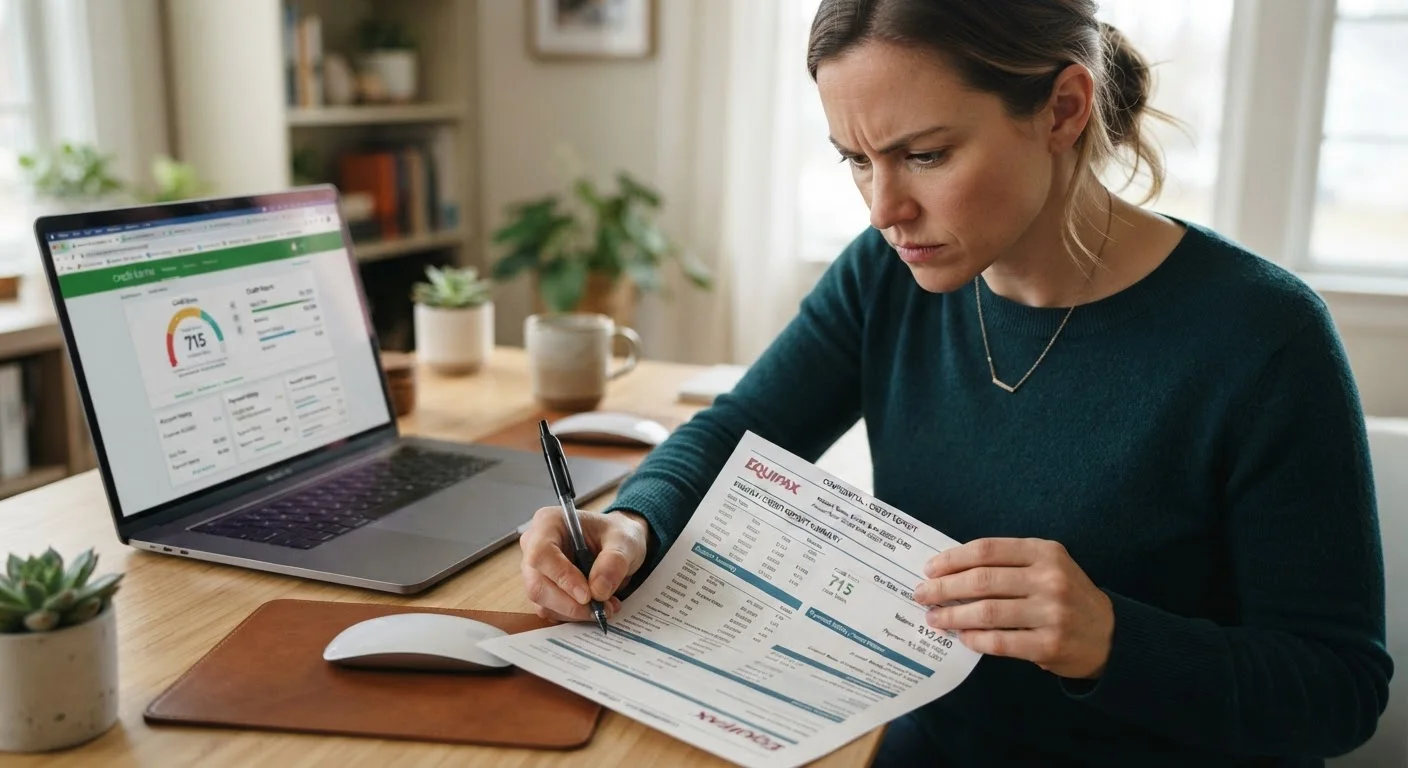
Credit report errors are more common than many consumers realize. A data furnisher — such as a lender or collection agency — may report incorrect payment dates, duplicate accounts, or balances that don't reflect actual amounts owed. Clerical mistakes, mixed files (where another person's data appears on your report), and identity theft can all introduce inaccurate information. Because lenders, landlords, and even some employers rely on credit reports to make decisions, an error can have real-world financial consequences.
Understanding the basics of how credit works helps contextualize the dispute process. If you haven't already, see our complete overview of credit and banking for foundational context on how reports are structured and how scores are calculated.
The Fair Credit Reporting Act (FCRA) is the federal law that governs consumer credit reporting in the United States. It grants you the right to dispute incomplete or inaccurate information with any of the three major credit bureaus — Equifax, Experian, and TransUnion — and requires those bureaus to investigate and respond within a defined timeframe.
What you will need
Before You File: Gather What You Need
A successful dispute starts with preparation. Before submitting anything, pull your credit reports from all three bureaus. You're entitled to free reports through AnnualCreditReport.com, which is the federally authorized source. Review each report carefully, because an error may appear on one bureau's report but not another's — you'll need to dispute with each bureau separately if that's the case.
Document each error clearly. Note the account name, account number (partial is fine), the nature of the inaccuracy, and what the correct information should be. Gathering supporting documentation — such as bank statements, payment confirmations, or correspondence with a creditor — gives your dispute a stronger factual foundation.
AnnualCreditReport.com
The federally authorized website for obtaining free credit reports from all three major bureaus.
Bureau online dispute portals
Each bureau's secure web interface for submitting and tracking disputes electronically.
Certified mail service
Provides dated proof of delivery when submitting disputes by mail, creating a verifiable paper trail.
Supporting financial documents
Bank statements, payment confirmations, or creditor correspondence that substantiate your dispute claim.
The Dispute Process, Step by Step
The FCRA allows you to dispute errors online, by mail, or by phone. Filing in writing — either online through a bureau's secure dispute portal or via certified mail — creates a documentation trail that can be important if the dispute escalates.
Identify the Exact Error on Your Report
Locate the specific tradeline, account, or personal information entry that is inaccurate. Write down the bureau reporting it, the creditor's name, the account number, and a precise description of what is wrong and what the correct information should be.
Compile Supporting Documentation
Gather any evidence that supports your claim: payment records, billing statements, correspondence with the creditor, or a police report if identity theft is involved. Copies (never originals) should accompany your dispute submission.
Submit Your Dispute to the Correct Bureau
File your dispute directly with the bureau reporting the error — Equifax, Experian, or TransUnion — through their official online dispute center or via certified mail with return receipt requested. Your dispute should clearly identify the item you're challenging, state why it's inaccurate, and request correction or removal.
Wait for the Bureau's Investigation
Under the FCRA, the bureau generally has 30 days to investigate your dispute (45 days in some circumstances, such as when you provide additional information). The bureau forwards your dispute and relevant documents to the original data furnisher — typically a lender or creditor — who must then verify the information.
Review the Outcome and Take Next Steps
The bureau must notify you of the results in writing. If the error is confirmed, it will be corrected or deleted. If the furnisher verifies the information as accurate, the item will remain. In that case, you can request a brief statement of dispute be added to your file, escalate the dispute directly to the original creditor, or consult a consumer law attorney if you believe the FCRA has been violated.
Keep a Dispute Log Throughout the Process
Create a simple log noting the date you submitted each dispute, the bureau involved, the method used, and any reference or confirmation numbers provided. If the bureau misses its deadline or the outcome seems incorrect, this record supports any follow-up action, including a complaint to the Consumer Financial Protection Bureau (CFPB).
It's also worth noting that disputing an error won't negatively affect your credit score. The act of filing a dispute doesn't appear as a hard inquiry. For a broader look at how different types of credit checks affect your profile, see our guide on hard inquiries vs. soft inquiries.
Be Cautious of Credit Repair Services
Some companies advertise the ability to remove negative information from your credit report for a fee. Legitimate negative information that is accurate cannot be legally removed by any third party — only the passage of time or a successful dispute based on genuine inaccuracy can accomplish that. The dispute process described here is free and available to every consumer directly.
This article is for general informational purposes only and does not constitute financial, legal, or credit counseling advice. Consult a licensed financial professional or credit counselor for guidance specific to your situation.
The content on this site is for informational purposes only and is not a substitute for professional advice. Always consult a qualified professional for guidance specific to your situation.