

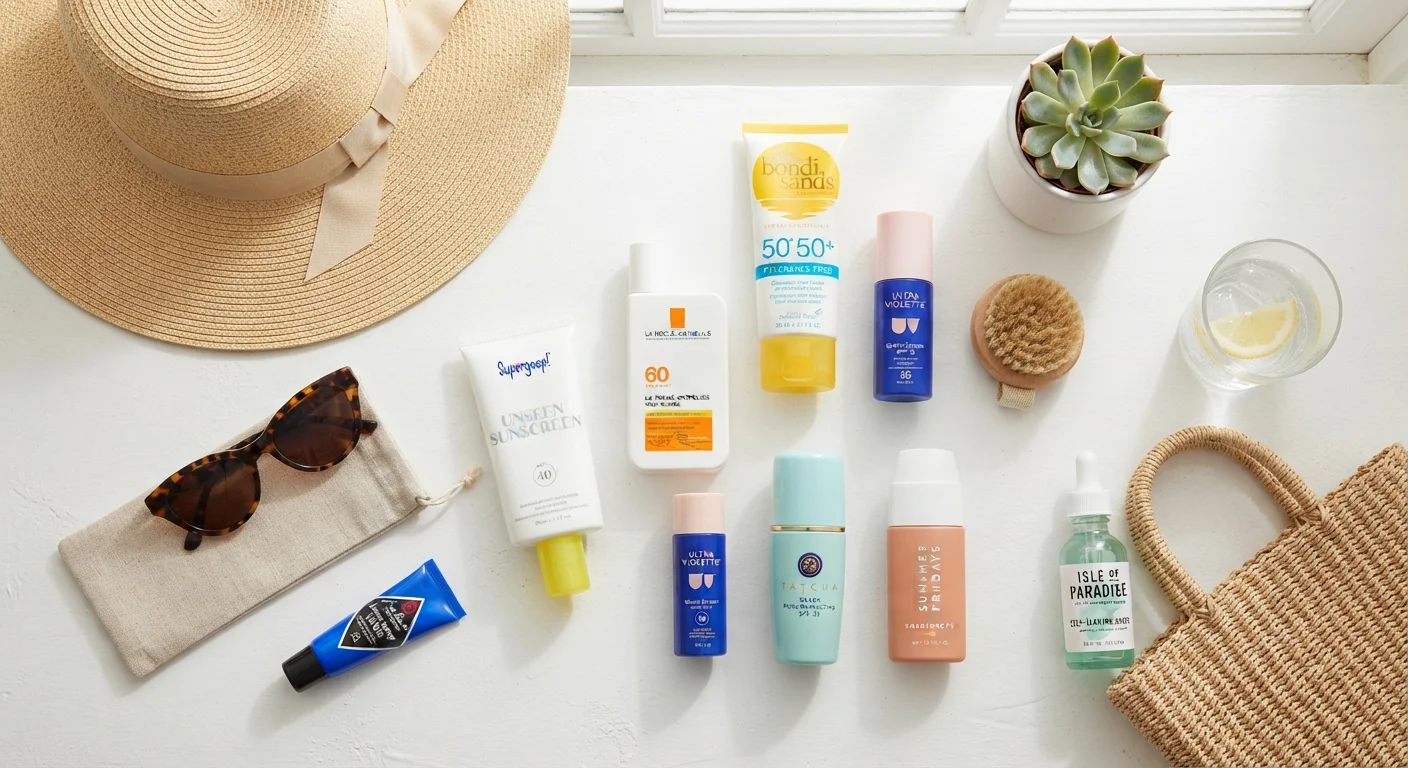
Why Sunscreen Myths Are a Real Skin-Health Issue
Sunscreen misinformation isn't just harmless confusion — it translates directly into missed applications, inadequate coverage, and long-term skin damage. Dermatologists widely consider UV exposure a leading contributor to premature skin aging and skin cancer risk, yet studies suggest a significant portion of adults consistently skip or misuse sun protection based on faulty beliefs.
Just like fitness myths that quietly derail progress, sunscreen misconceptions feel logical on the surface but fall apart under scrutiny. Let's sort fact from fiction so your SPF routine actually does its job.
Myth
If it's cloudy outside, I don't need sunscreen.
Fact
Up to 80% of UV rays can pass through clouds, meaning overcast days still carry significant UV exposure.
Cloud cover reduces visible light but does very little to block ultraviolet radiation. UVA rays in particular — the type most associated with skin aging and deeper skin damage — penetrate clouds, fog, and even light window glass with relative ease. Many people report their worst sunburns happening on overcast beach days precisely because they skipped sun protection. A daily SPF habit protects you regardless of what the sky looks like.
Myth
People with darker skin tones don't need sunscreen.
Fact
Melanin provides some natural UV protection, but it does not prevent UV damage, sunburn, or skin cancer in darker skin tones.
Higher melanin levels do offer a degree of natural UV filtering — estimated to be roughly equivalent to an SPF of 13 or lower — but that is far below the protection dermatologists recommend. People of all skin tones can develop UV-induced skin damage, hyperpigmentation, and skin cancer. Acral lentiginous melanoma, for instance, disproportionately affects people with darker skin and is often diagnosed at later stages partly because the myth of built-in immunity discourages monitoring and protection.
Myth
A higher SPF means I only need to apply sunscreen once a day.
Fact
SPF 50 or even SPF 100 degrades with time, sweat, and exposure — reapplication every two hours is still necessary.
SPF ratings measure protection intensity under controlled lab conditions, not duration. Once applied, sunscreen begins to break down through UV exposure, perspiration, and physical contact (rubbing your face, toweling off). An SPF 100 formula applied once at 8 a.m. provides minimal protection by midday. Reapplying every two hours — or immediately after swimming or heavy sweating — is the standard guidance from skin-health organizations regardless of the SPF number on the label.
Myth
Sunscreen is waterproof, so swimming won't wash it off.
Fact
No sunscreen is truly waterproof. Regulations in the U.S. only allow products to claim "water resistant" for 40 or 80 minutes.
The U.S. Food and Drug Administration prohibits the term "waterproof" on sunscreen labels because no formula maintains full efficacy through prolonged water exposure. Products labeled water resistant for 80 minutes still require reapplication after that window — and sooner if you're toweling off vigorously, which physically removes the product. If you plan to swim or sweat, carry your sunscreen with you and set a timer as a reminder to reapply.
Myth
Sunscreen is only necessary at the beach or pool.
Fact
Everyday UV exposure during commutes, outdoor errands, and time near windows adds up to significant cumulative skin damage.
Cumulative, incidental UV exposure — the kind you accumulate driving, walking to your car, or sitting near a sunny window — accounts for a large proportion of lifetime UV damage. Dermatologists often call this "everyday sun damage" and note it is a major driver of photoaging (fine lines, uneven tone, loss of elasticity). A daily SPF as part of your morning skincare routine, even on non-beach days, is one of the most consistently supported habits in preventive skin health.
Building a Sunscreen Habit That Actually Works
Knowing the myths is only half the equation. The other half is finding an application routine you'll realistically stick to. Sunscreen works best when it's applied generously — most dermatology guidelines suggest about a nickel-sized amount for the face alone — and reapplied every two hours when outdoors, or after sweating and swimming.
Don't Rely on Makeup SPF Alone
Many foundations, tinted moisturizers, and powders contain SPF, but cosmetic layers are rarely applied thickly or evenly enough to deliver the labeled protection. These products work well as a supplementary layer, but they should not replace a dedicated sunscreen applied before makeup. Layering both gives you a more reliable baseline of protection for daily use.
Broad-spectrum formulas labeled SPF 30 or higher are generally recommended by skin-health organizations for everyday use. The format — lotion, serum, stick, or mineral powder — matters less than consistent, adequate application. If you're already thinking critically about everyday myths that affect your wellbeing, you might also find it useful to revisit common myths about what insurance actually covers — the same pattern of misplaced assumptions can leave you underprotected in surprisingly similar ways.
This article is for general informational and educational purposes only and is not a substitute for professional medical or dermatological advice. Consult a qualified healthcare provider with questions about your specific skin health needs.
The content on this site is for informational purposes only and is not a substitute for professional advice. Always consult a qualified professional for guidance specific to your situation.