

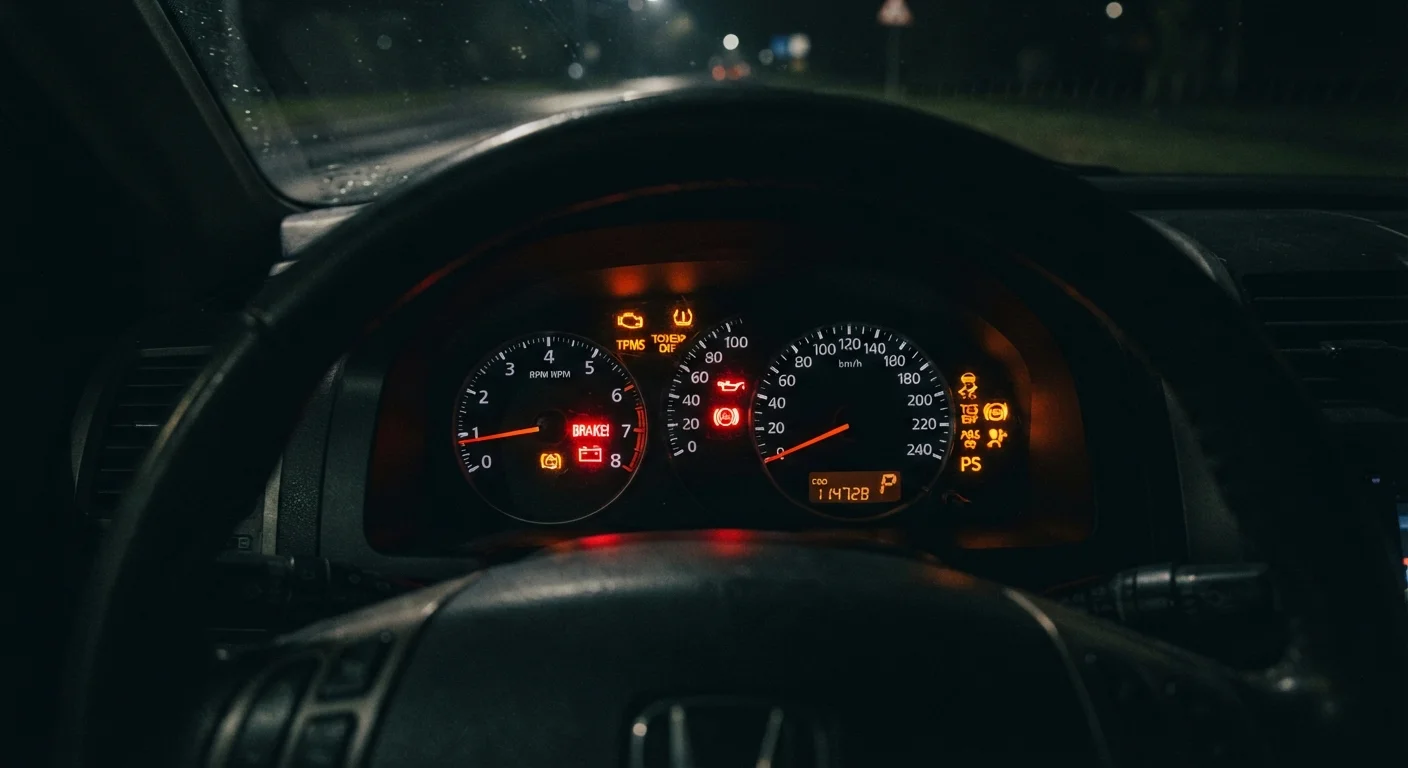
Dashboard Warning Lights: What Each Color Means
Modern vehicles use a color-coded system to communicate urgency. Red lights signal an immediate problem - stop safely and address it before continuing. Yellow or amber lights indicate a condition that needs attention soon but typically isn't an emergency. Green or blue lights are informational, confirming a system is active.
| Red warning light urgency | Stop driving safely as soon as possible |
| Amber warning light urgency | Schedule service soon - not an immediate emergency |
| Check engine light causes | Hundreds of possible fault codes - scan tool required for diagnosis |
| OBD-II standard introduced | Required on all US passenger vehicles from model year 1996 |
| Tire pressure reference | Driver's door jamb sticker (not tire sidewall maximum) |
| Fuel smell in cabin | Treat as a safety concern; avoid driving - have vehicle towed |
Here are the most common warning lights and their typical meanings:
- Check Engine (amber engine icon): Triggered by the vehicle's onboard diagnostics system. Could range from a loose gas cap to a misfiring cylinder. A steady light usually means a non-emergency fault; a flashing light indicates a more serious issue like a catalytic converter problem - reduce speed and seek service promptly.
- Battery (red battery icon): The charging system isn't maintaining voltage. This could be a failing alternator, corroded terminals, or a dying battery. You may have limited driving time before the car loses power entirely.
- Oil Pressure (red oil can icon): Low oil pressure can cause severe engine damage within minutes. Pull over safely, turn off the engine, and check the oil level. Do not continue driving until the cause is identified.
- Temperature Warning (red thermometer icon): The engine is overheating. Turn off the AC, pull over, and let the engine cool. Never open a hot radiator cap. Check coolant levels once the engine is fully cooled - see our guide to reading your fluids for more detail.
- TPMS (amber tire icon): Tire pressure is significantly low in one or more tires. Inspect and inflate to the pressure listed on the driver's door jamb sticker, not the maximum stamped on the tire sidewall.
- ABS (amber "ABS" text): The anti-lock braking system has a fault. Normal braking still works, but ABS assistance may not engage during a hard stop.
- Brake Warning (red exclamation in circle): If the parking brake is off and this light is on, brake fluid may be low or a brake system fault exists. Have it inspected immediately.
Unusual Sounds and What They Typically Indicate
Your ears are an underrated diagnostic tool. Noises often appear before a problem becomes visible - and catching them early usually means a less expensive repair.
OBD-II
On-Board Diagnostics, second generation - a standardized system built into vehicles since 1996 that monitors engine and emissions performance. When the check engine light comes on, a mechanic reads fault codes from this system using a scan tool.
CV Joint
Constant Velocity joint - a flexible coupling in the drivetrain that transfers power to the wheels while accommodating suspension movement and steering. Wear is common on high-mileage front-wheel-drive vehicles.
Catalytic Converter
An emissions control device in the exhaust system that converts harmful combustion byproducts into less harmful gases. A failing converter can trigger the check engine light and cause a sulfur odor.
TPMS
Tire Pressure Monitoring System - a sensor-based system that alerts the driver when one or more tires drop significantly below the recommended inflation pressure.
Wheel Bearing
A set of steel balls or rollers housed in a ring that allows the wheel to spin smoothly. When worn, they produce a humming or grinding sound that often changes with vehicle speed or lane changes.
Heat Shield
A thin metal guard surrounding parts of the exhaust system to protect nearby components from heat. Loose or corroded heat shields often cause rattling sounds under the vehicle.
- Grinding when braking: The brake pads have worn down to the metal backing. This is a safety issue - the rotors are likely being damaged with every stop. Schedule brake service promptly.
- Squealing when braking: Most brake pads include a small metal wear indicator designed to squeal when pads are low, but not yet metal-on-metal. It's a warning, not an emergency - but don't ignore it.
- Knocking or pinging from the engine: Often caused by using fuel with an octane rating lower than the vehicle requires, or by engine deposits causing premature ignition (called "knock"). Persistent knocking can indicate more serious internal wear.
- Clicking when turning: A clicking sound during turns - especially at low speed - typically points to a worn CV (constant velocity) joint on front-wheel-drive vehicles. This will worsen over time if left unaddressed.
- Rumbling or humming from the wheels: A wheel bearing showing wear often produces a low hum that changes with vehicle speed. The sound may shift as you change lanes because lateral load moves between bearings.
- Rattling underneath: Could be a loose heat shield on the exhaust, a worn exhaust hanger, or suspension components. While sometimes minor, loose exhaust components can become a fire hazard.
- Whining from under the hood: Power steering fluid may be low, or the power steering pump may be struggling. On electric power steering systems, a whine could indicate an electrical or motor fault.
Keep a habit of briefly noting any new sounds - when they occur, at what speed, and under what conditions. This information helps a mechanic diagnose problems faster.
Unusual Smells: What Your Nose Is Telling You
Odors are often the first sign of a fluid leak, an overheating component, or a safety hazard. Never dismiss a persistent or sudden smell coming from your vehicle.
When a Smell Means Get Out of the Car
A strong fuel smell inside the cabin - particularly if it appears suddenly or is accompanied by visible fluid under the vehicle - should be treated as a potential safety emergency. Turn off the ignition, exit the vehicle, move away from it, and call for roadside assistance rather than attempting to drive. Do not use any open flames or electrical switches near a suspected fuel leak.
- Burning rubber or plastic: Could mean a drive belt is slipping or touching a hot component, or that a plastic bag has contacted the exhaust. If persistent, have it checked - some causes pose a fire risk.
- Sweet, syrupy smell: Coolant (antifreeze) has a distinctly sweet odor. This smell - especially accompanied by steam from the hood - usually indicates a coolant leak. Check your coolant reservoir when the engine is cold. Coolant is also toxic, so clean up any pooled fluid promptly.
- Rotten eggs (sulfur): A strong sulfur smell can indicate a malfunctioning catalytic converter or, on older vehicles, a charging issue causing the battery to off-gas hydrogen sulfide. Either warrants prompt inspection.
- Burning oil: Oil dripping onto hot engine components produces a sharp, acrid smell. Check your oil level and inspect for visible leaks around the valve cover gasket or oil pan. Low oil combined with the oil pressure warning light is especially urgent.
- Fuel smell inside the cabin: This is a safety concern. A fuel system leak - injector, fuel line, or tank - can create fire or vapor hazards. If the smell is strong, ventilate the car, avoid running the engine, and have it towed rather than driven.
- Musty or mildew smell from vents: Moisture has accumulated in the HVAC system, often on the evaporator coil. Running the fan without AC for a few miles at the end of a drive can help reduce this. Cabin air filter replacement may also help.
Staying on top of vehicle symptoms is part of routine ownership. Pairing this reference with a seasonal car care checklist can help you catch developing issues before they escalate.
This article is intended as a general educational reference and does not substitute for diagnosis by a qualified mechanic. If you are uncertain about any vehicle symptom, have your vehicle inspected by a licensed automotive professional before continuing to drive.
The content on this site is for informational purposes only and is not a substitute for professional advice. Always consult a qualified professional for guidance specific to your situation.