

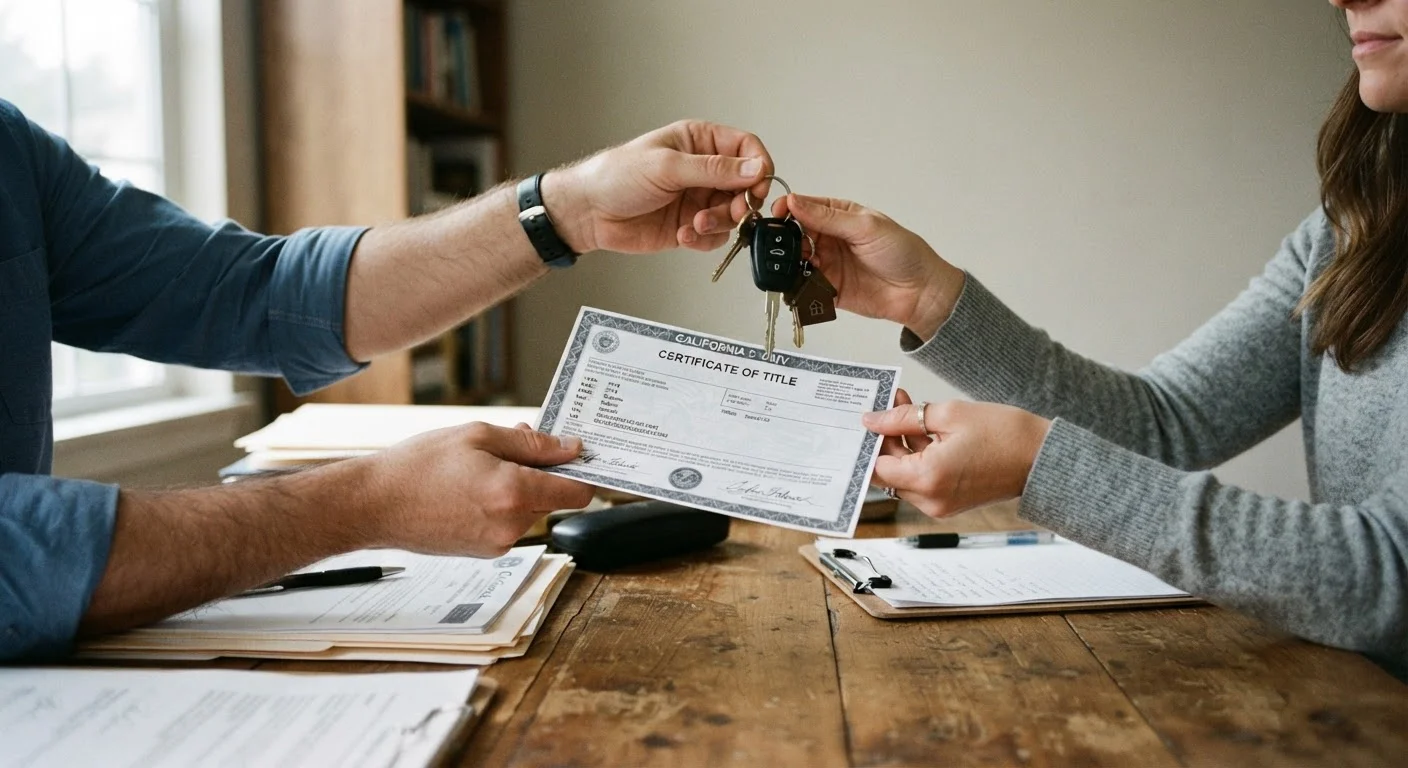
Why the Title Transfer Process Matters
The certificate of title is the legal proof of vehicle ownership in the United States. Without a properly completed transfer, the seller remains the legal owner on record - meaning they could face liability if the vehicle is involved in an accident or receives unpaid traffic violations after the sale. The buyer, meanwhile, can't legally register the vehicle in their name without a title in their name.
Title transfer requirements are set by each state's DMV, so exact forms, fees, and deadlines vary. What doesn't vary is the underlying principle: both parties need to complete the process correctly and promptly. Whether you're selling to a stranger, buying from a private party, or gifting a car to a family member, the mechanics are largely the same. For broader context on what comes before and after a transfer, see the full car-buying process and understand how private-party vs. dealership paperwork differs.
What you will need
What You'll Need Before You Start
Gathering the right documents before you meet with the buyer or seller saves significant time and prevents trips back to the DMV. The core documents are consistent across most states, but check your specific DMV website for any supplemental forms your state requires. For gifted vehicles or inherited vehicles, additional affidavits may be needed.
Original Vehicle Title
The primary legal document that must be signed and transferred to establish new ownership.
Bill of Sale
Documents the transaction details including price, date, and parties involved for legal protection.
State Title Transfer Application
The DMV-specific form required to process the change of ownership in your state's system.
Odometer Disclosure Statement
Federally required for vehicles under 10 model years old to certify the vehicle's mileage at time of sale.
Lien Release Letter
Confirms the prior loan on the vehicle has been paid off and the lender no longer holds a claim on the title.
Outstanding Liens Block Title Transfers
If the seller still owes money on the vehicle, the lender holds the title and must release the lien before transfer can proceed. Always verify lien status - ask the seller for a lien release letter or payoff confirmation before handing over any payment. Receiving a car without a clear title can create significant legal complications for the buyer.
Step-by-Step: Completing the Transfer
Follow each step in order. Skipping or rushing any step - particularly the title signing or lien verification - is where most problems arise. Private-party transactions are especially prone to errors because neither party has dealt with the paperwork before. If you're reviewing a purchase checklist before signing, title verification should appear near the top.
Verify the Title is Clean and Matches the Vehicle
Before anything changes hands, confirm the title is valid. Check that the VIN (Vehicle Identification Number) on the title matches the VIN on the dashboard and door jamb. Confirm the seller's name on the title matches their government-issued ID. Run the VIN through your state DMV or a public vehicle history resource to check for open liens, salvage branding, or odometer discrepancies.
Obtain and Complete Required State Forms
Most states require forms beyond the title itself. Visit your state DMV's website to download the current title transfer application, odometer disclosure statement, and any additional forms required for your transaction type (sale, gift, or inheritance). Fill out your section completely and legibly - errors or corrections on a title can delay processing or require a new form.
Complete the Bill of Sale
A bill of sale documents the transaction in writing. It should include the full names and addresses of both buyer and seller, the vehicle's year, make, model, and VIN, the agreed sale price (or declared value for a gift), and the date of sale. Both parties should sign it. Even in states that don't legally require a bill of sale, having one protects both parties in the event of a future dispute.
Sign the Title in the Correct Sections
The seller signs the title in the designated seller section - typically on the back - and prints their name exactly as it appears on the front of the title. The buyer fills in their name, address, and purchase price in the buyer section. If the vehicle is being co-owned, both buyers must sign. Do not use white-out or correction fluid anywhere on the title; corrections typically require a new title application.
Submit Paperwork to Your State DMV
The buyer - not the seller - is typically responsible for submitting the completed title transfer paperwork to the state DMV, along with the required fees. Many states allow this by mail or online, but some require an in-person visit. Most states set a deadline of 10 to 30 days after the sale to submit transfer documents. Missing this window can result in penalty fees.
Update Registration and Insurance
A title transfer and vehicle registration are separate processes. Once the title is in the new owner's name, the vehicle also needs to be registered in that owner's name before it can be legally driven. Notify your insurance provider of the new vehicle immediately - coverage gaps between sale and registration can leave you exposed. See how registration works in your state for a full breakdown of what's required.
Keep Copies of Everything
Before handing over the signed title, photograph or photocopy every completed document - the title itself, bill of sale, and any lien release. These records protect you if a dispute arises later about the sale date, price, or ownership history.
Never Sign a Blank Title
Signing a title before all fields are completed - a practice sometimes called 'title jumping' - is illegal in most states and can expose you to fraud liability. Fill in all required fields completely before any party signs. If you receive a title already signed by a previous owner with buyer fields blank, consult your state DMV before proceeding.
Common Complications and How to Handle Them
Lost title: If the seller has misplaced the original title, they must apply for a duplicate from the state DMV before the transfer can proceed. This can take days to weeks depending on the state - factor that into your transaction timeline.
Out-of-state titles: If the vehicle was previously registered in a different state, additional steps may be required, including a VIN inspection or emissions check, before your current state will issue a new in-state title.
Inherited vehicles: Transferring a vehicle from a deceased owner's estate typically requires a copy of the will, death certificate, or letters testamentary. Requirements vary significantly; consult your state DMV or an estate attorney for guidance specific to your situation.
For a fuller look at what ongoing ownership involves after the transfer is complete, the complete picture of car ownership in the US covers registration renewals, insurance, and maintenance responsibilities.
The content on this site is for informational purposes only and is not a substitute for professional advice. Always consult a qualified professional for guidance specific to your situation.