

Our Verdict
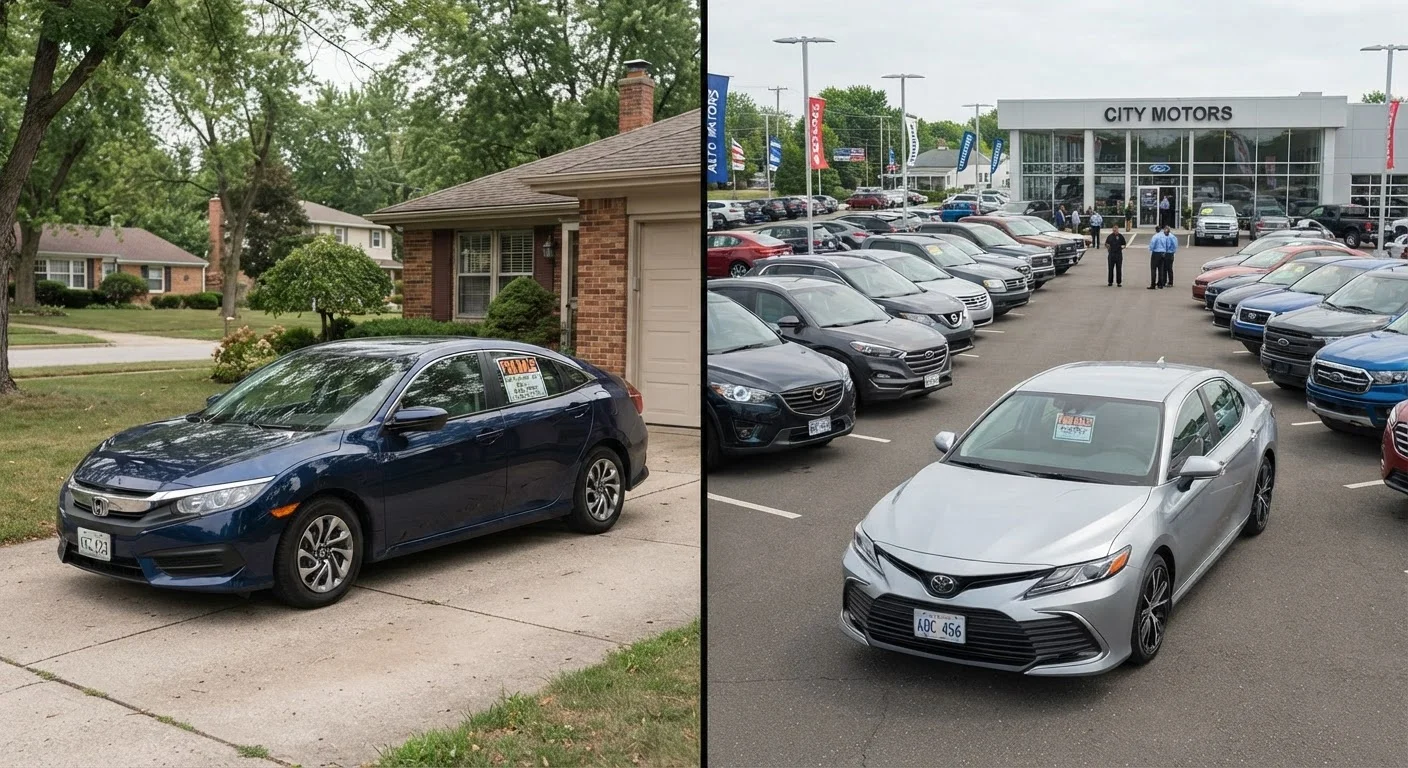
Neither buying channel is universally superior - the right choice depends on your risk tolerance, financing needs, and how much legwork you're willing to do. Private sales can save money upfront but demand more due diligence. Dealerships add convenience and protections that come at a cost.
Private seller purchases suit confident, cash-ready buyers who are comfortable with vehicle inspections and paperwork; dealerships are better suited to buyers who want financing options, warranty coverage, and a more structured transaction.
Two Distinct Buying Experiences
When shopping for a used vehicle, American buyers generally face one fundamental choice: buy from a private individual or from a licensed dealership. Both are legitimate paths to vehicle ownership, but they operate under very different rules, offer different levels of consumer protection, and carry distinct financial implications. Understanding the mechanics of each helps you go in with realistic expectations - and avoid costly surprises. For a broader look at ongoing ownership costs, see the hidden fees of car ownership that rarely show up in the sales pitch.
This article breaks down the core pros and cons of each route so you can weigh them against your own situation.
Buying From a Private Seller
Private-party transactions happen between two individuals, without a business intermediary. The seller lists a car, a buyer responds, and the two negotiate directly. Here's what that typically means in practice.
Lower purchase price in most cases
Private sellers don't carry the overhead costs of a dealership - no lot fees, no sales staff commissions, no advertising budget. That typically translates into a lower asking price for comparable vehicles.
More room to negotiate directly
With no sales manager approval layers, price conversations are straightforward. A motivated seller may accept a lower offer, especially if the vehicle has been listed for a while.
No add-on fees or dealer markups
Documentation fees, dealer preparation charges, and market adjustment markups simply don't exist in private transactions. The agreed price is generally what you pay, plus applicable tax and registration.
Seller may have deep knowledge of the vehicle
A long-term owner often knows the car's full maintenance history, quirks, and any repairs performed - information that formal service records alone may not capture.
On the downside, private sales come with considerably less structure and fewer guardrails.
Sold as-is - no warranty protection
Private sales in most states carry no implied warranty. Once money changes hands, the buyer assumes full responsibility for any mechanical issues that emerge, even ones discovered shortly after purchase.
No financing options from the seller
Private sellers require cash or a pre-arranged loan, typically from a bank or credit union. Buyers who haven't secured financing before shopping are at a disadvantage.
Higher fraud and title risk
Scams, undisclosed liens, salvage titles, and odometer fraud are more common risks in private transactions. Buyers must perform their own due diligence without institutional oversight.
Paperwork burden falls on the buyer
Title transfers, bill of sale documentation, and DMV filings are the buyer's responsibility to complete accurately and on time in a private deal.
One area that catches buyers off guard is the title transfer process. In a private sale, both parties are responsible for completing the paperwork correctly and on time. Errors or delays can create legal complications. How a title transfer works and what documents you'll need is worth reviewing before you finalize any private deal.
Buying From a Dealership
Licensed dealerships are regulated businesses subject to state and federal consumer protection laws. That regulatory layer changes the buying experience substantially - in both helpful and costly ways.
~50%
Used vehicle sales through dealerships in the U.S.
Industry data consistently shows that roughly half of all used car transactions in the United States occur through licensed dealerships, reflecting buyer preference for structured transactions.
Varies by state
Dealer documentation fee limits
Some states cap dealer doc fees by law, while others impose no limit - meaning the same fee category can range from under $100 to over $900 depending on where you buy.
Dealers also handle much of the paperwork in-house, including title transfers, temporary registration, and sometimes emissions documentation. That convenience is real, but it comes bundled with costs. Dealer documentation fees, sometimes called "doc fees," vary widely by state and dealership, and they're often non-negotiable. If you're considering financing through the dealership itself, it's worth comparing those terms against outside lenders first. Our guide on dealer financing vs. bank or credit union loans walks through what to look for before signing.
Certified Pre-Owned Is a Middle Ground
Many franchised dealerships offer Certified Pre-Owned (CPO) programs, where manufacturer-backed inspections and limited warranties apply to qualifying used vehicles. CPO vehicles typically cost more than comparable non-certified used cars, but they provide a level of assurance closer to a new-car purchase. Eligibility criteria, inspection standards, and warranty terms vary by manufacturer and program, so reviewing the specific CPO documentation matters before relying on that designation.
Dealers may also accept trade-ins, which adds another variable to the transaction. Trade-in valuations are often lower than what a private buyer might pay, though the convenience factor appeals to many sellers. Why trade-in values vary so much is a useful read if you're planning to roll an existing vehicle into the deal.
What Both Routes Have in Common
Regardless of where you buy, several best practices apply universally. Always obtain a vehicle history report using the car's VIN - this surfaces past accidents, title problems, odometer discrepancies, and prior owners. Always arrange an independent pre-purchase inspection by a qualified mechanic before committing to any used vehicle, whether the seller is a neighbor or a franchise dealer.
Budget carefully for costs beyond the sticker price. Registration fees, sales tax, insurance, and any immediate maintenance needs exist no matter which channel you use. For a full picture of what ownership actually costs, the Car Ownership Basics hub covers registration, insurance, and ongoing expenses in detail.
If you're still deciding between a used vehicle and a new one altogether, the financial and practical trade-offs between those options are worth examining separately. See new car vs. used car ownership for a side-by-side comparison that covers depreciation, warranties, and financing costs.
This article is for general informational and educational purposes only. It does not constitute legal, financial, or professional advice. Terms, regulations, and fees vary by state and individual circumstance. Consult a licensed professional for guidance specific to your situation.
The content on this site is for informational purposes only and is not a substitute for professional advice. Always consult a qualified professional for guidance specific to your situation.