

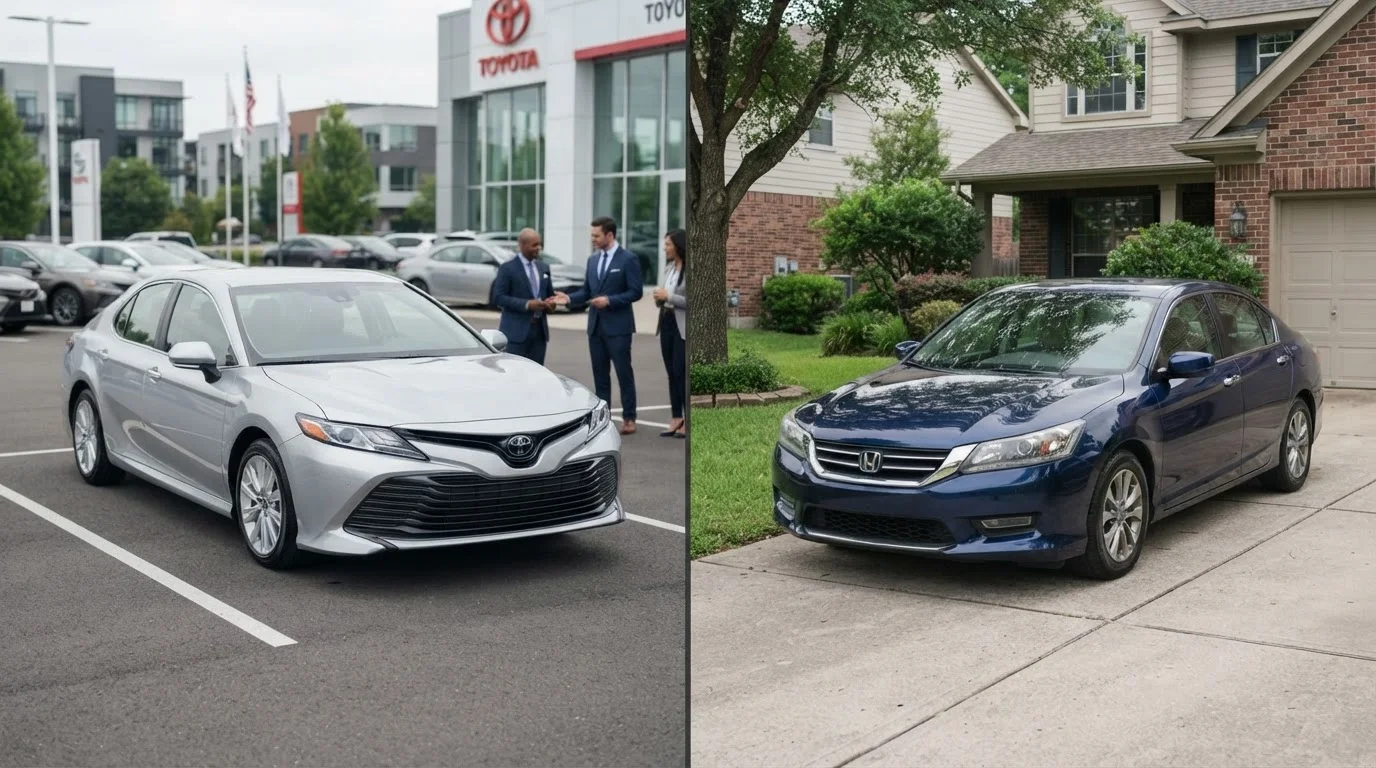
Option A
New Car Ownership
The full-warranty, zero-history choice.
Best for: Drivers who prioritize the latest safety features, manufacturer warranty coverage, and predictable near-term maintenance costs.
Option B
Used Car Ownership
The depreciation-adjusted, value-forward alternative.
Best for: Cost-conscious buyers willing to accept some ownership uncertainty in exchange for a lower purchase price and reduced depreciation hit.
The Depreciation Gap: Where the Biggest Financial Difference Lives
Depreciation - the loss of a vehicle's market value over time - is typically the single largest cost of car ownership, often exceeding fuel and insurance combined. New vehicles are hit hardest in the earliest years. Industry data consistently shows that many new cars lose a substantial share of their value within the first three years of ownership, though the exact rate varies widely by make, model, and market conditions.
When you buy used, especially a vehicle that is two to four years old, a previous owner has absorbed that initial steep drop. You enter the ownership cycle at a less punishing point on the depreciation curve. For a deeper look at how this mechanism works, see our guide to vehicle depreciation.
That said, depreciation is not the whole story. Financing costs, warranty coverage, and maintenance expenses all shift the math in ways that can favor either side depending on your situation.
| Criterion | New Car | Used Car |
|---|---|---|
| Upfront purchase price | Higher | Lower |
| Depreciation exposure | Steepest in years 1-3 | Reduced; prior owner absorbed early drop |
| Manufacturer warranty | Full coverage included | Limited or none (CPO programs vary) |
| Typical loan interest rate | Generally lower | Generally higher |
| Insurance premiums | Higher (greater vehicle value) | Lower in most cases |
| Repair unpredictability | Low in early years | Moderate to higher depending on age |
| Technology & safety features | Latest standards | Varies by model year |
| Registration fees | Often higher (value-based states) | Often lower |
Warranties, Reliability Risk, and Maintenance Costs
New cars come with a manufacturer's bumper-to-bumper warranty - typically three years or 36,000 miles - plus a longer powertrain warranty. That coverage substantially limits out-of-pocket repair exposure during the early ownership period. It also means you're working with a vehicle whose full service history you control from day one.
Used cars present more variability. A late-model used vehicle may still have remaining factory warranty, particularly if it falls under a certified pre-owned program, which typically includes an inspection and extended limited warranty. Older or higher-mileage used vehicles carry more repair uncertainty - though routine maintenance costs (oil changes, tires, brakes) are broadly similar regardless of vehicle age. If you're considering a third-party service plan for an older purchase, our overview of extended warranty trade-offs is worth reviewing before you commit.
~20%
Typical first-year new car depreciation
Automotive valuation research consistently estimates many new vehicles lose roughly 15-25% of their value within the first year, though rates vary by segment.
2-4 yrs
Sweet spot age for used car value
Consumer financial analysts often cite two-to-four-year-old used vehicles as offering the best balance of price reduction and remaining useful life.
$700+
Average annual vehicle repair cost (used vehicles)
Industry estimates suggest used vehicle owners spend meaningfully more on unplanned repairs annually than owners of new vehicles still under warranty.
One practical consideration: used car owners who plan to keep a high-mileage vehicle long-term face a distinct set of trade-offs. Our article on owning an older high-mileage vehicle covers those realities in detail.
Financing, Insurance, and the Full Ownership Cost Picture
Purchase price is only one input. The true cost of car ownership includes insurance premiums, registration fees, fuel, and financing charges - all of which differ between new and used vehicles.
Financing: New car loans often carry lower interest rates than used car loans, as lenders view new vehicles as lower-risk collateral. However, the larger loan principal on a new car may result in a higher total interest paid over the loan term, even at a lower rate. Used car buyers typically borrow less but may pay a higher rate - the net impact depends on the specific loan terms and vehicle price.
Insurance: Comprehensive and collision coverage costs are tied to a vehicle's actual cash value. A newer, more expensive vehicle will generally cost more to insure than a comparable older model. New car buyers are also more likely to be required by lenders to carry gap insurance, which covers the difference between the loan balance and the car's value if it is totaled early in the loan - a period when depreciation can outpace payoff.
Registration fees: Many states calculate annual registration fees based partly on vehicle value or model year, meaning new cars often carry higher fees in the first years of ownership.
For buyers navigating the used market specifically, the purchase source also matters. Our comparison of buying from a private seller versus a dealership outlines what each route involves in terms of price, paperwork, and risk. This article is part of our broader complete guide to car ownership in the United States.
Certified Pre-Owned: A Middle Ground
Certified pre-owned (CPO) vehicles occupy a space between fully new and standard used. They are factory-inspected, typically limited to a defined age and mileage range, and backed by an extended limited warranty. CPO vehicles generally cost more than equivalent non-certified used cars, but provide warranty protections closer to what a new car buyer receives. Terms and inspection standards vary significantly by manufacturer, so it's worth reviewing what a specific CPO designation actually covers before treating it as equivalent to a new-car warranty.
The content on this site is for informational purposes only and is not a substitute for professional advice. Always consult a qualified professional for guidance specific to your situation.