

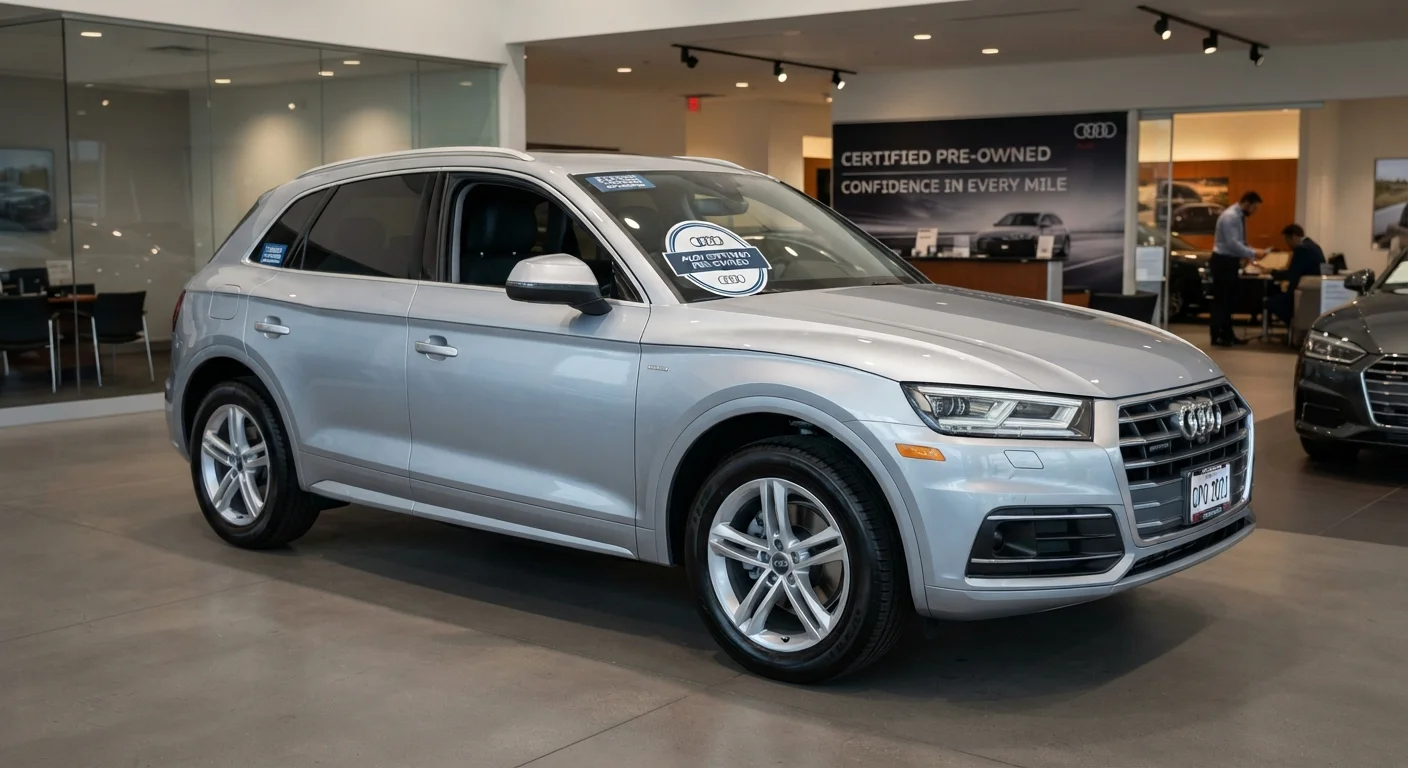
What 'Certified' Actually Means
The word 'certified' carries real weight in marketing - but in the used-car market, it doesn't have a single universal definition. Certified pre-owned programs fall into two broad categories: manufacturer-backed programs and dealer-certified programs.
Manufacturer programs are administered and backed directly by the automaker. These typically require that vehicles be sourced from specific channels (often off-lease or trade-in units), meet strict age and mileage limits, pass a multi-point inspection, and come with a warranty that the manufacturer itself stands behind.
Dealer-certified programs, on the other hand, are created and administered by individual dealerships. The standards here can range from thorough and transparent to minimal. The word 'certified' in a dealer program may simply mean a basic inspection was performed - with no manufacturer warranty attached.
When evaluating a CPO vehicle, the first question to ask is: who backs this certification? A manufacturer-backed CPO designation carries significantly more accountability than a dealer-issued one.
Manufacturer CPO vs. Dealer Certified: A Key Distinction
The terms 'manufacturer CPO' and 'dealer certified' are sometimes used interchangeably in advertising, but they represent meaningfully different levels of protection. Manufacturer programs are governed by the automaker and carry consistent standards across all participating dealers. Dealer-certified programs are set by individual dealerships, meaning the scope and quality can vary considerably. Always ask specifically who backs the certification and request the warranty documentation in writing.
Inspection Standards: What Gets Checked
Manufacturer CPO programs typically require a multi-point inspection - commonly ranging from 100 to over 200 checkpoints. These cover major mechanical systems, safety features, and interior and exterior condition. Common inspection areas include:
- Engine and transmission performance
- Brake system components (pads, rotors, fluid)
- Suspension, steering, and wheel alignment
- Electrical systems and onboard technology
- Heating, ventilation, and air conditioning
- Tires and lights
- Body condition, glass, and paint
Importantly, any items that fail inspection must be repaired - not just noted - before the vehicle can be certified. Dealers are generally required to document the inspection results, and buyers should ask to see this checklist before purchase.
For comparison, a standard used-car lot sale may include no formal inspection at all. This is a meaningful distinction, though it doesn't eliminate the value of an independent third-party review. See what a pre-purchase vehicle inspection covers to understand what an independent mechanic looks for - even on a CPO vehicle.
Ask for the Inspection Checklist
Before committing to a CPO purchase, request the completed multi-point inspection report. Legitimate manufacturer CPO programs require dealers to document which items passed, which were repaired, and what parts were used. If a dealer can't produce this documentation, treat the certification claim with caution and consider an independent pre-purchase inspection.
The Warranty: Terms, Coverage, and Limits
The warranty is often the most valuable component of a CPO program - and the most misunderstood. CPO warranties generally come in two layers:
- Remaining factory warranty: If the original new-car warranty hasn't expired, it typically transfers to the CPO buyer.
- CPO-specific warranty extension: The manufacturer adds coverage beyond what's left on the factory warranty. This is often a powertrain warranty covering the engine and transmission for an additional period.
What's typically not covered: wear items like brake pads, wiper blades, and tires; cosmetic issues; and damage from accidents or neglect. Some programs also exclude electronics or infotainment systems after a certain point.
Duration varies significantly. Some CPO powertrain warranties extend to 100,000 miles or 6 years from the original sale date; others are more limited. Always read the actual warranty document - not just the sales brochure summary.
If you're weighing whether extended coverage is worth the price premium, the pros and cons of extended warranty coverage breaks down the key tradeoffs.
2-3x
More inspection points in manufacturer vs. dealer CPO programs
Manufacturer CPO checklists commonly include 150-200+ points, while dealer programs may cover far fewer with less standardization.
~$1,500
Typical CPO price premium over non-certified used vehicles
Industry estimates suggest CPO vehicles often carry a price premium of roughly $1,000-$2,000 compared to equivalent non-certified used cars, though this varies by brand and market conditions.
Eligibility Requirements and What the Label Doesn't Cover
Not every used vehicle qualifies for CPO status. Manufacturer programs typically require:
- Vehicle age: Usually no more than 5-6 model years old
- Mileage cap: Commonly under 60,000-80,000 miles
- Clean title: No salvage, flood, or rebuilt title history
- Brand alignment: The vehicle must be the same make as the certifying manufacturer
Even with CPO status, the label doesn't guarantee a vehicle is free of all problems. Inspection checklists are conducted by dealership technicians - not independent parties. Minor issues can be overlooked, and the inspection only reflects the vehicle's condition at a point in time.
A vehicle history report (such as one from a national database service) should accompany any CPO purchase. Check for prior accidents, ownership history, odometer discrepancies, and service records. The CPO certification does not substitute for this due diligence.
Before finalizing any purchase, review a pre-closing checklist for car buyers to make sure all the documentation, warranty paperwork, and deal terms are in order. And if the finance office presents add-on products alongside your CPO purchase, understanding F&I office add-ons can help you evaluate each item on its own merits.
For a broader look at how CPO fits into the used vs. new car decision, see new car vs. used car ownership trade-offs.
Frequently Asked Questions
Manufacturer CPO inspections typically cover 100 to 200+ checkpoints including the engine, transmission, brakes, electrical systems, and safety features. The exact checklist varies by brand. Dealers are generally required to document which items passed or were repaired.
No. CPO warranties are typically shorter and may exclude more components than a new vehicle's factory warranty. Some CPO programs do extend the original factory warranty, but the terms still differ. Always read the warranty document for specific coverage details.
Generally, no. Manufacturer CPO programs restrict eligibility by vehicle age, mileage, and condition. Most programs require the vehicle to be fewer than five or six years old and under a certain mileage cap, often around 60,000 to 80,000 miles.
Most CPO warranties cover mechanical breakdowns, not routine maintenance like oil changes or tire rotations. Some programs include limited complimentary maintenance as a perk, but this is not universal. Check the specific program documents for what is and isn't included.
It depends on the vehicle, the program terms, and your risk tolerance. CPO vehicles typically cost more than equivalent non-certified used cars. The value largely comes from the warranty coverage and peace of mind - factors that vary by program quality.
An independent inspection is always a reasonable step. CPO inspections are performed by the selling dealership, which is a potential conflict of interest. A third-party mechanic provides an unbiased assessment of the vehicle's actual condition.
The content on this site is for informational purposes only and is not a substitute for professional advice. Always consult a qualified professional for guidance specific to your situation.