

Why the Same Car Gets Different Numbers
If you've ever gotten a trade-in quote from a dealer, checked an online valuation tool, and then gotten a second dealer offer - all for the same car - you already know the numbers rarely match. That gap isn't arbitrary. It reflects genuine differences in how each party intends to use your vehicle and what they expect it will cost them to do so.
A franchised dealership, for example, must pay to recondition a vehicle, certify it if applicable, carry it on the lot, and eventually sell it at retail. Those overhead costs are baked into what they're willing to pay you. An independent used-car operation may have lower overhead but a narrower retail audience. A private buyer has neither overhead nor a profit motive - they're just paying for a car they want to drive.
Online valuation tools occupy yet another position: they aggregate transaction data to produce an estimate of market value, but they can't inspect your specific vehicle, account for local demand, or factor in what reconditioning it actually needs. The result is a useful baseline, not a binding offer.
$1,000-$3,000+
Typical spread between dealer and private-party offers
Industry observers and consumer automotive resources commonly note that private-party sales yield meaningfully more than dealer trade-in offers for the same vehicle.
~12,000-15,000
Average annual miles used as appraisal benchmark
Vehicles significantly above this annual mileage threshold are generally appraised lower due to greater wear and shorter expected service intervals.
3-5 days
Typical time a dealer's written offer remains valid
Many dealers provide written appraisal offers that expire within a few business days, reflecting the volatility of wholesale used-car market pricing.
The Factors That Shape Your Offer
Every appraisal, whether done by a dealer or a third-party service, weighs a similar set of variables. Understanding them helps you anticipate where your number will land - and spot if something seems off.
- Mileage: Higher mileage compresses value. Vehicles well above average annual usage raise concerns about remaining service life and upcoming repair costs.
- Condition: Paint, interior wear, mechanical soundness, and tire life all factor in. Dealers typically run a walk-around inspection and may perform a basic mechanical check.
- Vehicle history: Accident records, title issues (salvage, flood, lemon law buyback), and ownership count are pulled via third-party history reports. A clean history supports a stronger offer.
- Market demand: Regional preferences matter. A truck may command a premium in rural markets; a fuel-efficient compact may move faster in a city. Dealers price to their local inventory needs.
- Current inventory: If a dealer already has six similar vehicles sitting on the lot, they have less incentive to add yours - which can suppress the offer regardless of your car's condition.
Collect at Least Two or Three Offers
Before accepting any trade-in offer, get appraisals from at least two sources - a dealership and one other party such as a third-party vehicle-purchase service or a competing dealer. This gives you a realistic range for your car's current market value and a factual basis for any negotiation.
How the Appraisal Process Actually Works
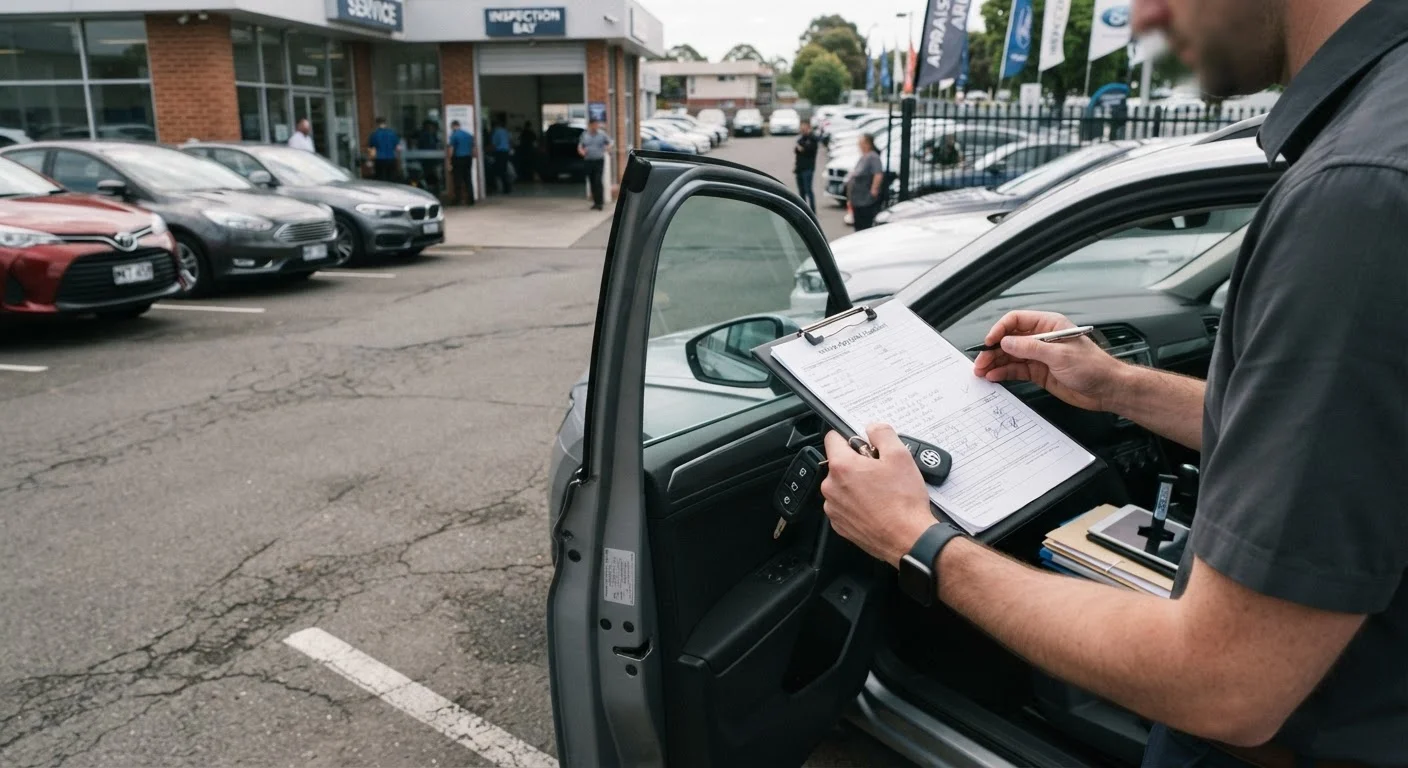
When you bring a vehicle to a dealership for appraisal, the process is more structured than a quick glance and a number. Most dealers follow a consistent sequence: a visual inspection of exterior and interior condition, a review of the vehicle identification number (VIN) to pull history data, a brief mechanical assessment, and then a lookup against wholesale market data - typically from sources that track actual dealer auction results.
That wholesale baseline is important. Dealers aren't valuing your car against what similar vehicles list for in private-party ads; they're anchoring to what comparable cars actually sell for at auctions where dealers buy and sell inventory. Retail guides and consumer-facing valuation tools generally report higher numbers because they reflect what end buyers pay - not what a dealer pays to acquire the car.
The appraisal also accounts for what it will cost to get the vehicle ready for retail sale. Paint correction, new tires, brake work, detailing, and any mechanical repairs are estimated and subtracted from the projected resale price before arriving at the offer to you.
For context on how trade-in dynamics fit into the broader car-buying picture, see our piece on new vs. used car ownership trade-offs.
Online Valuations Are Starting Points, Not Offers
Consumer-facing valuation tools aggregate market data and can give you a useful ballpark, but they cannot inspect your actual vehicle or account for local supply and demand. Use them as a reference range when evaluating real offers - not as a firm expectation of what you'll receive.
How to Use This Knowledge When You Trade In
The most practical step you can take before trading in is to collect more than one offer. Dealers, third-party appraisal services, and direct-purchase programs all use slightly different models, and competitive tension between them can work in your favor. Walking into a dealership with a documented competing offer gives you a factual basis for negotiation rather than a gut feeling.
It's also worth separating the trade-in conversation from the new vehicle purchase. When the two are combined into a single monthly payment discussion, it becomes difficult to evaluate whether you're receiving fair value on either. Negotiate the purchase price of the vehicle you're buying first, then introduce the trade-in as a distinct line item.
If you're weighing whether to trade in at all versus selling privately, consider that private sales often produce more money - but require time, advertising, test-drive coordination, and some risk. Our overview of private seller vs. dealership buying covers related dynamics from the buyer's perspective and may help you think through the full picture.
Finally, preparation matters. Clean the vehicle, gather maintenance records, and know what minor issues exist before the appraiser finds them - because they will. Transparency and documentation tend to support stronger, more consistent offers across the board.
Frequently Asked Questions
Online tools like consumer valuation guides reflect retail or private-party pricing, not the wholesale price a dealer pays. Dealers factor in reconditioning costs, lot time, and profit margin before making an offer, which pulls the number lower than what you might see on a public pricing site.
Yes, significantly. Dealers routinely run vehicle history reports during appraisal. A prior accident - especially one involving structural repair - can reduce an offer by hundreds to several thousand dollars, depending on severity and how the repair was documented.
Private sales typically yield more money, but require more time, effort, and risk on your part. A trade-in is more convenient but usually nets less. The right choice depends on how much your time is worth and how quickly you need to move the vehicle.
Yes. A dealer's first offer is rarely their best. If you have competing offers or documented service records, use them as leverage. Keeping the trade-in negotiation separate from the new vehicle price also helps you evaluate each number clearly. See our <a href="/cars-autos/buying-a-car/negotiating-at-a-dealership-whats-actually-on-the-table">guide to dealership negotiation</a> for more.
Mileage is one of the most heavily weighted factors. Vehicles significantly above average annual mileage (roughly 12,000-15,000 miles per year is a common benchmark) tend to receive lower offers because they have shorter expected service lives before major maintenance costs appear.
Ideally, treat them as two separate deals. Know what your trade-in is worth before negotiating the purchase price of a new vehicle. Bundling them together makes it harder to tell whether you're getting fair value on either transaction.
The content on this site is for informational purposes only and is not a substitute for professional advice. Always consult a qualified professional for guidance specific to your situation.