

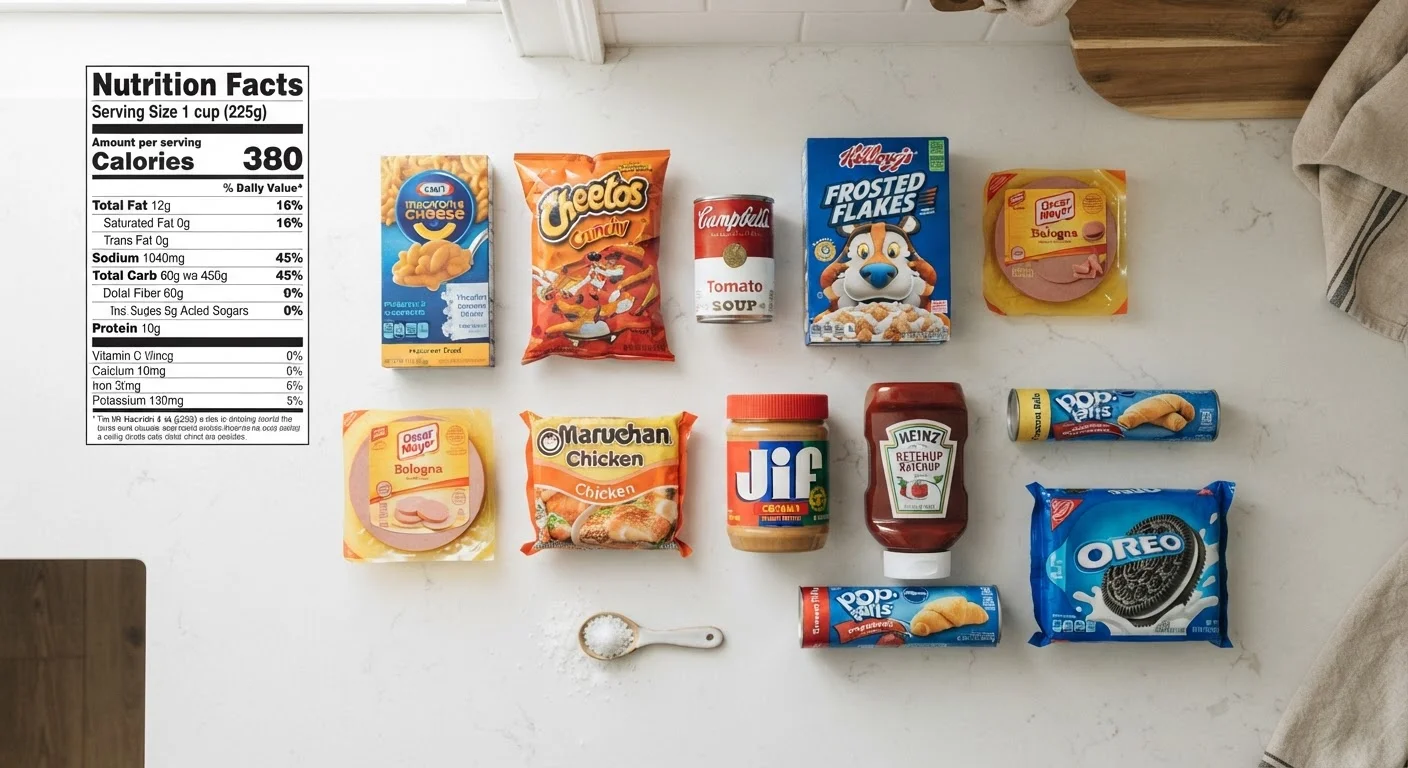
Why Sodium Deserves More Attention
Sodium is an essential mineral — it helps regulate fluid balance, supports nerve function, and plays a role in muscle contraction. But in the American diet, most people get far more of it than the body needs. According to the U.S. Dietary Guidelines, the general recommendation for adults is to stay below 2,300 milligrams of sodium per day. Yet average American intake is estimated to be significantly higher than that.
What makes this particularly tricky is that the bulk of that excess doesn't come from sprinkling salt at the dinner table. Research consistently shows that roughly 70% of the sodium Americans consume comes from processed, packaged, and restaurant foods — often before any salt is ever added at home. That means awareness of where sodium hides is far more useful than simply putting down the salt shaker.
Understanding sodium's role and its sources is a foundation of everyday nutritional literacy — similar to learning how to read a Nutrition Facts label or recognizing which foods contribute to fiber shortfalls. This article walks through the key hiding places for sodium and offers perspective on how to think about your intake practically.
Sodium and Potassium Work Together
Dietary sodium doesn't act in isolation. Potassium, found in foods like bananas, beans, leafy greens, and potatoes, helps counterbalance some of sodium's effects on blood pressure through its role in fluid regulation. Most Americans fall short on potassium as well as exceeding sodium targets — a pattern worth being aware of. For a broader look at how minerals interact, see our plain-language minerals reference.
Common Places Sodium Hides in the American Diet
Bread and baked goods
Bread ranks among the top contributors to sodium intake in the U.S. — not because any single slice is loaded with it, but because most Americans eat multiple servings throughout the day. A single slice of standard sandwich bread can contain 100–200 mg of sodium. Rolls, bagels, English muffins, and wraps follow a similar pattern. The sodium accumulates quickly across breakfast toast, a sandwich at lunch, and a dinner roll.
When comparing breads, checking the Nutrition Facts panel per serving is more informative than relying on front-of-package claims like "low sodium," which have specific regulatory meanings under FDA guidelines.
Bread is one of the top sodium contributors in the American diet — purely through frequency of consumption.
Deli meats and cured proteins
Processed meats — including deli turkey, ham, salami, and sausages — are preserved using salt and curing compounds, which means sodium levels tend to be high even in seemingly lean options. A two-ounce serving of deli turkey can contain 400–600 mg of sodium or more. Bacon, hot dogs, and canned fish also fall into this category.
This doesn't mean these foods must be eliminated, but portion awareness and frequency of consumption matter. Pairing smaller amounts of cured meats with lower-sodium whole foods — fresh vegetables, for example — can help balance the overall meal.
Even lean deli turkey can contain more than 400 mg of sodium in just two ounces.
Canned soups and broths
Canned soups are a well-known sodium source, and for good reason — a single serving of standard canned chicken noodle or tomato soup frequently contains 700–900 mg of sodium, and many cans hold more than one serving. Broths and stocks used in home cooking can contribute several hundred milligrams per cup as well.
Lower-sodium versions of these products exist and use the same FDA-defined labeling terms. Comparing the "per serving" sodium figures on the Nutrition Facts label across a few options is typically the most straightforward way to identify the lower-sodium choice.
A single serving of canned soup can account for nearly half of the daily sodium limit for many adults.
Condiments and sauces
Soy sauce, ketchup, mustard, salad dressings, hot sauce, teriyaki sauce, and many other condiments are surprisingly dense in sodium. Soy sauce alone contains roughly 900 mg per tablespoon — a figure that adds up fast in stir-fries or marinades. Bottled pasta sauces and pizza sauces also tend to carry significant sodium loads.
Because condiments are often applied in small amounts, their contribution is easy to underestimate. Keeping a mental note of which condiments are heaviest in sodium helps inform how freely they're used.
One tablespoon of soy sauce can contain close to 900 mg of sodium — nearly 40% of the general daily limit.
Restaurant and fast food meals
Restaurant meals — whether fast food or sit-down dining — are among the highest-sodium eating occasions for Americans. A single restaurant entrée can easily exceed a full day's worth of sodium. Dishes that appear relatively healthy, such as grilled chicken salads or grain bowls, often include high-sodium dressings, sauces, or seasoned components that push the total significantly higher.
Many chain restaurants are required to disclose calorie counts, and some provide full nutrition information including sodium. When available, this information can inform ordering decisions. The same general awareness applies to takeout and delivery.
A single restaurant entrée can contain more sodium than the entire recommended daily limit.
Cheese and dairy products
Cheese is a notable contributor to sodium intake that often goes overlooked. Processed cheeses — including American cheese slices — tend to be highest, but even natural cheeses like feta, parmesan, and blue cheese contain meaningful amounts of sodium per ounce. Cottage cheese and some flavored yogurts also contribute. Because cheese is often used as an ingredient or topping rather than a main item, its sodium content is easy to overlook.
Cheese contributes significantly to dietary sodium, especially when used frequently as a topping or ingredient.
Breakfast cereals and savory snacks
Many breakfast cereals contain more sodium than their sweet taste might suggest — some standard cereals have 200–300 mg per serving. On the savory side, crackers, chips, pretzels, and popcorn (particularly flavored varieties) are obvious sodium contributors. Even "whole grain" or "multigrain" labeling on snack foods doesn't mean sodium is low. Cross-referencing the Nutrition Facts panel remains the most reliable check — a skill covered in more depth in our guide on reading food labels before you buy.
"Whole grain" labeling on cereals or snacks says nothing about sodium content — always check the label.
A Practical Strategy: Track for One Week
Rather than trying to overhaul everything at once, consider tracking your sodium intake for just one week using your existing eating patterns. Many nutrition tracking apps can estimate sodium from packaged foods automatically. This exercise often reveals two or three high-sodium habits that, once adjusted, account for a large portion of the reduction — without requiring major dietary changes.
Putting It All in Perspective
Managing sodium doesn't require obsessive label-reading at every meal or eliminating entire food groups. A more sustainable approach involves building awareness over time — noticing which staple foods in your regular rotation are quietly high in sodium, then making incremental adjustments. Swapping one high-sodium item per week, for example, adds up meaningfully over months without feeling restrictive.
It's also worth noting that sodium needs vary by individual. People with hypertension, kidney disease, heart failure, or other conditions may benefit from stricter limits, while very active individuals who sweat heavily may need more than the average person. These are conversations best had with a qualified healthcare provider, who can give guidance tailored to your specific health history.
For broader nutritional context, exploring the vitamins and minerals reference guide can help you understand how sodium fits alongside other micronutrients in your diet. And if you're working on improving overall food quality, strategies like adding more vegetables without overhauling your diet can naturally shift your plate toward lower-sodium whole foods.
This article is for general informational and educational purposes only and is not a substitute for personalized medical or nutritional advice. Consult a qualified healthcare professional before making significant changes to your diet, particularly if you have an existing health condition.
The content on this site is for informational purposes only and is not a substitute for professional advice. Always consult a qualified professional for guidance specific to your situation.