

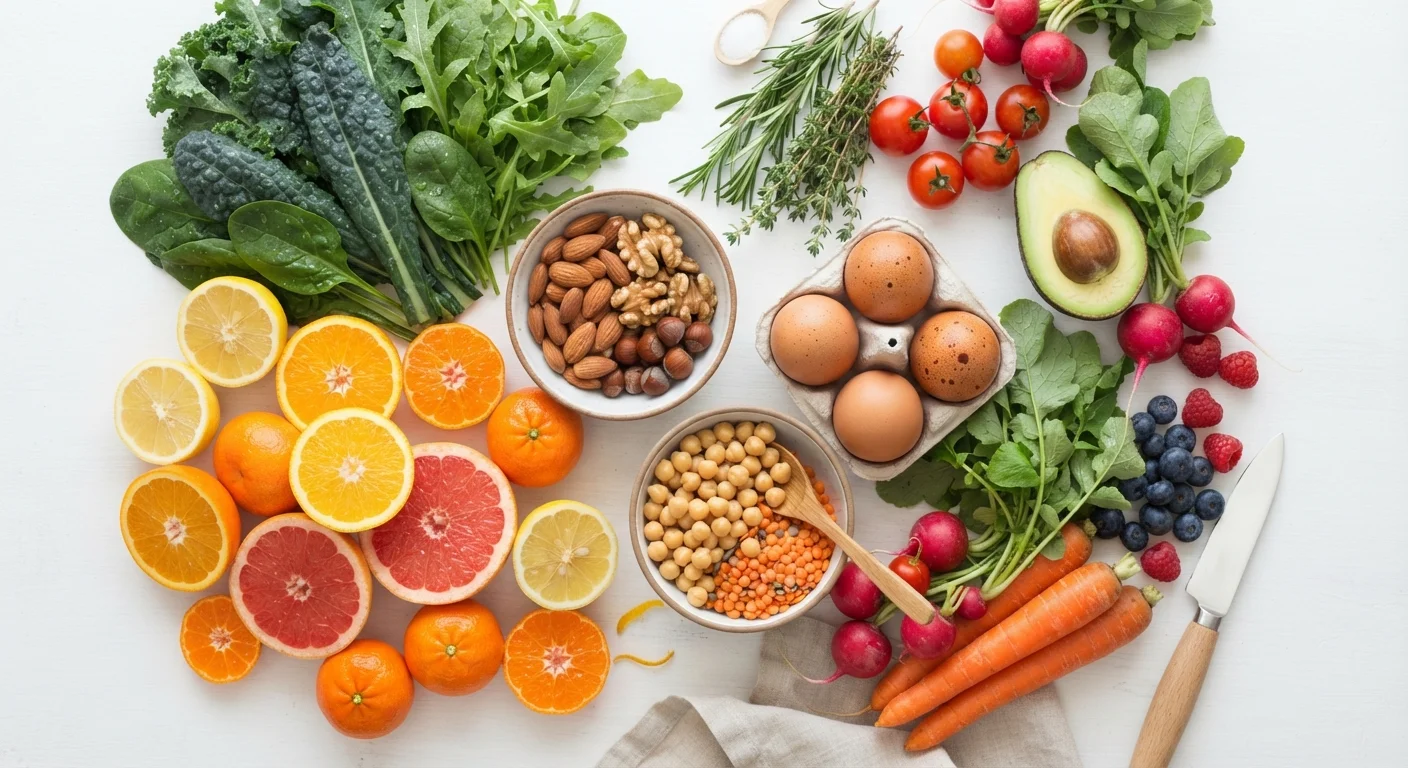
Why Micronutrients Matter
Vitamins and minerals are often called micronutrients because the body needs them in relatively small amounts — yet their roles are enormous. Unlike carbohydrates, protein, and fat (see what macronutrients actually do inside your body), micronutrients do not provide calories directly. Instead, they enable nearly every biological process: building bone, converting food into energy, supporting immune defense, and maintaining healthy vision, nerve function, and blood clotting.
Most healthy adults can meet their needs through a varied, food-first diet. Deficiencies are more common among people with restrictive diets, certain health conditions, or increased physiological demands such as pregnancy. This guide is a general educational reference — not a substitute for advice from a qualified healthcare professional who knows your individual health history.
Fat-Soluble Vitamins: A, D, E, and K
Fat-soluble vitamins are stored in the liver and fatty tissues, which means the body can draw on reserves between meals — but also that excessive supplementation can accumulate to harmful levels.
- Vitamin A — Supports vision (especially in low light), immune function, and cell growth. Found in liver, dairy, eggs, and as beta-carotene in orange and leafy-green vegetables.
- Vitamin D — Critical for calcium absorption and bone health; also plays a role in immune regulation. Synthesized in skin exposed to sunlight; dietary sources include fatty fish, fortified dairy, and egg yolks.
- Vitamin E — An antioxidant that protects cells from oxidative damage. Found in nuts, seeds, plant oils, and leafy greens.
- Vitamin K — Essential for blood clotting and bone metabolism. Vitamin K1 is abundant in dark leafy vegetables; K2 is found in fermented foods and some animal products.
Because these vitamins are stored, people taking high-dose supplements should consult a healthcare provider to avoid toxicity.
Water-Soluble Vitamins: C and the B Complex
Water-soluble vitamins are not stored in significant quantities; the kidneys excrete excess amounts in urine, which lowers — but does not eliminate — the risk of toxicity from overuse.
- Vitamin C — Supports collagen synthesis, wound healing, and immune function; also enhances iron absorption from plant foods. Richly supplied by citrus fruits, bell peppers, strawberries, and broccoli.
- Thiamin (B1) — Converts carbohydrates into usable energy. Found in whole grains, legumes, and pork.
- Riboflavin (B2) — Involved in energy metabolism and cellular growth. Dairy, eggs, lean meats, and almonds are good sources.
- Niacin (B3) — Supports energy metabolism and DNA repair. Found in poultry, fish, peanuts, and fortified grains.
- B6 — Important for protein metabolism and neurotransmitter production. Found in poultry, fish, potatoes, and bananas.
- Folate (B9) — Essential for DNA synthesis and cell division; critically important before and during early pregnancy. Found in dark leafy greens, legumes, and fortified foods.
- Vitamin B12 — Required for nerve function and red blood cell formation. Found almost exclusively in animal products; people following vegan diets typically need a supplement or fortified foods.
Boosting your intake of these vitamins through food is straightforward — see practical strategies for eating more vegetables for low-effort ideas.
Micronutrient
Vitamins and minerals required by the body in small amounts to support normal growth, development, and physiological function. They do not provide calories.
Daily Value (DV)
A reference amount set by the FDA representing how much of a nutrient a typical adult should consume per day, used as the benchmark on U.S. nutrition labels.
Antioxidant
A compound — including vitamins C and E — that neutralizes unstable molecules called free radicals, which can damage cells when they accumulate.
Bioavailability
The proportion of a nutrient that is actually absorbed and used by the body. It varies by food form, preparation method, and individual factors.
Heme iron
A form of iron found in animal foods (meat, poultry, seafood) that is absorbed more efficiently by the body than the non-heme iron found in plant foods.
Fortified food
A food to which nutrients have been added that are not naturally present or are present in lower amounts — for example, vitamin D added to milk or folic acid added to enriched bread.
Key Minerals: Calcium, Iron, Magnesium, Potassium, and Zinc
Minerals are inorganic elements that the body cannot manufacture. The following are among the most commonly discussed in public health contexts.
~40%
U.S. adults with vitamin D insufficiency
Estimates from NHANES data suggest a substantial share of American adults have blood levels of vitamin D below the threshold considered sufficient.
~10%
U.S. women of reproductive age with iron deficiency
According to CDC surveillance data, iron deficiency remains the most common nutrient deficiency among American women of childbearing age.
48%
Americans not meeting magnesium intake recommendations
NHANES-based analyses have consistently found that nearly half of U.S. adults consume less magnesium than recommended dietary allowances suggest.
- Calcium — The most abundant mineral in the body, vital for bone density, muscle contraction, and nerve signaling. Dairy products, fortified plant milks, sardines, and leafy greens such as kale are good sources.
- Iron — Central to oxygen transport in red blood cells. Heme iron (from animal foods) is absorbed more efficiently than non-heme iron (from legumes, fortified grains, spinach). Pairing plant-based iron sources with vitamin C improves absorption.
- Magnesium — Involved in more than 300 enzymatic reactions, including energy production and muscle and nerve function. Found in nuts, seeds, legumes, whole grains, and leafy greens.
- Potassium — Helps regulate blood pressure, fluid balance, and muscle contractions. Richly supplied by bananas, potatoes, beans, and leafy greens.
- Zinc — Supports immune function, wound healing, and taste and smell perception. Found in oysters, red meat, poultry, beans, and fortified cereals.
Mineral content appears on packaged food labels — learning how to read a food label can help you quickly compare sources.
Using This Reference Day to Day
No single food contains every micronutrient your body needs, which is why dietary variety is the cornerstone of nutrition guidance from organizations such as the USDA and the NIH. A practical approach:
- Fill half your plate with fruits and vegetables at most meals.
- Choose whole grains over refined grains where feasible.
- Include a variety of protein sources — plant and animal — across the week. For guidance on protein specifically, see protein basics for adults who don't track macros.
- Use nutrition labels to spot gaps and compare products — the nutrition label decoded walks through every line of the FDA facts panel.
Supplements can help close genuine gaps — particularly for B12, vitamin D, folate during pregnancy, and iron in people with documented deficiency — but they are not a replacement for a varied diet. Always discuss supplementation with a licensed healthcare provider before starting, especially if you take medications or have a chronic health condition.
This article is for general informational and educational purposes only and does not constitute medical or dietary advice. Consult a qualified healthcare professional for guidance specific to your health needs.
The content on this site is for informational purposes only and is not a substitute for professional advice. Always consult a qualified professional for guidance specific to your situation.