

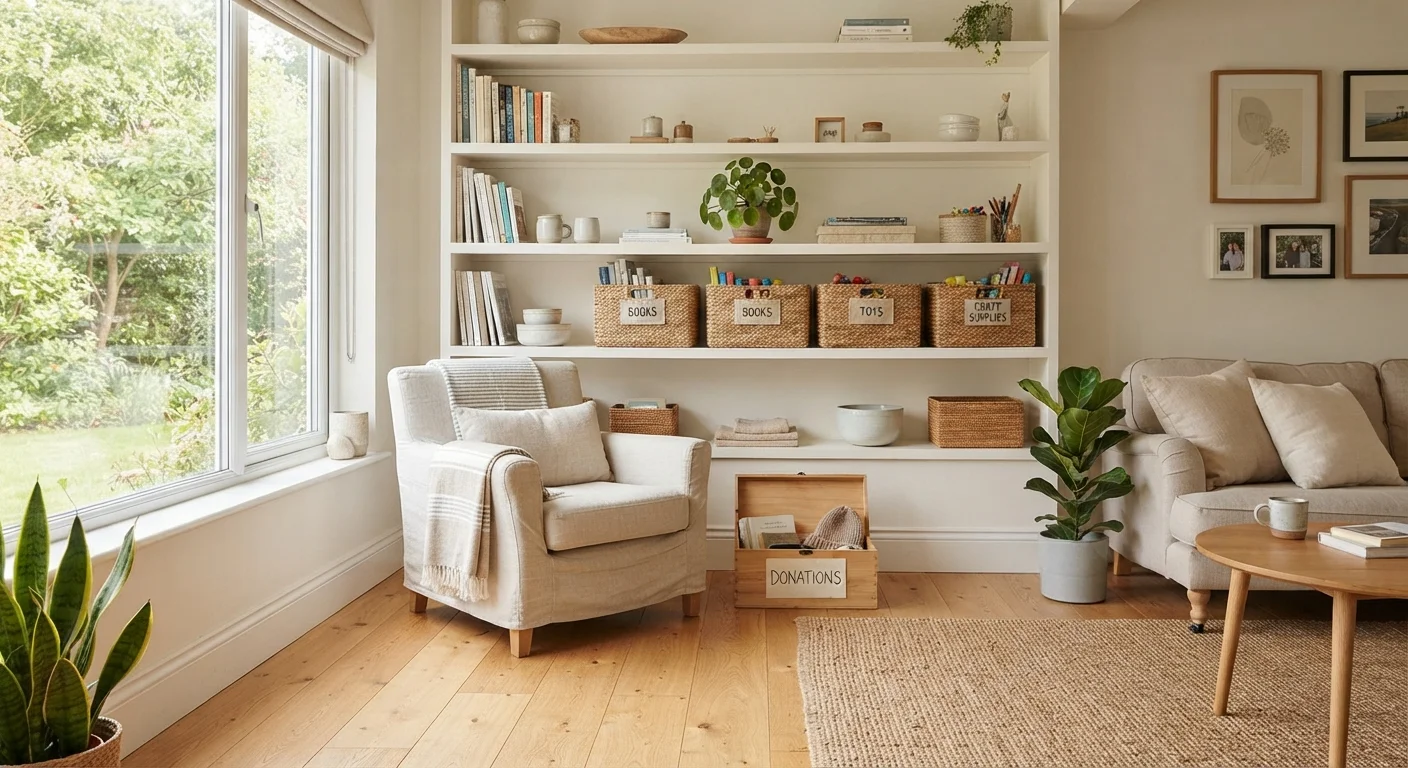
Why One-Time Purges Don't Stick
The idea of a single, dramatic whole-house clear-out is appealing — but for most households, it doesn't produce lasting results. Clutter returns because the habits and decisions that created it haven't changed. Items come in continuously; without a system for managing what stays and what goes, surfaces fill back up within weeks.
A sustainable approach treats decluttering as an ongoing, low-effort practice rather than an event. Small, consistent sessions are easier to fit into real life, cause less emotional fatigue, and gradually shift how your household handles belongings over time. This guide walks through that repeatable process — one that works even when time and energy are limited.
If you're also thinking about the financial side of managing your home more intentionally, the budget-friendly organizing strategies article is a practical companion to what you'll find here.
Large trash bags
Used to collect items for discard or donation during each sorting session.
Cardboard boxes or bins
Temporarily hold 'keep' items while you decide on their permanent home in the room.
Sticky labels or masking tape
Label boxes clearly (Keep, Donate, Discard) to maintain sorting discipline during a session.
A notebook or notes app
Record items you notice are missing or need replacing so you don't buy duplicates of things you already own.
A timer
Keeps sessions to a defined length, reducing fatigue and decision overload.
What You'll Need Before You Start
What you will need
You don't need specialized products or a full weekend free. The most important thing you can bring to a decluttering session is a clear decision-making framework — which the steps below provide.
Avoid Buying Storage Before Sorting
Purchasing bins, baskets, or shelving units before you know what you're keeping is one of the most common decluttering mistakes. You may end up organizing things that should have been discarded, and spending money you don't need to spend. Sort first, measure what remains, then decide whether storage products are actually necessary.
The Step-by-Step System
Set a Timer to Reduce Decision Fatigue
Limit each decluttering session to 20–30 minutes. Short, focused blocks keep energy high and prevent the paralysis that comes from open-ended sorting. You can always do another session tomorrow — consistency over marathon effort is what builds lasting results.
Choose One Zone — Not the Whole House
Pick a single, manageable area to start: a kitchen drawer, a bathroom cabinet, one closet shelf. Resist the urge to tackle multiple rooms at once. A contained zone gives you a visible win quickly and builds momentum without overwhelming your schedule or energy.
If your home feels generally disorganized, start with the space that causes the most daily friction — the area you avoid opening or the one that slows down your morning routine.
Empty the Space Completely
Remove every item from the chosen zone and place them on a flat surface — a table, bed, or floor. This gives you a clear view of what you actually own and prevents the common habit of rearranging clutter rather than addressing it.
Seeing everything at once also surfaces duplicates you didn't know you had: three vegetable peelers, six half-empty sunscreen bottles, chargers for devices you no longer own.
Sort Into Three Categories
Work through each item and place it into one of three labeled groups:
- Keep: Used regularly, in good condition, and has a clear home.
- Donate: Functional but no longer needed by your household.
- Discard: Broken, expired, or genuinely unusable.
If you hesitate on an item, ask: Have I used this in the past year? Would I replace it if it were gone? If both answers are no, it's likely a donate or discard candidate. For clothing decisions in particular, the wardrobe audit framework offers a useful question checklist.
Return Only What Belongs — In a Better Arrangement
Before putting 'keep' items back, wipe down the space. Then return items with intention: group similar things together, place frequently used items at eye level or within easy reach, and push rarely used items to the back or higher shelves.
This is also the moment to notice whether your existing storage is actually working. Most homes have untapped storage potential — the guide to storage space you already have is worth reading before you consider buying anything new.
Remove Donation and Discard Items Immediately
Bag discard items for trash and move donation bags to your car or front door. Don't let them sit in a spare bedroom or garage — that's where good intentions stall out. Schedule a drop-off within the week.
For large volumes of donations, many local charities and thrift organizations offer scheduled home pickups, which removes the need to transport items yourself.
Schedule the Next Session Before You Finish This One
Sustainable decluttering isn't a single event — it's a rhythm. Before you put away your supplies, pick the next zone and put a session on your calendar. Even a 20-minute slot once a week moves through an entire home in a matter of months without the pressure of a weekend-long overhaul.
Pair your decluttering rhythm with a broader home maintenance approach — the cleaning schedule comparison can help you decide how decluttering fits alongside your other household routines.
Don't Skip the Donation Step
Items earmarked for donation have a way of drifting back into cabinets and closets. Schedule a specific drop-off day within one week of sorting, and keep donation bags near your exit so they leave the house promptly. Items that linger in the home often get kept by default, not by choice.
Building the Habit Over Time
Once you've worked through a few zones, the process becomes faster and more intuitive. You'll develop a clearer sense of what your household actually uses, which makes future sorting decisions quicker. You'll also find it easier to avoid accumulating new clutter — because you've experienced firsthand how much effort it takes to process.
Consider pairing your decluttering practice with a household inventory — a simple record of what you own across key categories. The household inventory guide outlines a straightforward method that works alongside an ongoing decluttering system. For households starting to think more broadly about home management, the full picture for first-time homeowners offers a wider framework.
The goal isn't a perfectly minimalist home — it's a home where things have clear places, decisions are easier, and maintenance doesn't require a heroic effort.
The content on this site is for informational purposes only and is not a substitute for professional advice. Always consult a qualified professional for guidance specific to your situation.