

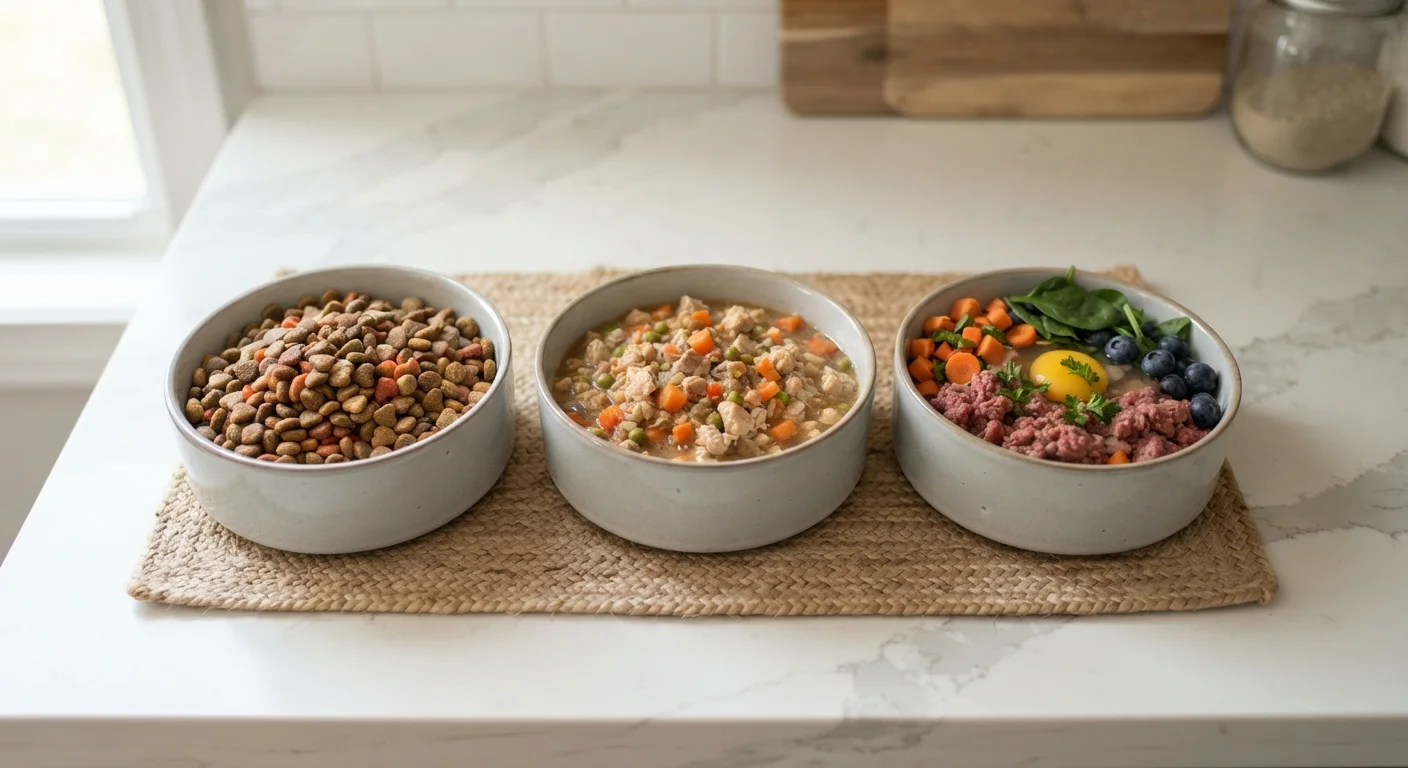
Our Verdict
Dry food remains the most practical and widely researched option for most healthy pets, but wet food offers meaningful benefits for hydration and palatability. Raw diets carry the highest safety burden and require close veterinary oversight. The right choice depends on your individual pet's health profile, your household circumstances, and guidance from a licensed veterinarian.
| Best for | Recommended |
|---|---|
| Pet owners prioritizing convenience and dental support | Dry Food |
| Cats with urinary issues or pets needing extra hydration | Wet Food |
| Highly motivated owners with veterinary guidance and strict food-handling protocols | Raw Diet (with caution) |
| Pets with complex health conditions requiring tailored nutrition | Veterinarian-prescribed therapeutic diet |
How Vets Frame the Diet Question
When pet owners ask their vet which food is best, most veterinarians resist giving a single universal answer — and for good reason. A healthy two-year-old Labrador has different nutritional needs than a senior cat with kidney disease. The goal, from a clinical perspective, is a diet that is complete and balanced — meaning it meets established nutritional standards for the specific life stage and species.
In the United States, the Association of American Feed Control Officials (AAFCO) sets nutrient profiles that pet food manufacturers use as benchmarks. Foods that carry an AAFCO nutritional adequacy statement have either been formulated to meet those profiles or have passed feeding trials. This label is one of the first things vets look for when evaluating a food. For a deeper look at how to read those labels, see what's actually in your pet's food.
With that baseline established, here is how veterinary professionals generally think about each major diet category.
Dry Food: Practical and Well-Studied
Dry kibble is the most commonly fed pet food in American households, and its popularity reflects real practical advantages. It is calorie-dense, shelf-stable, easy to store, and typically less expensive per serving than wet or raw options. Many formulations also carry a long track record of nutritional research behind them.
From a dental standpoint, some dry foods may offer mild mechanical cleaning through chewing, though veterinary dentists note this effect is often overstated — it does not replace professional dental cleanings or tooth brushing.
The main limitation of dry food is its low moisture content, typically around 10%. For cats especially — whose ancestral diet was high in moisture from prey — this can contribute to inadequate daily water intake if they are not drinking enough independently. Owners feeding exclusively dry food should monitor their pet's hydration and provide fresh water at all times.
Transitioning Between Diets Takes Time
When switching your pet's food — regardless of the type — do so gradually over 7 to 10 days by mixing increasing amounts of the new food with the old. Abrupt changes are a common cause of vomiting and diarrhea in dogs and cats. If your pet shows persistent digestive upset during a transition, contact your veterinarian before continuing.
Portion control matters regardless of food type. Overfeeding dry kibble is one of the most common drivers of pet obesity. See why pets gain weight for context on the long-term health consequences.
Wet Food: Hydration and Palatability Benefits
Canned or pouch-based wet food typically contains 70–80% moisture, making it a meaningful source of dietary water. This is particularly relevant for cats with lower urinary tract disease, chronic kidney disease, or those who simply tend to drink little on their own. Many vets recommend wet food — or a wet-dry combination — for cats with these concerns.
Wet food is also often more palatable, which matters for picky eaters, senior pets with diminished senses of smell, or animals recovering from illness. The texture can be easier to eat for pets with dental pain or missing teeth.
On the practical side, wet food costs more per calorie, requires refrigeration after opening, and spoils faster than dry. Some owners find a mixed feeding approach — dry food as the base with wet food as a complement — balances cost, convenience, and hydration benefits effectively. Pairing feeding strategy with awareness of feeding habits that quietly harm pets can help avoid common mistakes.
| Dry Food | Wet Food | Raw Diet | |
|---|---|---|---|
| Moisture content | ~10% | 70–80% | Varies (often 60–70%) |
| Typical cost per serving | Low to moderate | Moderate to high | High |
| Shelf life / convenience | Long shelf life, easy to store | Refrigerate after opening | Requires careful handling |
| Nutritional completeness | Well-established if AAFCO-labeled | Well-established if AAFCO-labeled | Variable; risk of imbalance |
| Food safety risk | Low | Low | Higher (pathogen exposure) |
| Vet recommendation frequency | Widely recommended | Frequently recommended | Generally approached with caution |
Raw Diets: What the Evidence and Vets Say
Raw diets — which may include uncooked meat, bones, organs, and sometimes fruits or vegetables — have grown in popularity among pet owners seeking a more "natural" feeding approach. Proponents argue that raw feeding more closely mirrors what animals ate before domestication. However, the scientific and veterinary consensus is more cautious.
The primary concern is food safety. Raw meat can harbor pathogens including Salmonella, Listeria, and E. coli. These bacteria can sicken pets and are also shed in feces, posing a transmission risk to human household members — particularly children, elderly individuals, and immunocompromised people. The American Veterinary Medical Association (AVMA) and the American Animal Hospital Association (AAHA) both discourage raw protein diets for this reason.
Nutritional imbalance is a second concern. Home-prepared raw diets are frequently deficient in critical nutrients unless carefully formulated with veterinary nutritionist input. Commercially prepared raw diets vary widely in quality and testing standards.
Raw Diets Carry Real Household Safety Risks
Pathogens found in raw meat — including Salmonella and Listeria — can be transmitted to humans through contact with pet food, bowls, and pet feces. Households with young children, pregnant individuals, elderly family members, or immunocompromised people face elevated risk. The AVMA and AAHA both advise against raw protein diets for this reason, and any owner considering raw feeding should discuss the full risk picture with their veterinarian first.
If a pet owner is committed to raw feeding, veterinary nutritionists generally recommend working with a board-certified veterinary nutritionist to design a balanced diet and maintaining strict kitchen hygiene protocols to reduce pathogen exposure.
Choosing the Right Approach for Your Pet
The most important factor in any feeding decision is your individual pet's health status. Life stage (puppy or kitten, adult, senior), body condition, medical history, and breed-specific considerations all influence what a vet will recommend. A pet that is overweight may benefit from a different caloric density than one that is underweight or highly active. For more on how body condition connects to long-term health, learn why pet weight gain matters.
59%
U.S. pets classified as overweight or obese
According to the Association for Pet Obesity Prevention, roughly 59% of dogs and cats in the U.S. are overweight or obese, with diet as a primary contributing factor.
70–80%
Moisture content in wet pet food
Wet food's high moisture content can be clinically meaningful for cats prone to urinary or kidney issues, according to veterinary nutrition literature.
Beyond diet type, consistency and appropriate portioning are among the most impactful factors in a pet's nutritional health. Frequent diet switching without transition periods can cause digestive upset, and common feeding habits like free-feeding or excessive treats can undermine even the best food choice.
Bring your questions about diet to your veterinarian at routine wellness visits. They can assess your pet's body condition score, review current food labels, and help you decide if a change is warranted — or if what you're doing is already working well.
This article provides general pet nutrition information and is not a substitute for personalized veterinary advice. Always consult a licensed veterinarian before making significant changes to your pet's diet.
The content on this site is for informational purposes only and is not a substitute for professional advice. Always consult a qualified professional for guidance specific to your situation.