

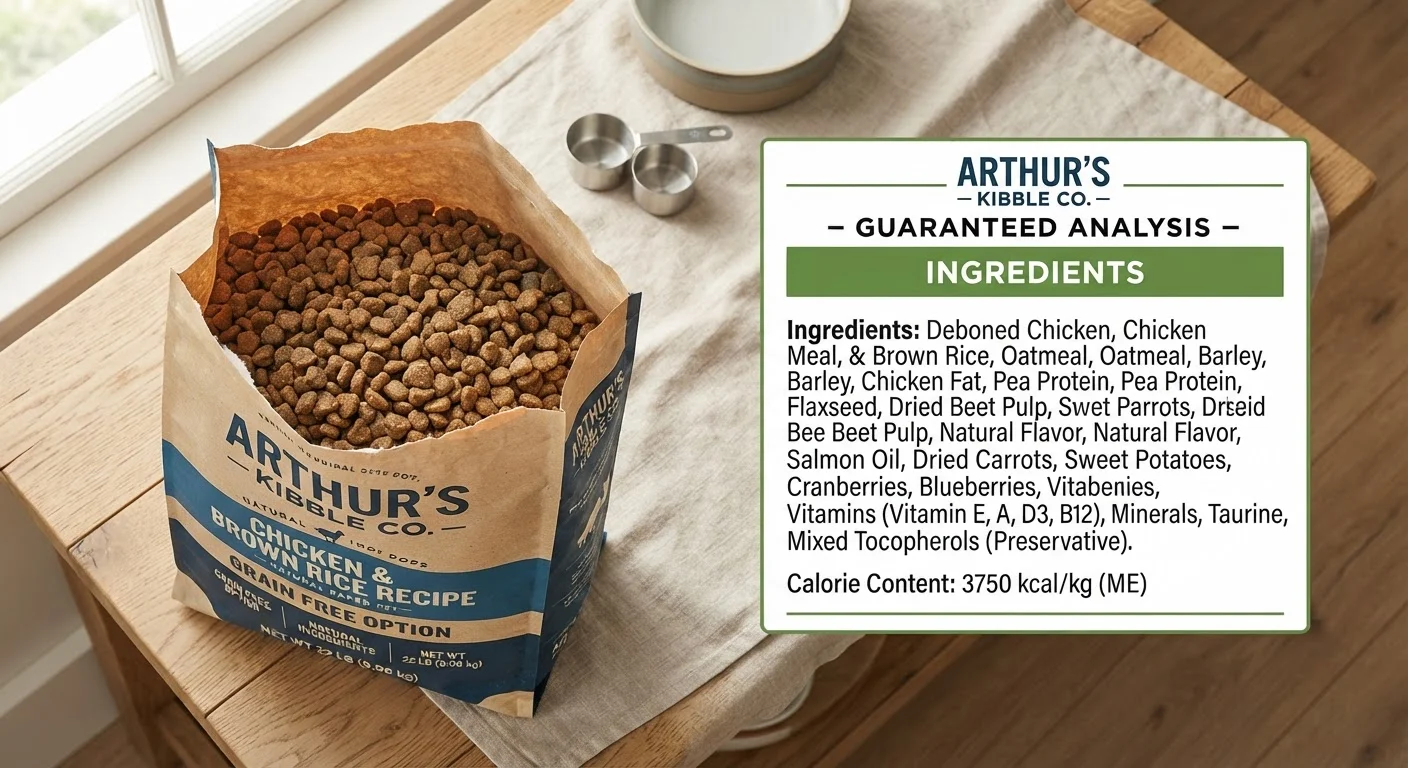
The Ingredient List: What It Actually Tells You
Every commercial pet food sold in the U.S. must list ingredients in descending order by weight — before processing. That detail matters more than most pet owners realize. Raw chicken, for example, is roughly 70% water. Once cooked and dried during manufacturing, it contributes far less protein by weight than its first-place ranking suggests. This is why a food labeled "chicken recipe" can still be predominantly grain-based by the time it reaches your pet's bowl.
Look for named protein sources — "salmon," "lamb," "deboned turkey" — rather than generic terms like "animal protein" or "meat meal" without a species identified. Named sources are regulated and traceable. Generic terms are legal but tell you less about what's actually in the bag.
By-products are another commonly misunderstood entry. AAFCO defines and regulates them; they typically include organ meats such as liver and kidney, which are nutritionally rich. "Chicken by-products" is a more specific and accountable term than "poultry by-products." Neither is inherently harmful, but specificity is a sign of transparency.
Scan for Specificity in Ingredient Names
When comparing pet foods, favor labels that name specific protein sources ('deboned salmon,' 'lamb meal') over vague terms ('animal protein,' 'meat by-products'). Specificity signals traceability and gives you and your vet more to work with when assessing ingredient quality. It's a quick filter that takes seconds at the shelf.
Preservatives and additives are also worth scanning. Natural preservatives like mixed tocopherols (vitamin E) and rosemary extract are common, as are synthetic options like BHA and BHT. Current regulatory consensus holds that these are safe at approved levels, but if you have concerns, your veterinarian can help you interpret the ingredient list in the context of your pet's overall diet. See our vet-informed breakdown of diet types for broader context on how food format affects nutrition.
The Guaranteed Analysis: Numbers With Limits
The guaranteed analysis panel lists four core values: minimum crude protein, minimum crude fat, maximum crude fiber, and maximum crude moisture. These are legal guarantees — a manufacturer must meet or exceed the minimums and stay at or below the maximums — but they are not precise nutritional measurements.
One practical complication: wet and dry foods can't be directly compared using as-fed percentages because moisture content skews the numbers. A wet food showing 8% protein and a dry kibble showing 28% protein may actually deliver similar protein on a dry-matter basis. To calculate, subtract moisture percentage from 100, then divide the nutrient percentage by that number. It sounds technical, but it's the only way to make meaningful comparisons across formats.
~70%
Moisture content of raw chicken before processing
AAFCO ingredient listing rules require pre-processing weights, which means high-moisture ingredients like whole meats rank higher than their post-processing contribution reflects.
2
Ways AAFCO validates nutritional adequacy claims
Pet food manufacturers must validate 'complete and balanced' claims either by formulating to AAFCO nutrient profiles or by conducting regulated feeding trials — both appear on the label.
The guaranteed analysis won't tell you about amino acid profiles, vitamin levels, or the bioavailability of nutrients — how well your pet can actually absorb and use what's listed. That's where the AAFCO nutritional adequacy statement becomes critical.
The Nutritional Adequacy Statement and Feeding Guidelines
Somewhere on the label — often in small print — you'll find the nutritional adequacy statement. This single line tells you whether the food is "complete and balanced" for a specific life stage, and how that claim was established. There are two pathways: formulation (the recipe meets AAFCO's published nutrient profiles) or feeding trials (actual animals were fed the food and assessed). A feeding trial is generally considered the more rigorous standard.
Life stages matter. A food labeled "for all life stages" must meet the most demanding requirements, which are set for growth and reproduction. An "adult maintenance" food may not provide enough calcium or phosphorus for a growing puppy. Match the label's life stage to your pet's actual life stage — and if your pet has a health condition, ask your vet before switching foods.
Feeding guidelines on the label are population averages, not tailored prescriptions. They're a useful starting point, but your pet's actual needs depend on breed, age, activity level, and whether they're spayed or neutered. Treat the label amount as an estimate, monitor body condition regularly, and adjust. For habits that can quietly derail even a well-chosen diet, see our article on feeding habits that quietly harm pets.
AAFCO Standards Vary by State Enforcement
AAFCO publishes the model regulations that define ingredient terms, label requirements, and nutritional adequacy standards — but enforcement is carried out at the state level. Most states adopt AAFCO guidelines closely, but minor variations can exist. The FDA also oversees pet food safety at the federal level, particularly around contaminants and labeling accuracy.
This article is for general informational purposes only and is not veterinary advice. Always consult a licensed veterinarian for guidance specific to your pet's health and nutritional needs.
Frequently Asked Questions
It means the food has been formulated or tested to meet AAFCO's established nutrient profiles for a specific life stage, such as adult maintenance or growth. A food without this statement should only be used as a treat or supplement, not as a primary diet. Always check the nutritional adequacy statement for the life stage it covers.
Not necessarily. By-products are regulated by AAFCO and typically include organ meats, which can be nutritionally dense. What matters more is the named source species (e.g., 'chicken by-products' vs. generic 'poultry by-products') and whether the overall diet is nutritionally complete. Your vet can help you evaluate specific foods.
Ingredients are listed by pre-processing weight, which includes moisture. A named meat like 'chicken' may rank first because raw chicken is roughly 70% water; once cooked and dried, its contribution is smaller. Grain-free does not automatically mean higher protein — check the guaranteed analysis for actual nutrient percentages.
Label feeding guidelines are population averages and a reasonable starting point, but your pet's ideal portion depends on age, weight, activity level, and health status. Monitor your pet's body condition over several weeks and adjust accordingly. Your veterinarian is the best resource for personalized feeding recommendations.
It's a regulated panel listing minimum percentages of crude protein and crude fat, and maximum percentages of crude fiber and moisture. These are legal guarantees, not precise nutritional snapshots — actual nutrient content can differ. Use it to compare foods on a dry-matter basis for a more accurate picture.
Price is not a reliable indicator of nutritional quality. What matters is whether the food carries an AAFCO nutritional adequacy statement for the appropriate life stage and whether the ingredient list reflects identifiable, named protein sources. A veterinary nutritionist can help you assess specific formulas.
The content on this site is for informational purposes only and is not a substitute for professional advice. Always consult a qualified professional for guidance specific to your situation.