

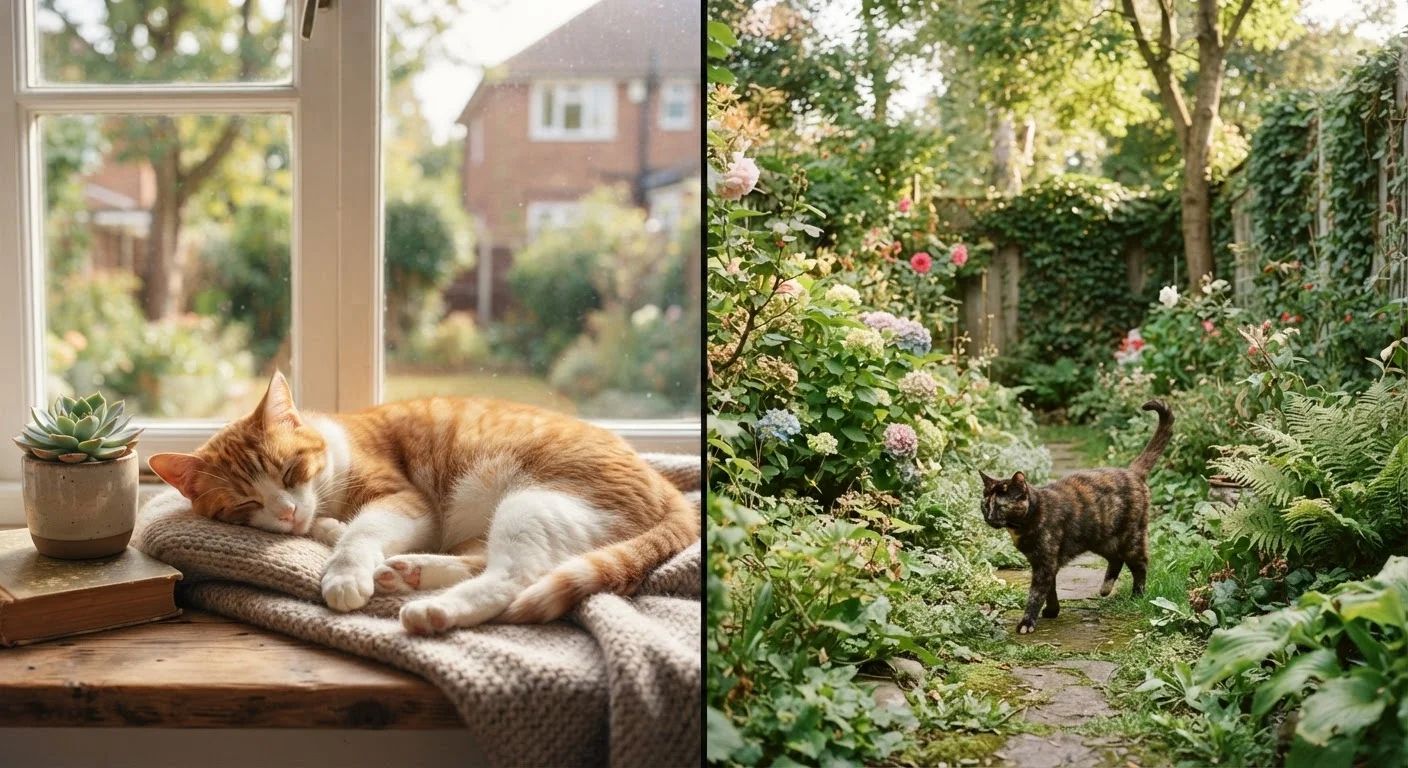
Option A
Indoor Cats
The protected, controlled environment choice.
Best for: Owners in urban or high-traffic areas who prioritize safety and predictable health outcomes for their cats.
Option B
Outdoor Cats
The stimulating, freedom-oriented lifestyle.
Best for: Owners in rural or low-traffic areas who want their cats to express natural hunting and exploring instincts.
The Core Tradeoff: Safety vs. Stimulation
The indoor vs. outdoor debate isn't about which lifestyle is inherently better — it's about which tradeoffs you and your cat can live with. Both options involve real compromises, and understanding them clearly is the first step toward making a confident decision.
Indoor cats are shielded from traffic, predators, infectious diseases spread by other animals, and environmental toxins like antifreeze or pesticides. Veterinary sources generally note that indoor cats tend to live significantly longer than their outdoor counterparts, though exact figures vary by study and population. The protection is real, but it comes at a cost: without deliberate enrichment, indoor cats can become sedentary, develop behavioral problems, or suffer from stress-related conditions.
Outdoor cats, by contrast, get continuous physical exercise, sensory stimulation, and opportunities to act on natural instincts like hunting and territory exploration. But they also face a long list of hazards — from car strikes and dog attacks to feline leukemia virus (FeLV), feline immunodeficiency virus (FIV), and intestinal parasites picked up through prey or contaminated soil.
| Criterion | Indoor Cats | Outdoor Cats |
|---|---|---|
| Average lifespan | Generally longer (10–15+ years) | Generally shorter (varies widely) |
| Injury risk | Low | Higher (traffic, animals, falls) |
| Disease exposure | Lower (FeLV, FIV, parasites) | Higher; more vaccines recommended |
| Physical stimulation | Requires intentional enrichment | Naturally high through roaming |
| Mental stimulation | Lower without intervention | High via hunting, territory |
| Obesity risk | Higher without active play | Lower due to activity levels |
| Owner control | High | Limited once outside |
Health Considerations for Each Lifestyle
Your cat's health profile changes meaningfully depending on where they spend most of their time. For indoor cats, obesity and boredom-related behaviors — like over-grooming, aggression, or destructive scratching — are among the most common concerns vets see. Regular play sessions, climbing opportunities, and mental enrichment help counter these tendencies. Understanding your cat's signals matters here too; reading your pet's body language can help you spot early signs of stress or frustration before they escalate.
Diet plays an equally important role regardless of lifestyle. Dry food, wet food, and raw diet considerations differ in ways that can matter more for indoor cats (who may need moisture-rich diets to offset low activity levels) than for outdoor cats burning more calories. Consult your veterinarian for guidance tailored to your cat's individual needs.
Outdoor cats require more robust vaccination schedules — rabies, FeLV, and FVRCP vaccines are especially relevant. They also need routine parasite prevention for fleas, ticks, and intestinal worms. Indoor cats aren't fully exempt from these needs, but their exposure risk is considerably lower.
10–15+ yrs
Typical indoor cat lifespan range
Veterinary sources commonly cite indoor cats outliving outdoor cats, though individual health and genetics vary widely.
~50%
U.S. cats kept exclusively indoors
The American Pet Products Association estimates roughly half of U.S. cat owners keep their cats indoors only, though survey data varies.
1–4 billion
Birds killed by cats annually (U.S.)
Estimates from wildlife researchers suggest free-roaming cats are a leading human-linked cause of bird mortality in the United States.
The Middle Ground: Supervised and Enclosed Outdoor Access
Many owners find that a hybrid approach gives their cats meaningful outdoor exposure without the full risk profile of free roaming. Common options include:
- Catios: Enclosed outdoor structures attached to a window or door, allowing fresh air and visual stimulation without unsupervised roaming.
- Leash and harness walks: Some cats, especially those introduced to harnesses early, adapt well to supervised walks. Patience and gradual introduction are key.
- Fenced garden systems: Roller-top fencing or net enclosures can make a backyard relatively cat-secure, though no outdoor setup eliminates all risk.
If your home's indoor air quality is a concern — something many households overlook — it's worth noting that indoor air quality affects pets and humans alike. Cats that spend most of their time indoors breathe the same air you do, making good ventilation and low-toxin household products relevant to their wellbeing.
This article provides general information for educational purposes and is not a substitute for professional veterinary advice. Always consult a licensed veterinarian for guidance specific to your cat's health, behavior, and environment.
The content on this site is for informational purposes only and is not a substitute for professional advice. Always consult a qualified professional for guidance specific to your situation.