

Our Verdict
Bundling policies can be a practical, cost-effective choice for consumers who prioritize simplicity and have straightforward coverage needs. However, it is not automatically the most comprehensive or best-value option — coverage limits and exclusions within a bundle deserve careful review before assuming the discount makes it worth it.
Best suited for homeowners or renters who already plan to carry both home and auto coverage and want to reduce administrative complexity without significant specialized coverage needs.
What Policy Bundling Actually Means
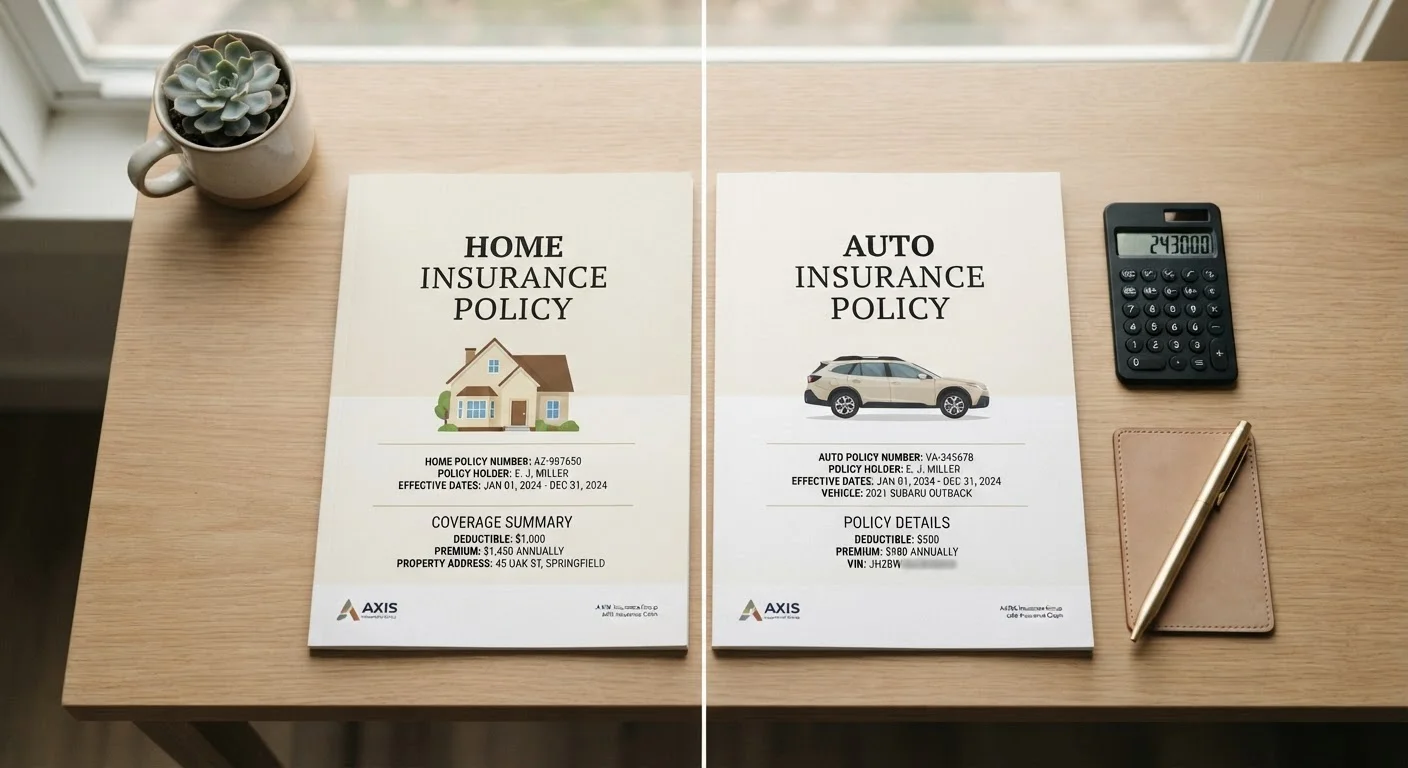
Policy bundling — sometimes called a multi-policy discount — refers to purchasing two or more types of insurance from the same carrier. The most common pairing is homeowners and auto insurance, though some insurers extend bundles to include renters, life, umbrella, or boat policies.
Bundling does not mean policies are merged into one document. Each policy remains a separate contract with its own coverage terms, deductibles, exclusions, and limits. What changes is the pricing relationship between them and the administrative convenience of a single insurer relationship. If you're new to how coverage categories are structured, the Coverage Types hub provides a useful overview before digging into bundle specifics.
It's also worth noting that "bundling" is a marketing term, not a regulatory one. What constitutes a bundle, and what discount applies, varies by insurer and state. Always read the actual policy documents — not just the summary sheet — to understand exactly what each component covers.
Advantages of Bundling Your Policies
There are genuine benefits to consolidating coverage under one insurer. The most straightforward is a reduction in total premium cost, though the size of that discount varies considerably. Beyond price, bundling can reduce administrative complexity in meaningful ways.
Premium discount on combined policies
Most insurers offer a reduced total premium when you carry multiple policies with them, typically ranging from 5% to 25% — though the actual amount depends on the insurer, state, and coverage types involved.
Single insurer simplifies billing and service
Managing one relationship — one login, one customer service line, one renewal period — reduces the administrative overhead of maintaining coverage across multiple companies.
Streamlined claims when multiple policies apply
In situations where both your auto and home policies might be involved (such as a vehicle damaging your property), having a single insurer can reduce coordination complexity during the claims process.
Loyalty benefits may grow over time
Some insurers extend additional perks to long-term multi-policy customers, such as vanishing deductibles or priority claims handling, though these programs vary widely and are not guaranteed.
5–25%
Typical multi-policy discount range
According to the Insurance Information Institute, multi-policy discounts commonly fall in this range, but actual savings vary significantly by insurer and state.
~70%
Homeowners who also bundle auto
Industry surveys have consistently found that the majority of homeowners insurance customers also carry their auto policy with the same insurer, making this the most common bundle type.
That said, a lower combined premium doesn't automatically mean better overall value. Lower monthly costs can obscure higher deductibles or thinner coverage — the same caution applies when evaluating bundle pricing.
Where Bundling Can Fall Short
The limitations of bundling often go unnoticed until a claim arises. One common issue: insurers who offer strong discounts on bundles may not offer the strongest standalone coverage within each policy type. A carrier that excels at auto insurance may have more restricted homeowners coverage, and packaging them together doesn't fix that gap.
Discount may not offset coverage tradeoffs
A carrier offering a compelling bundle discount may provide narrower coverage limits within each individual policy than competitors who specialize in that coverage type. The savings look good on paper but may not hold up at claim time.
Harder to comparison-shop individual policies
Once bundled, consumers tend to renew everything together and rarely re-evaluate each policy separately at renewal. This can lead to staying with a carrier even when better standalone options exist.
If you switch one policy, you may lose the discount
If your auto insurer raises rates significantly and you want to move that policy elsewhere, losing the multi-policy discount on your homeowners coverage could offset any savings from switching.
Not all coverage types bundle equally well
Specialty coverage — like flood insurance, high-value jewelry riders, or commercial auto — may not be available through your bundle carrier, forcing you to carry separate policies anyway and fragmenting your coverage regardless.
Exclusions are not consolidated or simplified
Bundling doesn't reduce the number of policy exclusions you need to understand. Each policy in the bundle still carries its own exclusions, and consumers sometimes assume bundling means more complete protection than it actually provides.
Coverage gaps in standard policies are already a widely underappreciated risk — see gaps that often go unnoticed in standard insurance coverage for a broader look at what standard policies frequently leave out. Bundling can make those gaps harder to spot because consumers assume the package is complete.
If you've ever been caught off guard by out-of-pocket costs after a claim, that experience often traces back to assumptions made at purchase — underestimating out-of-pocket costs is one of the most common insurance mistakes.
How to Evaluate Whether a Bundle Is Right for You
Start by pricing each policy separately before agreeing to a bundle. Get standalone quotes for your auto and homeowners (or renters) coverage from different carriers, then compare those figures against the bundle quote. The difference in total cost — not just the advertised discount percentage — tells you whether the bundle is actually saving money.
Next, compare coverage limits and deductibles side by side. Bundled auto coverage may carry different liability limits than what you'd get from a dedicated auto insurer. If you need specialized coverage — say, scheduled personal property on a homeowners policy, or gap coverage on a financed vehicle — check whether those options are available within the bundle or require an additional rider. Our article on riders and endorsements explains how supplemental coverage works when a base policy doesn't go far enough.
Bundling and Auto Coverage Nuances
If you're evaluating a home-and-auto bundle, it helps to be clear on what your auto policy actually includes. Comprehensive and collision coverage are two components that frequently cause confusion when comparing policies side by side. The article Comprehensive vs. Collision Coverage walks through how each works and when each applies, which is useful context when assessing whether bundled auto coverage meets your needs.
Finally, consider service history and claims handling. Paying slightly more for a carrier with strong claims support can matter far more than a 10% bundle discount when you actually need to use your coverage. This is general educational guidance — for decisions specific to your situation, consulting a licensed insurance agent is always worthwhile.
This article is for informational purposes only and does not constitute personalized insurance, financial, or legal advice. Coverage terms, discounts, and availability vary by insurer and state. Always read your policy documents in full and consult a licensed insurance professional for guidance tailored to your circumstances.
The content on this site is for informational purposes only and is not a substitute for professional advice. Always consult a qualified professional for guidance specific to your situation.