

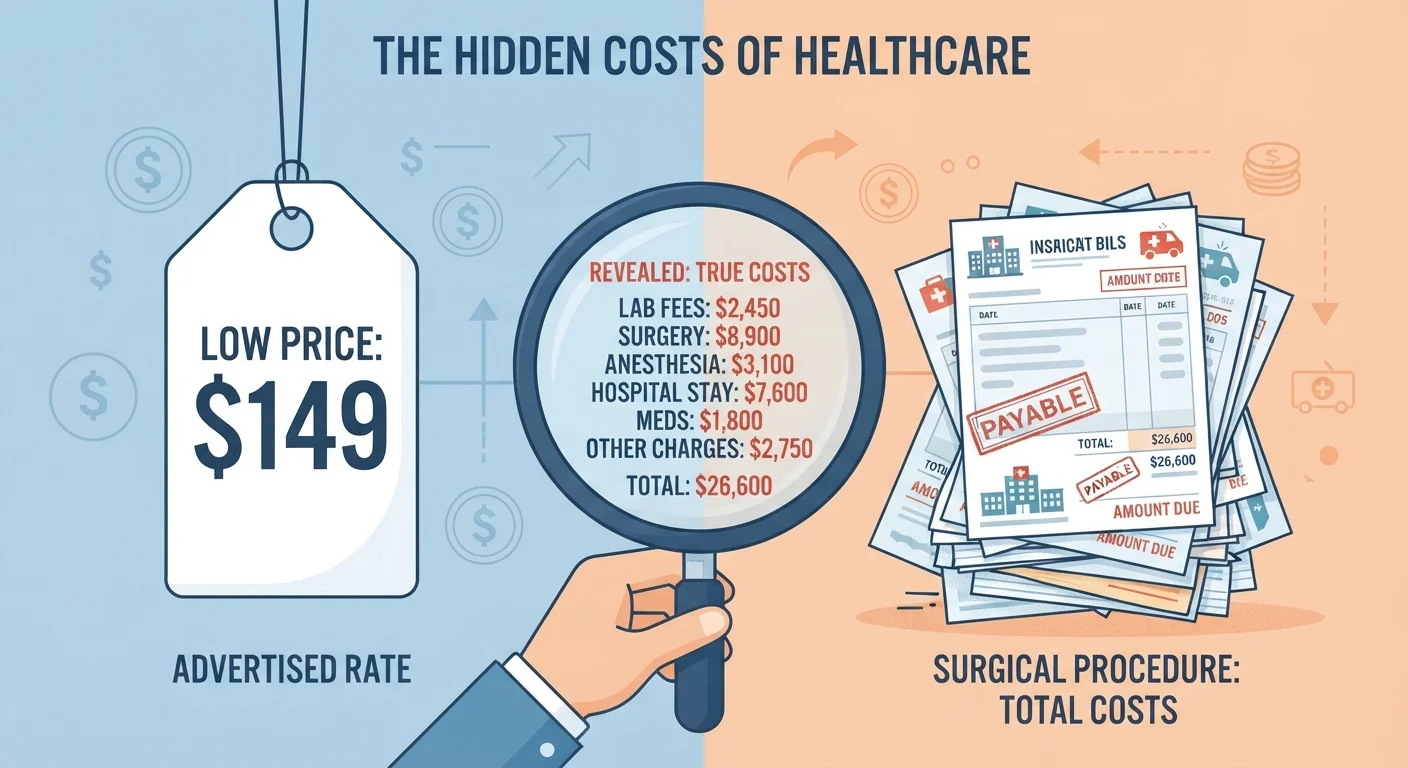
The Premium Is Just the Entry Fee
When people compare insurance plans, they almost always start with the monthly premium. It's the most visible number — the one that shows up in bold on every comparison page. But treating the premium as the total cost of a plan is like judging a car by its sticker price without factoring in fuel, maintenance, or insurance.
The premium buys you access to coverage. What you pay when you use that coverage is an entirely separate set of numbers. For a full breakdown of how these cost terms relate to each other, see Premiums, Deductibles, and Copays: What Each One Actually Means.
$1,763
Average annual deductible for single employer coverage
According to KFF's 2023 Employer Health Benefits Survey, the average deductible for single-coverage employer-sponsored plans was approximately $1,763.
43%
Workers enrolled in high-deductible health plans
KFF's 2023 Employer Health Benefits Survey found that roughly 43% of covered workers were enrolled in a high-deductible health plan with a savings option.
$9,450
ACA out-of-pocket maximum for individual plans
For 2024, the ACA sets the out-of-pocket maximum for individual marketplace plans at $9,450, representing the most a covered person can be required to pay in a plan year.
The Cost Components That Matter Most
Once you're past the premium, four other numbers shape what you'll actually spend:
- Deductible: The amount you pay out of pocket before your insurer starts sharing costs. A plan with a $300 monthly premium and a $6,000 deductible could cost you thousands before coverage meaningfully kicks in.
- Copays: Fixed dollar amounts you pay per visit or service — for example, $30 for a primary care visit or $15 for a generic prescription. These apply even after the deductible in many plans.
- Coinsurance: After your deductible is met, you often still share a percentage of costs with the insurer. An 80/20 split means you pay 20% of a covered service's cost.
- Out-of-pocket maximum: The ceiling on what you'll pay in a plan year for covered services. Once you hit it, the insurer covers 100%. This protects against catastrophic expense — but reaching it still means significant spending.
These components interact. A plan with low copays might carry high coinsurance. A plan with a generous out-of-pocket maximum might have a steep deductible to match. No single number tells the full story.
Add Up Your Annual Cost, Not Just Monthly
Multiply your monthly premium by 12 to get your baseline annual cost, then factor in your expected deductible, copays, and coinsurance. This simple math exercise often reveals that a 'cheap' plan is more expensive in total than a plan with a higher premium but better cost-sharing terms.
How Your Usage Changes Everything
The plan that costs the least depends almost entirely on how much you use it. Someone who rarely visits a doctor might genuinely benefit from a high-deductible plan with a low monthly premium — and could come out ahead financially. But someone managing a chronic condition, taking regular medications, or expecting a major procedure in the coming year could pay far more with that same plan once deductible and coinsurance stack up.
This is one of the most common places insurance shoppers go wrong. For more on where these miscalculations happen, see Underestimating Out-of-Pocket Costs: Where Insurance Shoppers Go Wrong.
To understand how premiums, deductibles, and out-of-pocket maximums interact as a system, see how these three numbers work together before you choose a plan.
Reading the Full Picture Before You Enroll
Every health insurance plan sold in the U.S. marketplace is required to provide a Summary of Benefits and Coverage (SBC) document. This standardized form lists deductibles, copays, coinsurance, and out-of-pocket maximums in plain terms — it's the clearest starting point for comparing real costs across plans.
A practical approach: estimate your expected annual use of services, multiply by your likely cost-sharing amounts, then add 12 months of premiums. That total gives you a realistic cost estimate rather than a false bottom line based on premium alone. If premium-only thinking has left you wondering whether a cheaper plan is actually better value, learn why lower premiums don't always mean better value.
Costs Vary Significantly by Plan Type
HMOs, PPOs, EPOs, and HDHPs all structure cost-sharing differently. A PPO might offer lower out-of-network costs while carrying higher premiums; an HMO may require referrals but offer more predictable copays. Understanding the plan type you're considering is a key part of evaluating its true cost. See our coverage types hub for an overview of major plan categories.
This article provides general insurance information for educational purposes only. Coverage terms, costs, and eligibility vary by insurer, plan, and state. Always review your actual policy documents and consult a licensed insurance agent or adviser for guidance specific to your situation.
Frequently Asked Questions
Beyond your premium, you may pay a deductible before coverage kicks in, copays for specific services, coinsurance as a percentage of costs, and expenses up to your out-of-pocket maximum. These add up quickly if you use your coverage regularly.
Not necessarily. A lower premium often means a higher deductible or thinner coverage, so you could end up paying more if you need care. The best value depends on how much healthcare or other insured services you expect to use.
It's the most you'll have to pay in a policy year for covered services, after which your insurer covers 100% of remaining costs. It's a financial safety net, but reaching it still requires significant spending first.
Estimate your likely use of services — doctor visits, prescriptions, specialist care — and map those against the plan's copays, deductible, and coinsurance. Add your annual premium on top to get a realistic total-cost estimate.
The Summary of Benefits and Coverage (SBC) document, which insurers are required to provide, spells out deductibles, copays, coinsurance rates, and out-of-pocket maximums. Always review this before enrolling.
The content on this site is for informational purposes only and is not a substitute for professional advice. Always consult a qualified professional for guidance specific to your situation.