

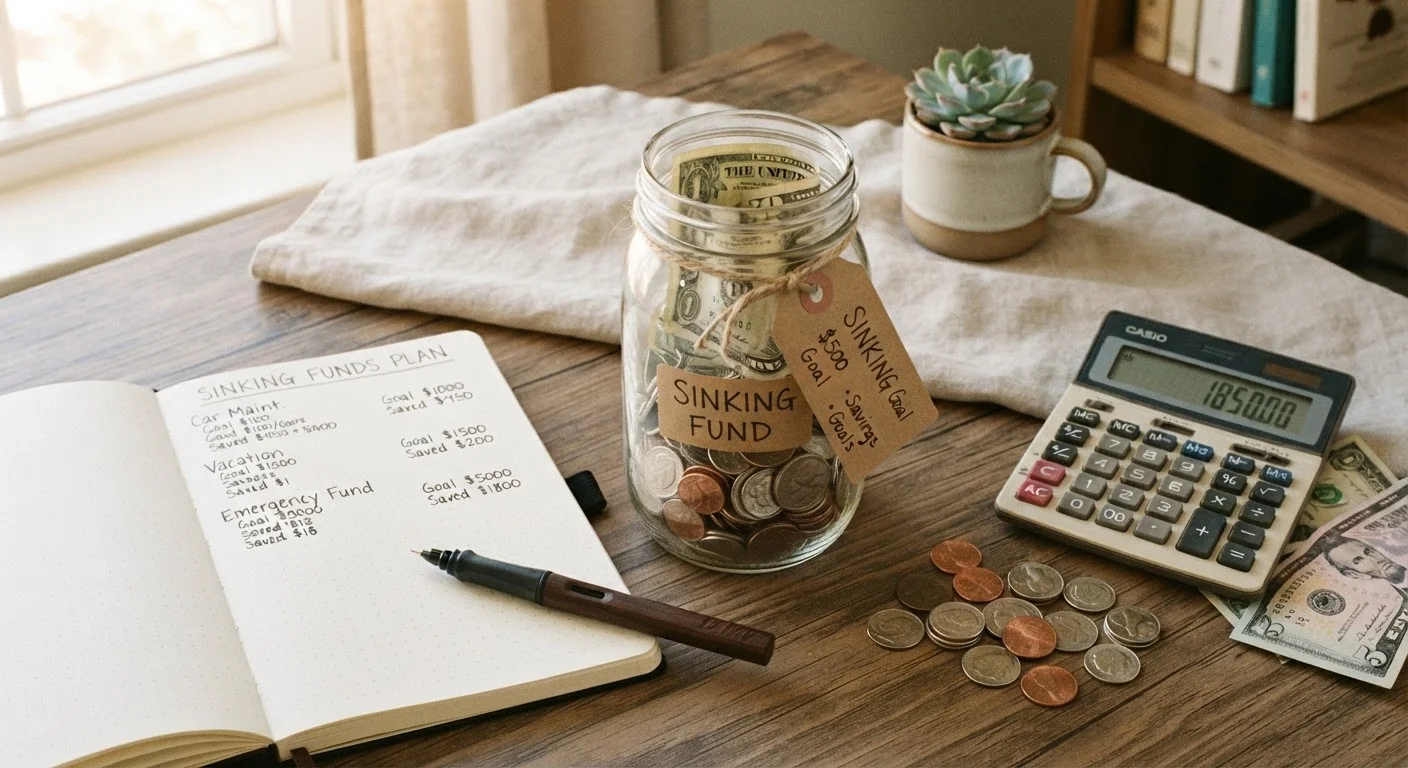
The Problem Sinking Funds Solve
Most household budgets are built around monthly recurring costs — rent, utilities, groceries. But plenty of real-life expenses arrive less predictably: the annual car registration, a holiday gift list, a family vacation, a dental crown. These costs are not surprises in the true sense — you know they are coming. Yet without a plan, they routinely blow up monthly budgets or push people toward credit card debt.
This is exactly the gap a sinking fund fills. Rather than absorbing a large expense all at once, you spread the financial impact across multiple months, saving incrementally until the money is ready when the bill arrives. It is one of the simplest, most effective tools in personal budgeting — and one that is often overlooked. For a broader vocabulary of budgeting concepts, see key budgeting terminology worth knowing.
34%
Americans with no savings for unplanned expenses
According to Bankrate's annual Emergency Savings Report, roughly one-third of U.S. adults report having no dedicated savings to cover unexpected or irregular costs.
$5,000+
Average annual vehicle ownership costs beyond loan payment
AAA's annual Your Driving Costs study consistently estimates that fuel, maintenance, tires, insurance, and fees add several thousand dollars per year to vehicle ownership for typical American drivers.
How a Sinking Fund Works in Practice
The mechanics are straightforward. Identify a future expense, estimate its total cost, and determine how many months you have until it is due. Divide the total by the number of months, and that is your monthly contribution.
For example: you expect to spend $900 on holiday gifts in December. If you start in January, you have 12 months to save. Contributing $75 per month means the money is fully available by the time you need it — with no debt, no budget crisis, and no stress.
Start With Your Most Predictable Expense
If sinking funds feel overwhelming, begin with just one: the irregular expense you are most confident about, whether in amount or timing. Once the habit is established and you can see the fund growing, adding a second or third category becomes much easier. Small, consistent action builds the skill as much as the savings.
The same logic applies to less predictable amounts. If your car tends to need $600 in maintenance annually, setting aside $50 per month builds that cushion month by month. You are treating an irregular expense as if it were a fixed monthly line item — which is precisely how sinking funds bring irregular costs under control. Understanding how fixed and variable expenses behave differently helps clarify which costs are best managed this way.
Sinking Funds vs. Emergency Funds: Not the Same Thing
A common point of confusion is conflating sinking funds with emergency funds. They serve distinct purposes and should not be merged. An emergency fund exists to absorb genuinely unexpected events — sudden job loss, an unplanned medical bill, a roof leak after a storm. It is a financial safety net for the unknown.
A sinking fund, by contrast, is for the known. You already have the expense on your radar; you are simply distributing its cost over time. Raiding your emergency fund for a predictable bill — like car registration — gradually erodes a safety net that exists for genuine crises. Keeping the two separate is not just organizational preference; it protects the integrity of both pools of money.
Both Funds Can Coexist in Your Budget
Financial planners generally recommend building an emergency fund baseline before aggressively funding other savings goals. However, modest sinking fund contributions can run alongside emergency fund building — particularly for expenses with a firm, near-term deadline. The key is knowing which pool of money serves which purpose, and not substituting one for the other.
Common Sinking Fund Categories
There is no universal list — the right categories depend on your household's specific financial landscape. That said, the following expense types are candidates that come up for many American households:
- Vehicle costs: registration fees, routine maintenance, tire replacement
- Home upkeep: HVAC service, appliance repair or replacement, pest control
- Annual insurance premiums paid in a lump sum rather than monthly
- Holiday and gift spending across the calendar year
- Vacations and travel planned months in advance
- Medical and dental costs such as anticipated procedures or deductibles
Running several sinking funds at once is normal and manageable. Each fund has its own timeline and monthly contribution, and together they represent the portion of your income earmarked for future-you's obligations. For practical guidance on reviewing and adjusting these contributions regularly, a monthly budget reset checklist can help you stay on track.
Setting Up and Maintaining Your Sinking Funds
Organization is what keeps sinking funds functional rather than abstract. The most effective approach is to keep each fund's money physically or digitally separate from your general checking account and from each other. Many banks allow you to open multiple savings accounts or labeled sub-accounts at no cost, making this straightforward.
Automate contributions wherever possible. Setting up a recurring transfer on payday removes the decision from your hands and reduces the risk of spending the money before it is allocated. Treat the transfer like any other fixed bill.
Review your sinking funds during your monthly budget check-in. Costs change, timelines shift, and new anticipated expenses emerge. A fund that was accurate in January may need recalibrating by June. Building this habit of regular review is part of making a budget stick over the long term. For more context on savings strategies beyond sinking funds, explore the Saving & Debt resource hub.
This article is for general informational and educational purposes only and does not constitute personalized financial advice. Consult a qualified financial professional for guidance specific to your situation.
Frequently Asked Questions
An emergency fund covers unexpected, unplanned costs — job loss, sudden medical bills, urgent home repairs. A sinking fund covers costs you already know are coming, such as annual insurance premiums or holiday gifts. Both serve different purposes and ideally coexist in your budget.
Divide the total amount you need by the number of months before the expense is due. For example, if a $1,200 bill is due in 12 months, you save $100 per month. Adjust the monthly amount if the timeline or estimated cost changes.
A high-yield savings account or a dedicated sub-account at your bank keeps the money accessible but separate from everyday spending. Separation is key — it reduces the temptation to spend money you have already earmarked for a future goal.
Yes, and most budgeters do. Common examples include funds for car maintenance, home repairs, vacations, and annual subscriptions. Track each fund separately so you always know exactly how close you are to each goal.
Any expense that is predictable but irregular — meaning it does not occur every month — is an ideal candidate. Examples include vehicle registration, insurance premiums, holiday spending, and periodic home maintenance such as HVAC servicing.
A savings account is the container; a sinking fund is the purpose. You might use one savings account to hold multiple sinking funds, or open separate accounts for each. The defining feature of a sinking fund is its specific, pre-defined goal and timeline.
The content on this site is for informational purposes only and is not a substitute for professional advice. Always consult a qualified professional for guidance specific to your situation.