

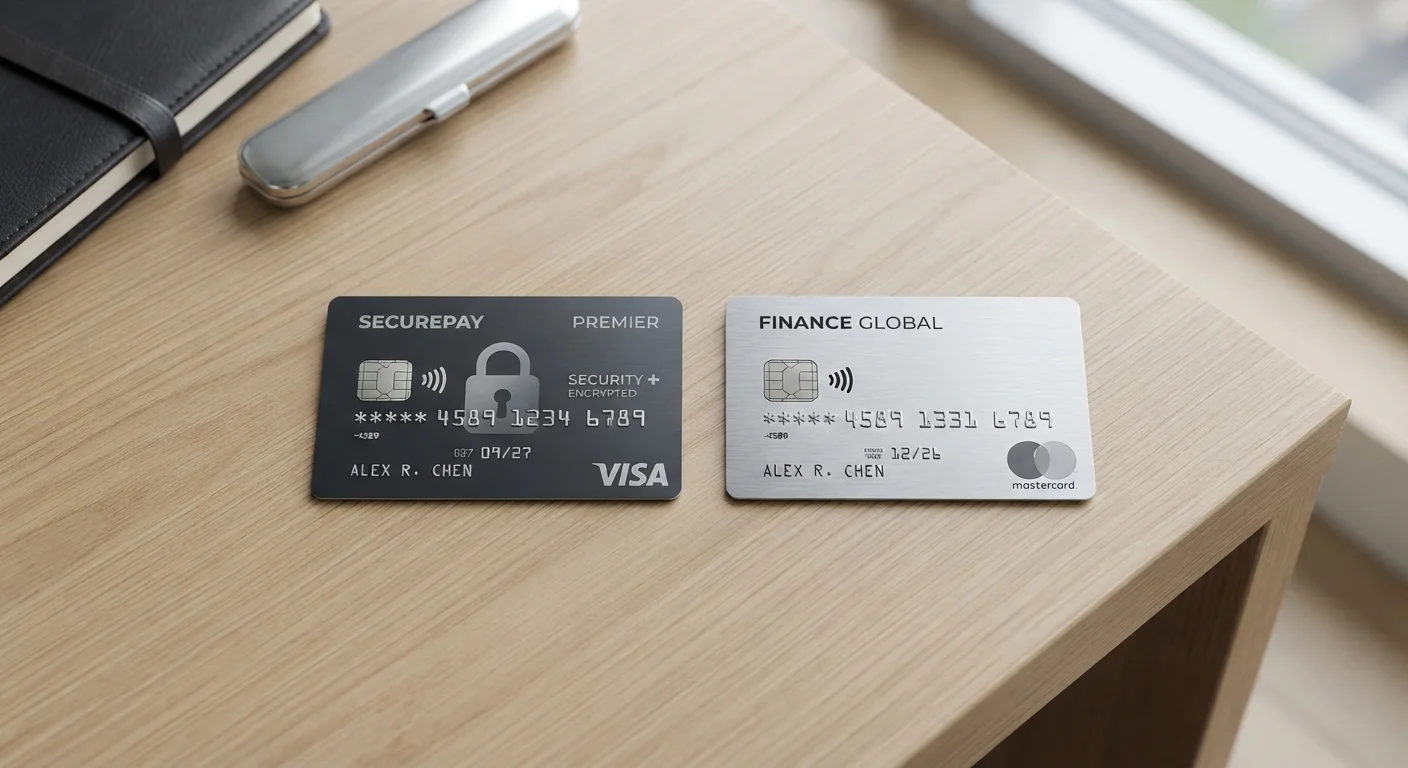
Option A
Secured Credit Card
The deposit-backed entry point into credit.
Best for: Consumers building credit from scratch or rebuilding after financial setbacks who can provide an upfront cash deposit.
Option B
Unsecured Credit Card
The traditional credit card with no collateral required.
Best for: Consumers with an established credit history who qualify based on their creditworthiness alone.
What Makes a Credit Card 'Secured'?
A secured credit card requires you to place a refundable cash deposit with the issuing bank or credit union before the account is opened. That deposit — commonly ranging from $200 to $500, though amounts vary by issuer — serves as collateral and typically sets your initial credit limit. If you deposit $300, you generally receive a $300 credit limit.
The deposit doesn't pay for your purchases. You still receive a monthly bill and are expected to make at least the minimum payment, just as with any credit card. The deposit simply protects the lender if you default. Because that risk is substantially reduced, issuers are more willing to approve applicants with limited or damaged credit histories.
When you close the account in good standing, or when the issuer upgrades you to an unsecured card, your deposit is typically returned. Understanding how these accounts interact with your broader credit profile is useful — see how credit inquiries work when you apply for any new card.
How Unsecured Cards Extend Credit Differently
An unsecured credit card requires no deposit. Instead, the lender evaluates your creditworthiness — primarily through your credit score, credit history, and income — and decides whether to extend a line of credit and at what limit. The lender takes on more risk, which is why approval standards are generally higher.
If you're approved, your credit limit reflects the issuer's assessment of how much you can responsibly borrow and repay. Limits can range widely depending on your profile. Because there's no collateral cushioning the lender's risk, unsecured cards often come with more rigorous underwriting but frequently offer more competitive interest rates, lower fees, and rewards programs compared to secured alternatives.
| Criterion | Secured Credit Card | Unsecured Credit Card |
|---|---|---|
| Collateral required | Yes — cash deposit | No deposit needed |
| Credit limit basis | Typically equals deposit amount | Based on credit profile and income |
| Approval difficulty | Easier — lower credit bar | More selective — higher credit bar |
| Typical APR | Often higher than average | Varies widely; can be lower |
| Annual fees | Common; often higher | Varies; many fee-free options |
| Credit bureau reporting | Most major issuers report | Standard for all issuers |
| Rewards programs | Rare or limited | Widely available |
| Deposit refund | Yes, on closure in good standing | N/A — no deposit made |
How you manage any credit card balance — secured or unsecured — has meaningful financial consequences. Our article on carrying a balance vs. paying in full explains the real cost of revolving debt month to month.
Credit Building: How Both Card Types Report to Bureaus
One of the most important features shared by both card types is the ability to report your payment activity to the three major credit bureaus — Equifax, Experian, and TransUnion. This reporting is what allows either card to help you establish or rebuild a credit history.
Payment history is the single largest factor in most credit scoring models, generally accounting for around 35% of your FICO score. Keeping balances low relative to your limit (your credit utilization ratio) and paying on time consistently are the core habits that move scores in a positive direction — regardless of whether your card is secured or unsecured.
35%
Weight of payment history in FICO scoring
According to FICO, payment history is the single largest factor in standard credit score calculations.
30%
Weight of credit utilization in FICO scoring
FICO data shows that amounts owed relative to available credit is the second most influential scoring factor.
~45M
Americans with no or thin credit files
The Consumer Financial Protection Bureau has estimated tens of millions of U.S. consumers are credit invisible or have insufficient credit history to generate a score.
Not all secured cards automatically report to all three bureaus, so it's worth confirming this before opening an account. Also worth noting: if managing credit card debt becomes complicated, understanding options like debt consolidation can provide useful context for your broader financial picture.
Costs, Limits, and Graduation: What to Expect Over Time
Secured cards often carry higher annual fees and APRs than comparable unsecured cards. This is partly because the target market — people with limited or impaired credit — represents a higher statistical risk even with the deposit in place, and partly because these products carry administrative overhead.
A realistic path for many consumers is to use a secured card responsibly for 12 to 24 months, then either request an upgrade from the issuer or apply for an unsecured card elsewhere. Some issuers have formal graduation programs that automatically convert a secured account to unsecured after a qualifying period. Others require you to initiate the change.
When evaluating your broader banking relationship — including where to open a secured card account — the difference between credit unions and banks may be worth understanding, as terms and fee structures can differ meaningfully between institution types.
This article is for general informational purposes only and does not constitute personalized financial or credit advice. Credit card terms, fees, and eligibility vary by issuer. Consult a licensed financial professional for guidance specific to your situation.
The content on this site is for informational purposes only and is not a substitute for professional advice. Always consult a qualified professional for guidance specific to your situation.