

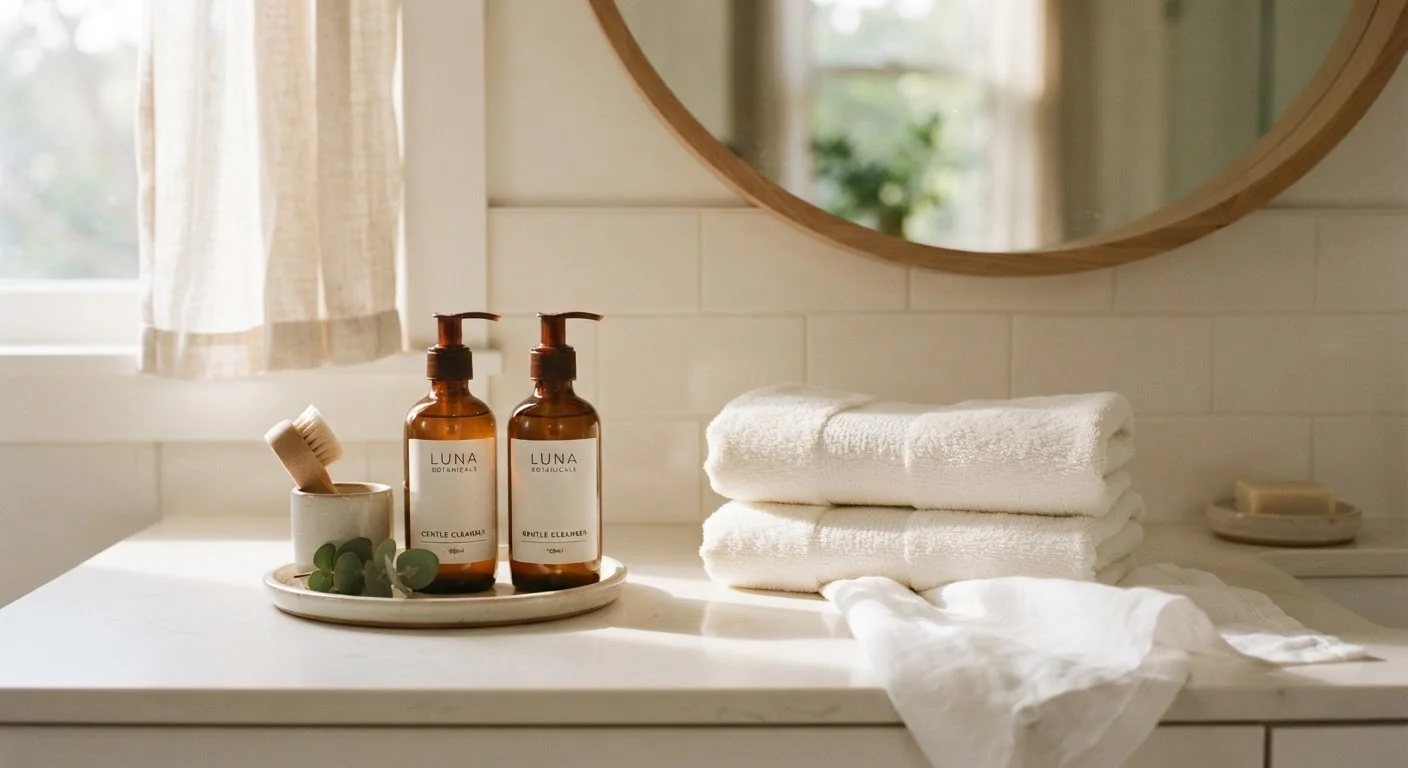
Option A
Double Cleansing
The thorough, two-step method favored by K-beauty devotees.
Best for: Those who wear makeup, SPF, or experience heavier skin congestion at the end of the day.
Option B
Single Cleansing
The streamlined, one-and-done approach built for simplicity.
Best for: Those with minimal product use, sensitive or dry skin, or a preference for a stripped-back routine.
What Each Method Actually Involves
Double cleansing is a two-step process rooted in Korean skincare tradition. The first step uses an oil-based cleanser — such as a cleansing oil or balm — to break down fat-soluble substances like sunscreen, long-wear makeup, and sebum. The second step uses a water-based cleanser (gel, foam, or cream) to cleanse the skin itself, removing sweat, water-based debris, and any remaining residue.
Single cleansing skips the oil step entirely and relies on one cleanser — typically water-based — to handle everything at once. Some water-based formulas do incorporate mild emulsifying agents that can tackle light makeup, but they generally aren't as effective at fully dissolving heavy SPF or long-wear products.
The distinction matters because not all skin impurities respond to the same ingredients. Oil dissolves oil — which is why the first cleanse in a double-cleanse routine is so effective at lifting stubborn, fat-soluble buildup before water-based cleansing can do its job. If you're curious about how other active ingredients interact with your cleansing routine, see our overview of how retinol works for grounded context.
| Criterion | Double Cleansing | Single Cleansing |
|---|---|---|
| Number of steps | Two (oil-based + water-based) | One cleanser only |
| Makeup & SPF removal | Very effective | Moderate; depends on formula |
| Risk of over-cleansing | Higher if used twice daily | Lower with a gentle formula |
| Best skin types | Oily, combination, acne-prone | Dry, sensitive, minimal-product users |
| Time required | 3–5 minutes | 1–2 minutes |
| Cost over time | Two products to replenish | One product to replenish |
| Ideal timing | Evening, after heavy product use | Morning and/or low-product evenings |
When Double Cleansing Makes Sense — and When It Doesn't
Double cleansing earns its place in a routine when you're consistently applying heavy or occlusive products. Sunscreen — especially mineral formulas — is notoriously difficult to remove with a single wash. If sunscreen isn't fully cleared from skin by bedtime, it can contribute to congestion over time. The same logic applies to full-coverage foundation, waterproof mascara, or any product specifically designed to resist water.
That said, double cleansing isn't a universal upgrade. For people who wear minimal makeup, skip SPF on low-sun days, or have skin that leans dry and reactive, a second cleanse can do more harm than good. Over-cleansing is a real concern: it can compromise the skin's natural moisture barrier, leaving skin feeling tight, flaky, or paradoxically more oily as it overproduces sebum to compensate.
2×
Cleansing steps in a double-cleanse routine
The two-step approach was popularized by Korean beauty culture and has since become a mainstream skincare practice globally.
~30%
Of skin barrier disruption linked to over-washing
Research published in dermatology literature suggests that excessive cleansing frequency can impair the skin's natural lipid barrier function.
The frequency of your double-cleansing habit matters too. Many dermatologists suggest it's most valuable in the evening, since that's when product buildup has accumulated. A gentle single cleanse in the morning is typically all skin needs after a night of nothing more than moisturizer. If you're building a broader routine, structuring habits by daily versus weekly frequency is worth considering.
Choosing What Fits Your Real Life
The most effective cleansing routine is the one you'll actually do — consistently, without stressing your skin or your schedule. If double cleansing feels like a chore, the compliance problem will outweigh any theoretical benefit. If single cleansing leaves your pores feeling clogged after heavy makeup days, it's clearly not doing enough.
A few practical questions can help guide the decision: Do you wear makeup or SPF most days? Is your skin generally oily, or prone to breakouts? How much time do you realistically have at the end of the day? These real-life factors matter more than any universal rule.
A Note on Skin Barrier Health
The skin's moisture barrier — a thin protective layer of lipids and proteins — plays a key role in keeping skin hydrated and resilient. Both over-cleansing and using overly harsh formulas can weaken this barrier over time. Whichever method you choose, look for pH-balanced formulas and avoid cleansers that leave skin feeling tight or stripped immediately after rinsing. If your skin regularly feels uncomfortable after cleansing, that's a signal worth paying attention to.
It's also worth noting that either method can be paired thoughtfully with other skincare steps. For instance, if you exfoliate regularly, you'll want to make sure your cleansing approach doesn't compound irritation — our comparison of physical vs. chemical exfoliation can help you calibrate. And if simplifying your overall routine is a goal, streamlining your routine without sacrificing results offers a practical framework for cutting what doesn't serve you.
This article is for general informational purposes only and does not constitute medical or dermatological advice. If you have a skin condition or specific skincare concerns, consult a licensed dermatologist or qualified skincare professional.
The content on this site is for informational purposes only and is not a substitute for professional advice. Always consult a qualified professional for guidance specific to your situation.