

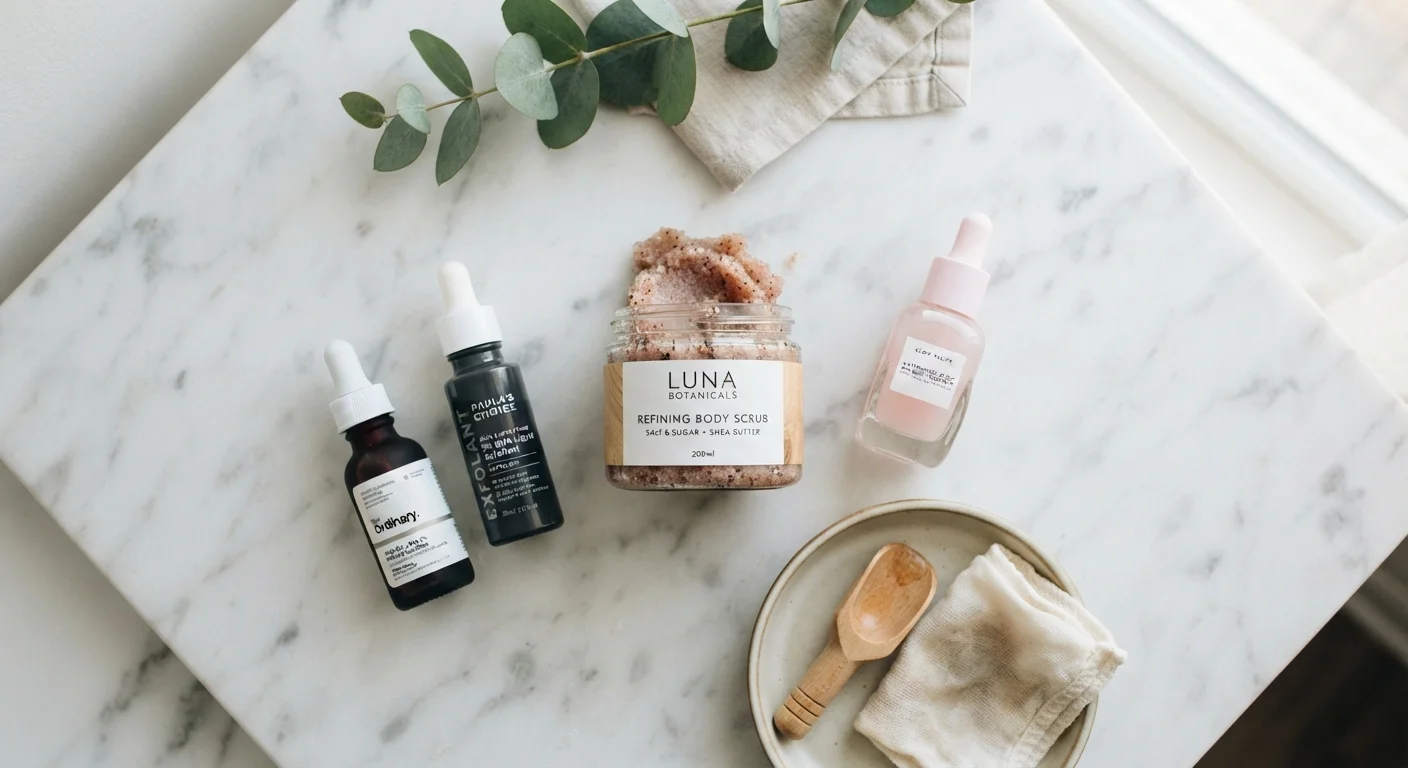
Option A
Physical Exfoliation
The hands-on, tactile approach to smoother skin.
Best for: Those who prefer an immediate, sensory polish with straightforward application and no wait time.
Option B
Chemical Exfoliation
The science-backed method that works beneath the surface.
Best for: Those targeting texture, tone, or clogged pores who want gradual, even results with minimal manual friction.
How Each Method Actually Works
The core difference comes down to mechanism. Physical exfoliation relies on friction — a scrub, cleansing brush, or textured cloth manually buffs away dead skin cells sitting on the surface. You feel the work happening in real time. Chemical exfoliation takes a different route: acids and enzymes break apart the bonds that hold dead cells to the skin, allowing them to shed more evenly without any rubbing required.
Common chemical exfoliants include AHAs like glycolic and lactic acid, which work primarily on the surface, and BHAs like salicylic acid, which are oil-soluble and can penetrate inside pores. Enzyme exfoliants — often derived from papaya or pineapple — offer a gentler alternative that suits particularly reactive skin.
Neither method is inherently superior. What matters is how each interacts with your skin type, concerns, and existing routine. For a broader look at how active ingredients interact, see our guide on skincare ingredient combinations that work against each other.
| Criterion | Physical Exfoliation | Chemical Exfoliation |
|---|---|---|
| How it works | Manual friction removes surface cells | Acids or enzymes dissolve cell bonds |
| Results timeline | Immediate tactile smoothness | Gradual improvement over weeks |
| Best skin types | Normal to oily, non-sensitive | Most skin types, including sensitive |
| Depth of action | Surface layer only | Surface to pore level (BHAs) |
| Main risk | Micro-tears from coarse particles | Barrier damage from overuse |
| Routine complexity | Low — apply and rinse | Moderate — timing and layering matter |
| Sunscreen required after? | Recommended always | Essential, especially with AHAs |
The Case for Physical Exfoliation — and Its Limits
Physical exfoliants have genuine appeal: the payoff is immediate, the application is intuitive, and there's no need to understand ingredient percentages or pH levels. A finely-milled scrub used once or twice a week can leave skin feeling noticeably smoother and support better product absorption after cleansing.
The drawbacks, however, are real. Coarse particles — think walnut shell or large sugar granules — can create micro-tears in the skin, particularly on thinner facial skin. Those with acne should be cautious, since aggressive scrubbing can spread bacteria and worsen breakouts rather than clear them. The key is choosing formulas with fine, uniform particles and applying with a genuinely light touch.
Physical exfoliation also has less impact on concerns like hyperpigmentation or congested pores, since it only addresses the top layer of dead cells rather than influencing cell turnover more broadly.
The Case for Chemical Exfoliation — and Its Limits
Chemical exfoliants have become a staple of evidence-informed skincare because they deliver consistent, measurable results for a range of concerns. AHAs are well-studied for improving skin texture and supporting an even complexion. BHAs are a reliable option for oily or acne-prone skin due to their ability to work inside the pore lining. Both require a little more knowledge to use well — concentration, pH, and frequency all affect how your skin responds.
The main risk with chemical exfoliants is over-use. Using high-strength acids too frequently — or layering them with other actives like retinoids — can compromise the skin barrier, leading to redness, sensitivity, and increased vulnerability to environmental damage. This is where routine structure becomes essential. Our piece on the pros and cons of skin cycling explores one popular method for pacing actives to reduce irritation.
A Note on Skin Conditions
If you have rosacea, eczema, psoriasis, or active acne, exfoliation of any kind warrants extra care. Certain acids and physical abrasives can aggravate these conditions significantly. Before adding any exfoliant to your routine, it's worth checking with a dermatologist who can assess your skin's specific needs and tolerance.
New to chemical exfoliants? Starting with a lower-concentration lactic acid (around 5–10%) used once weekly is a commonly suggested entry point for those unfamiliar with acids — but individual skin tolerance varies. If you have a skin condition or concerns about starting an active, a dermatologist is the right resource.
Building Exfoliation Into a Realistic Routine
Regardless of which method you choose, frequency is where most people go wrong. Over-exfoliating — whether with a daily scrub or nightly acid — disrupts the skin barrier faster than it can recover. Most skin types do well with one to three exfoliation sessions per week, though the right number depends on your skin's tolerance and the strength of the product.
Sunscreen is non-negotiable when using chemical exfoliants, especially AHAs, which increase photosensitivity. This isn't optional — it's a basic safeguard for maintaining the skin you're working to improve.
Thinking about how exfoliation fits into a full weekly structure? Our guide on weekly vs. daily beauty habits covers how to assign tasks by frequency so your routine stays manageable. And if your routine is starting to feel like a lot, streamlining your beauty routine offers a practical reset.
2–3×
Recommended exfoliation sessions per week
Dermatologists commonly suggest limiting exfoliation to two or three times weekly for most skin types to avoid barrier disruption.
~28 days
Natural skin cell turnover cycle
The skin naturally sheds and renews cells roughly every 28 days, a process that slows with age — which is why exfoliation can support a more even complexion.
This article is for general informational purposes only and is not intended as medical or dermatological advice. Consult a licensed dermatologist or skincare professional for guidance tailored to your individual skin type and concerns.
The content on this site is for informational purposes only and is not a substitute for professional advice. Always consult a qualified professional for guidance specific to your situation.