

Our Verdict
Skin cycling is a genuinely useful starting framework for people who want to introduce potent actives without overwhelming their skin. It reduces the guesswork around ingredient conflicts and builds in the recovery time many routines skip. That said, it's not a one-size prescription — those with more tolerant skin may find it overly conservative, and anyone managing specific conditions should loop in a professional.
Skin cycling works best for beginners exploring actives like retinol or exfoliating acids, and for anyone whose skin has previously felt irritated or overwhelmed by a nightly active routine.
What Is Skin Cycling, Exactly?
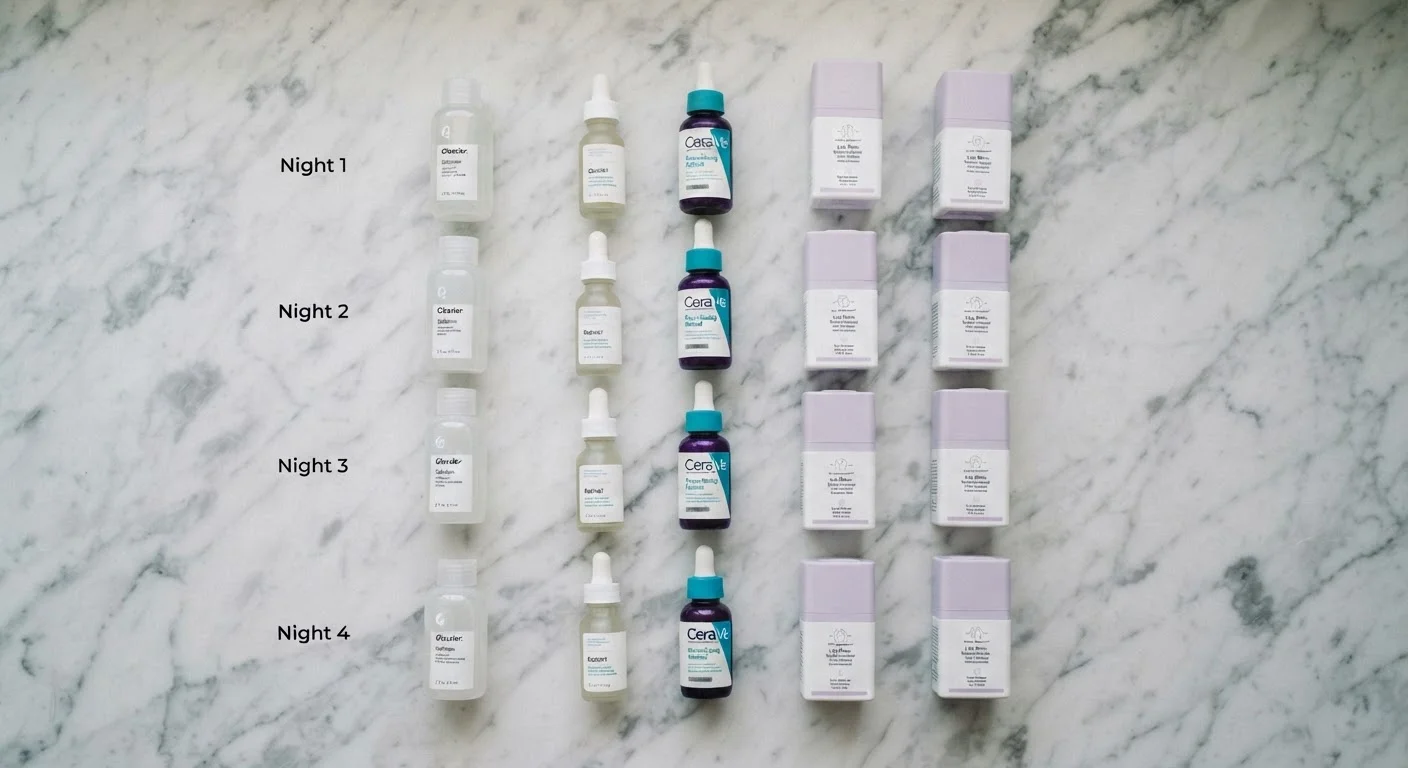
Skin cycling is a nighttime skincare method that assigns specific product types to specific nights on a repeating schedule. The most widely referenced version follows a four-night rotation: exfoliation night, retinoid night, then two recovery nights focused on hydration and barrier repair. The cycle then repeats.
The concept gained widespread attention when dermatologists began discussing it on social media as a structured alternative to applying actives every night. The core idea is that rotating potent ingredients — rather than layering or using them nightly — gives skin time to adapt and recover between exposures. For context on how retinol fits into this framework, see our grounded breakdown of retinol.
Skin cycling isn't a patented system or clinical protocol — it's an organizing principle. How strictly someone follows it (or adapts it) is entirely flexible.
The Pros: Why Skin Cycling Has Real Appeal
The approach has earned genuine praise for practical reasons, not just trend momentum.
Reduces irritation from active ingredient overload
By spacing out retinoids and exfoliants across separate nights, skin cycling prevents the compounding irritation that can result from applying multiple potent actives simultaneously. This makes the approach particularly beginner-friendly.
Built-in recovery nights support barrier health
Dedicated hydration nights using occlusives, ceramides, and gentle moisturizers give the skin barrier time to repair between active exposures, which can reduce long-term sensitivity.
Removes guesswork around ingredient timing
Rather than researching which actives conflict with each other every time you add a new product, the cycling structure naturally separates ingredients that shouldn't share a night.
Approachable entry point for skincare beginners
A four-night rotation is easy to remember and implement, lowering the barrier for people who want to explore active ingredients without feeling overwhelmed by conflicting advice.
Flexible enough to customize over time
The core framework can be adjusted — shortening recovery nights, adding a second retinoid night — as your skin builds tolerance and your knowledge grows.
One of the clearest wins is how skin cycling handles the problem of conflicting ingredients. Retinoids and exfoliating acids used on the same night can cause irritation or destabilize each other — skin cycling sidesteps this by design. The built-in recovery nights also address a gap that many routines ignore: barrier repair. Ceramide-rich and hydrating products applied during recovery nights help maintain the skin's protective function, which actives can temporarily compromise.
The Cons: Where the Method Falls Short
Skin cycling isn't without real trade-offs, and it's worth knowing them before committing to the structure.
May slow results for tolerant, experienced skin
Users whose skin already handles nightly actives without irritation may see slower progress with skin cycling, since they're applying key ingredients less frequently than their skin could support.
Rigid schedule doesn't adapt to skin fluctuations
Hormonal shifts, weather changes, and stress can all alter how reactive your skin is on any given night — the fixed rotation doesn't automatically account for these variables.
Doesn't address morning routine habits
Skin cycling is a nighttime-only framework, so daytime habits — including sunscreen use, which is especially important when using retinoids and exfoliants — remain outside its scope.
Can feel overly prescriptive without personalization
Following a set cycle without adjusting for your skin type, climate, or existing product lineup may mean the schedule doesn't align well with what your skin actually needs.
The four-night template was popularized as a beginner-friendly guide — but it doesn't adjust for how quickly an individual's skin builds tolerance. Someone whose skin handles nightly retinol without issue is essentially under-dosing by sticking to the cycle. Similarly, the schedule doesn't inherently account for what changes in your skin from season to season. For a different lens on structuring your routine by frequency rather than product type, this guide on weekly vs. daily habits offers a complementary approach.
Skin Cycling Is Not Medical Guidance
Skin cycling is a general routine-structuring approach, not a dermatologically prescribed treatment plan. If you're managing conditions like rosacea, eczema, acne, or hyperpigmentation, the standard cycle may not be appropriate for your skin. Always consult a board-certified dermatologist before introducing or rotating active ingredients, particularly prescription-strength retinoids.
How It Compares to Other Routine Frameworks
Skin cycling sits somewhere between a fully minimalist approach and a complex multi-step regimen. If you've ever read about streamlining a routine without losing results, you'll recognize that fewer, well-timed steps often outperform a crowded product shelf.
Unlike AM/PM routine splits — which divide products by time of day — skin cycling divides them by night across a multi-day window. Both frameworks respect the idea that skin has different needs at different moments. For more on why morning and evening calls for different approaches, see The AM/PM Split.
Skin cycling also pairs well with thoughtful exfoliation choices. If you're uncertain whether a chemical or physical exfoliant belongs on your exfoliation night, this comparison of the two approaches can clarify the decision.
2 of 4
Nights dedicated to recovery in the standard cycle
The original four-night skin cycling framework reserves half of all nights for barrier-focused recovery rather than active ingredient application.
~2–4 weeks
Typical adjustment period for new retinoid users
Dermatologists generally note that new retinoid users often experience a transitional phase before tolerance develops, making structured introduction methods like skin cycling potentially useful during this period.
The content on this site is for informational purposes only and is not a substitute for professional advice. Always consult a qualified professional for guidance specific to your situation.