

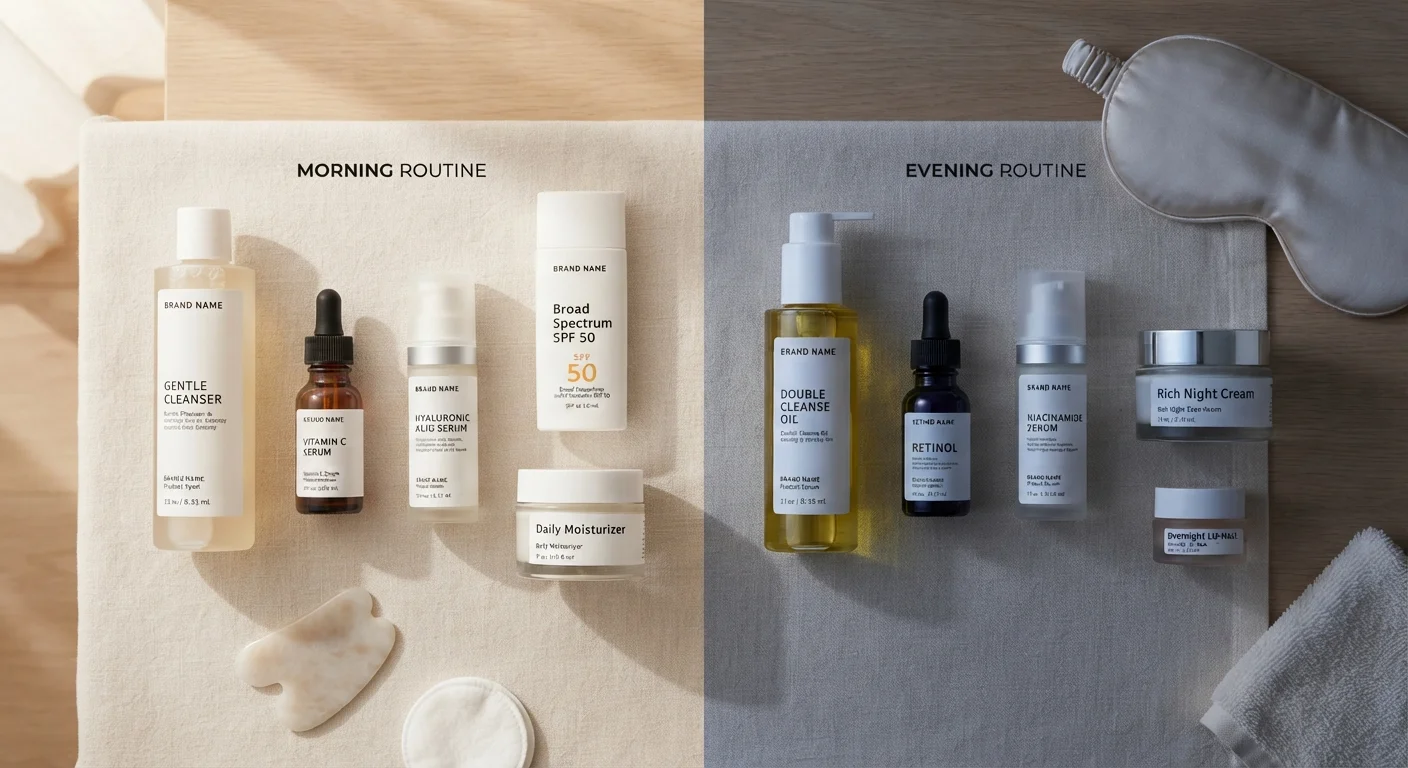
Why Skin Behaves Differently by Time of Day
Your skin isn't static — it runs on a biological clock. During the day, it acts as a frontline barrier against UV radiation, pollution, and environmental oxidative stress. At night, that defensive mode shifts into repair: cell turnover accelerates, the skin barrier works to retain moisture, and the body produces growth hormone that supports tissue recovery.
This rhythm, often called the skin's circadian cycle, is why piling on the same products morning and night isn't the most effective approach. What supports protection during the day can actually interfere with the repair processes that happen after dark — and vice versa.
SPF Doesn't Belong in Your Night Routine
Some people wonder whether applying SPF at night adds an extra layer of protection. It doesn't — sunscreen is formulated to absorb or reflect UV radiation, which isn't present indoors at night. Applying it after dark is simply unnecessary and can make your skin feel heavier than needed. Save it for the morning, where it actually works.
For a deeper look at how the sequence of products interacts with these cycles, see our guide to layering skincare in the right order.
Building Your Morning Routine: Protect First
The morning routine has one non-negotiable job: prepare your skin to face the outside world. That means leading with cleansing (a gentle rinse or light cleanser if you used actives overnight), then layering in a logical sequence toward your most protective step — sunscreen.
- Antioxidant serum: A vitamin C serum applied under SPF can help neutralize free radicals that UV and pollution generate throughout the day.
- Lightweight moisturizer: Hydration buffers the skin barrier and helps SPF apply evenly.
- Broad-spectrum SPF 30+: This is the step that does the most documented work in preventing premature aging and reducing UV-related skin damage. It goes on last in your skincare routine, before makeup.
Notice what's absent from this list: retinoids, exfoliating acids, and heavy facial oils. These either break down in sunlight, increase photosensitivity, or create a heavier base than most daytime skin needs.
90%
Of visible skin aging attributed to UV exposure
According to research widely cited by dermatologists and the Skin Cancer Foundation, the majority of premature skin aging — including wrinkles and uneven tone — is linked to sun exposure rather than chronological aging.
2–3×
Higher cell turnover rate during sleep
Studies on skin circadian biology indicate that epidermal cell division peaks during overnight hours, supporting the rationale for applying treatment products in the evening.
Building Your Night Routine: Repair and Replenish
Evenings are when you can bring out the ingredients that do their best work uninterrupted. The first step — and one of the most important — is thorough cleansing to remove SPF, makeup, and the day's accumulated buildup. Skipping this step leaves a film that can interfere with everything applied afterward. Our guide to makeup removal covers why this step is more consequential than most people realize.
- Exfoliating acids (AHAs/BHAs): These increase cell turnover but also sun sensitivity — keep them at night.
- Retinoids: Vitamin A derivatives are among the most studied ingredients for supporting collagen and addressing fine lines. They degrade in UV light and can irritate daytime skin, making them firmly a nighttime tool.
- Richer moisturizer or facial oil: The skin loses more water overnight (transepidermal water loss increases during sleep). A denser moisturizer or a few drops of facial oil helps counteract this.
If you're working with multiple actives — like a retinoid and an acid — it's worth understanding which combinations support each other and which can cause irritation. Skincare ingredient combinations that work against each other is a useful reference before you layer.
Rotate Actives Gradually, Not All at Once
If you're adding retinoids or exfoliating acids to your nighttime routine, introduce one at a time over several weeks rather than layering them immediately. This gives your skin a chance to adjust and makes it easier to identify what's working — or what might be causing irritation. Our overview of skin cycling walks through one popular method for rotating actives with recovery nights built in.
Making the Split Work for Real Life
You don't need a ten-step regimen twice a day for the AM/PM split to pay off. Even a three-step morning routine (cleanser, moisturizer, SPF) and a two-step evening routine (cleanser, night moisturizer) reflects the core logic: protect by day, replenish by night.
For those who want more structure without more complexity, organizing habits by daily versus weekly frequency can help you decide which steps actually need to happen every single day. And if your mornings are genuinely rushed, a five-minute morning approach shows how to keep skin protected without the elaborate routine.
This article is for general informational purposes only and is not a substitute for professional medical or dermatological advice. Consult a qualified dermatologist if you have specific skin concerns or conditions.
Frequently Asked Questions
Not everyone needs a complex dual routine, but separating protection (AM) from repair (PM) is grounded in how skin actually functions. Even a simple split — SPF in the morning, a richer moisturizer at night — makes a meaningful difference over time.
Yes, if it suits both contexts. A lightweight, non-comedogenic moisturizer can work for both. That said, many people find a richer night cream more beneficial in the evening when the skin's barrier needs extra replenishment during sleep.
Retinol breaks down when exposed to UV light and can also make skin more sensitive to sun damage. Dermatologists generally recommend applying it at night, followed by SPF the next morning, to preserve its effectiveness and protect your skin.
Vitamin C is generally best used in the morning. It's an antioxidant that helps neutralize free radicals generated by UV and pollution exposure throughout the day. It also degrades when exposed to air and light over time, so morning application maximizes its benefit.
If you can only do one, prioritize the morning — specifically SPF. Sun protection is the single most evidence-supported step for preventing premature skin aging and reducing skin cancer risk. At night, at minimum, cleanse and moisturize.
The content on this site is for informational purposes only and is not a substitute for professional advice. Always consult a qualified professional for guidance specific to your situation.