

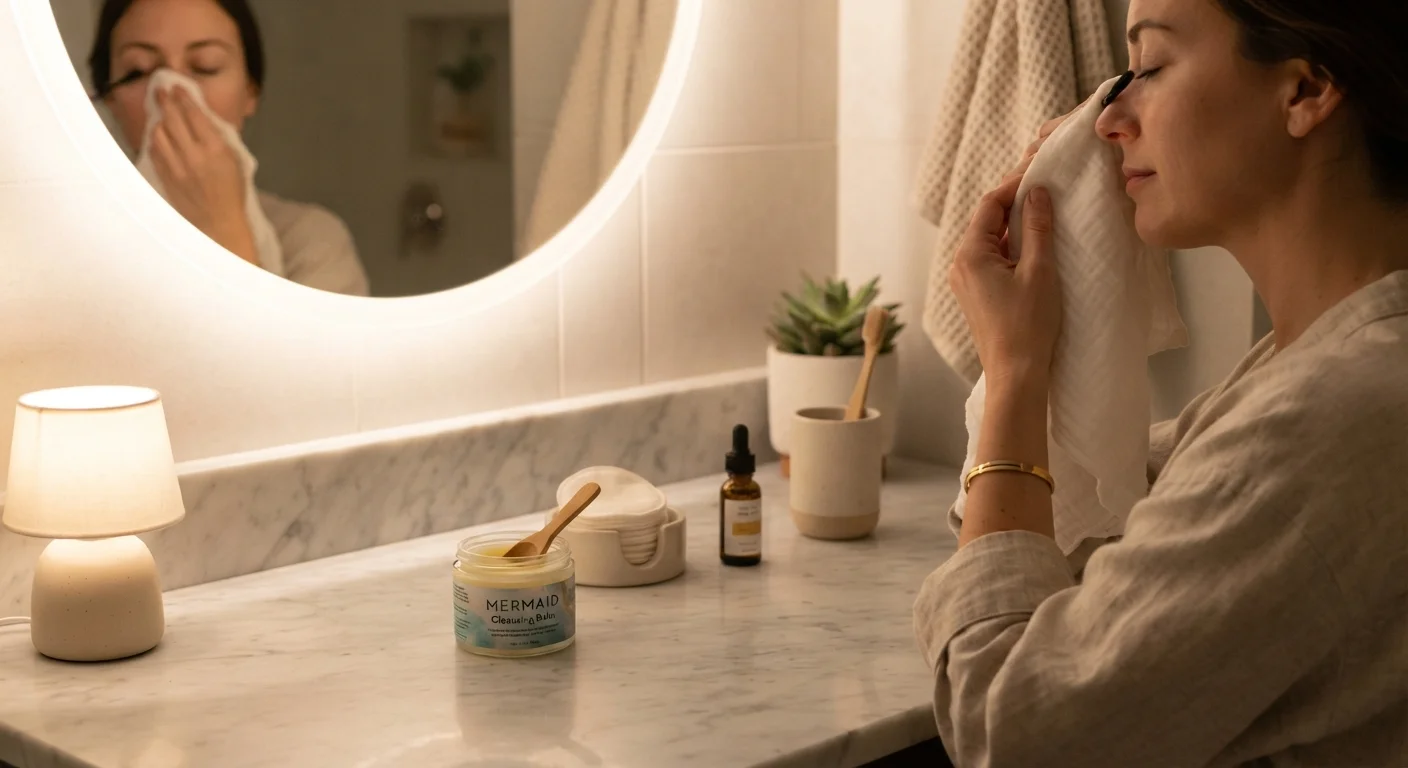
What Actually Happens When You Skip Makeup Removal
It's tempting to rationalize skipping the sink on a long night, but the consequences of sleeping in makeup go beyond a blurry pillowcase. Throughout the day, your skin collects makeup residue, environmental pollutants, and sebum. Left overnight, this mix sits against your face for six to eight hours — prime time for your skin's natural repair cycle.
Dermatologists consistently point to a few key concerns. First, pore congestion: foundation and powder create a physical barrier that traps dead skin cells and oil, increasing the likelihood of breakouts and blackheads. Second, accelerated skin aging: free radicals from pollution that bind to makeup residue can break down collagen faster when left on the skin overnight. Third, eye irritation: mascara and eyeliner that migrate during sleep can cause redness, itching, and in some cases, more serious issues like blocked eyelash follicles or conjunctivitis.
The good news? You don't need an elaborate routine to prevent all of this. Consistent removal — even a quick one — makes a meaningful difference. If you're rethinking your overall evening habits, learn why your PM routine should look different from your morning one.
Best Practices for Removing Makeup Gently and Effectively
How you remove makeup matters almost as much as whether you remove it. Aggressive scrubbing, harsh wipes, or the wrong formula for your skin type can leave you with irritation, dryness, or a compromised skin barrier — which defeats the purpose entirely.
Match your removal method to your makeup weight and skin type.
A light tinted moisturizer dissolves easily with micellar water, but full-coverage foundation or waterproof mascara often needs an oil-based cleanser or balm to fully break down. Using the wrong formula means residue stays behind, even after rinsing.
Treat the eye area with extra care and a dedicated product.
The skin around your eyes is significantly thinner than the rest of your face and more prone to damage from friction. Tugging to remove stubborn liner or mascara can contribute to fine lines over time and cause lash breakage.
Never rely on makeup wipes as your only removal step.
Pre-moistened wipes are convenient for displacement — they move makeup around — but most don't fully dissolve or lift pigment, especially around the hairline, nose, and eyes. They also tend to drag on the skin rather than glide.
Cleanse after removal — they are not the same step.
Even thorough makeup removal leaves behind traces of emollients, sunscreen, and the removal product itself. A gentle face wash after removal clears the skin completely and prepares it to absorb any moisturizer or treatment you apply next.
Keep your removal supplies visible and within arm's reach.
Behavioral research consistently shows that reducing friction around a habit dramatically increases follow-through. If removal requires walking to another room or digging through a crowded drawer, it's easy to skip.
Once you've removed makeup thoroughly, a gentle face wash finalizes the process. For more on how that second step fits in, see double cleansing vs. single cleansing to understand when a two-step approach makes sense for your routine.
Making It Easier on the Nights You Have Zero Energy
The biggest barrier to consistent makeup removal isn't knowledge — it's fatigue. Building a routine that requires minimal effort is the key to actually doing it every night.
Sustainability is the real goal. A streamlined beauty routine built around habits you'll actually keep is far more effective than a perfect one you abandon. For a broader view of how to pace your routine by day and week, structuring daily vs. weekly habits can help you build a realistic framework.
A Note on Skin Sensitivity
If your skin is prone to redness, eczema, or general sensitivity, some removal products — particularly those with fragrance, alcohol, or preservatives — may cause irritation. This article provides general beauty guidance, not medical or dermatological advice. If you're experiencing persistent skin concerns like rashes, breakouts, or eye irritation, consult a licensed dermatologist or healthcare provider for personalized guidance.
The content on this site is for informational purposes only and is not a substitute for professional advice. Always consult a qualified professional for guidance specific to your situation.