

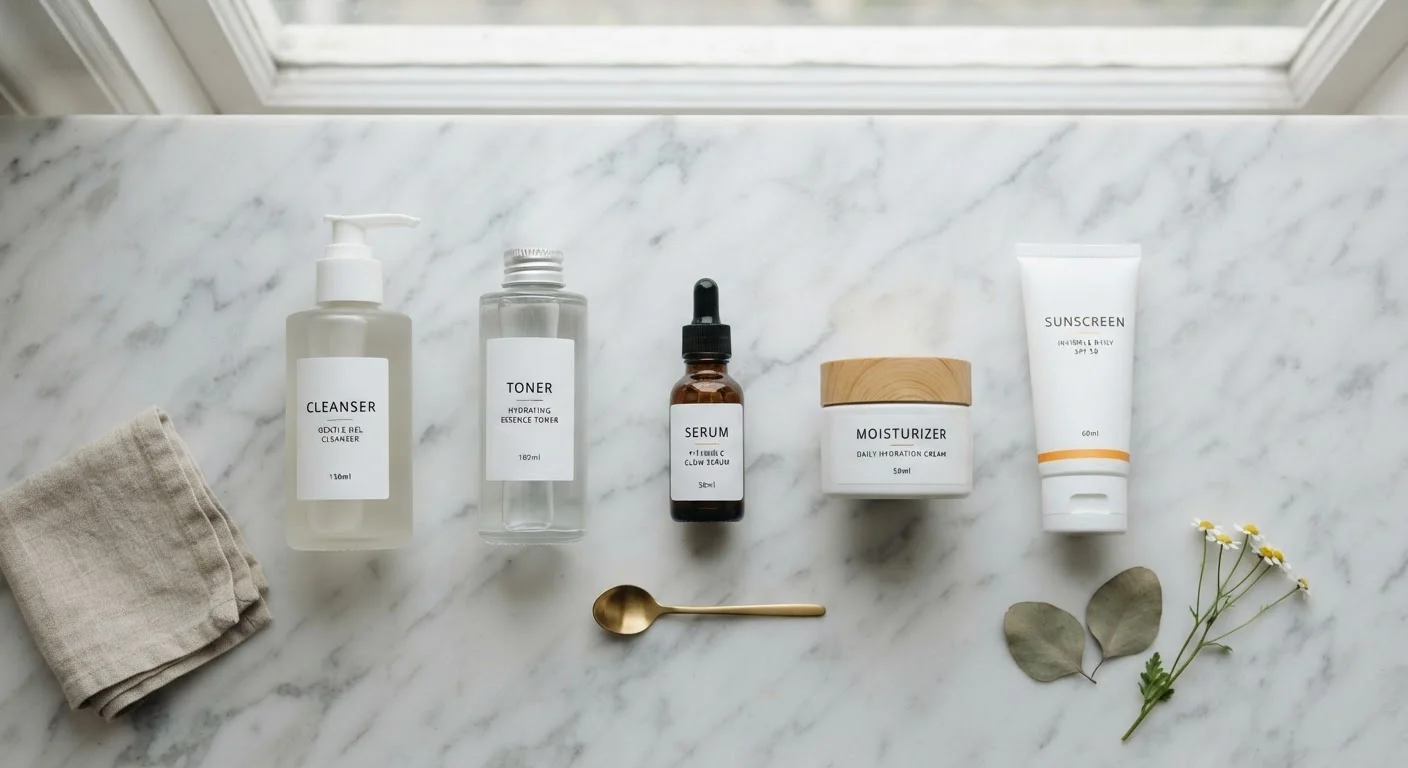
Why Order Actually Matters
Skincare products are formulated to work in a specific environment — and when you apply them out of sequence, you can unintentionally prevent them from working at all. A heavy moisturizer applied before a serum, for example, creates a physical barrier that blocks the serum's smaller molecules from reaching the skin. The general principle is straightforward: go from thinnest to thickest consistency.
Beyond texture, pH also plays a role. Some actives like vitamin C and AHA exfoliants work best in a lower-pH environment, which is why they typically belong early in the routine, right after cleansing, before your skin's surface is altered by heavier formulas.
This doesn't mean you need a ten-step routine to get results. In fact, a streamlined approach often performs just as well. Check out our guide to simplifying your routine if you'd rather keep things minimal. But whatever products you do use, the sequence they go in makes a genuine difference.
Gentle Facial Cleanser
Removes surface dirt, oil, and makeup to prep skin for the rest of your routine.
Toner or Essence
Balances skin's pH after cleansing and primes it to absorb serums more effectively.
Treatment Serum
Delivers concentrated active ingredients (like vitamin C, niacinamide, or hyaluronic acid) to target specific concerns.
Eye Cream
Addresses the thinner, more delicate skin around the eyes before heavier moisturizers.
Moisturizer
Seals in hydration and supports the skin barrier after actives are applied.
Facial Oil
Adds an extra layer of nourishment and helps lock in moisture; applied after water-based steps.
Broad-Spectrum Sunscreen (SPF 30+)
Provides UV protection and must be the final step in any daytime routine.
The Step-by-Step Layering Sequence
Here's the full routine in order — use what applies to you and skip what doesn't. The logic stays the same whether you're working with three products or seven.
What you will need
Cleanse
Start with a gentle cleanser to remove surface buildup — oil, sweat, pollution, and any residual makeup. This step ensures that nothing is sitting on the skin to block what comes next. Use lukewarm water; hot water can strip the skin's natural barrier. Pat dry with a clean towel rather than rubbing.
Apply Toner or Essence
While damp skin is still slightly receptive, apply a toner or essence. These lightweight, water-based formulas help rebalance the skin's pH after cleansing and create a more receptive surface for serums. Apply with clean hands or a cotton pad using light pressing motions.
Apply Treatment Serums
Serums are typically the most concentrated products in a routine, so they go on early — right after toning. Apply thinner, water-based serums first (such as vitamin C or niacinamide), then any slightly thicker hydrating serums (like hyaluronic acid) on top. Use a pea-to-dime-sized amount and press gently into the skin rather than rubbing.
Apply Eye Cream
Eye cream goes on before your main moisturizer because the skin around the eyes is thinner and more delicate. Using a ring finger, gently tap a small amount along the orbital bone — the bony ridge under the eye — rather than directly on the lid or lash line. Pressing rather than rubbing prevents unnecessary pulling on the skin.
Moisturize
Moisturizer creates a barrier that locks in the active ingredients and hydration you've just applied. Choose a formula suited to your skin type — lighter gels for oily or combination skin, richer creams for dry skin. Apply in upward, outward motions across the face and neck.
Apply Facial Oil (If Using)
Facial oils are occlusive — meaning they form a seal over the skin — so they always go on after water-based products and moisturizer. Pressing a few drops between your palms and then gently pressing them onto the face is generally more effective than rubbing. In a nighttime routine, oil can be your final step.
Apply Sunscreen (Morning Only)
In the morning, sunscreen is the non-negotiable final product. Apply a generous, even layer to the face, neck, and any other exposed skin. Most dermatologists recommend at least a quarter teaspoon for the face alone. Allow it to sit undisturbed for a minute or two before applying makeup on top, if desired.
Give Each Layer a Moment to Settle
You don't need to wait a precise amount of time between every step, but letting a product feel mostly absorbed before applying the next helps prevent pilling and ensures each formula has a chance to penetrate. Roughly 30–60 seconds per step is a practical rhythm for most people.
SPF Must Always Come Last in the Morning
Sunscreen only works as intended when it sits on top of your other products, undiluted. Applying moisturizer, oil, or anything else over your SPF can break down the UV filter and reduce protection. In your morning routine, sunscreen is always the final step before makeup or leaving the house.
Mixing Certain Actives Can Backfire
Some ingredient combinations — like vitamin C paired with certain exfoliating acids, or retinol alongside strong AHAs — can cause irritation or reduce effectiveness when applied together. If you use multiple actives, check our guide to ingredient combinations to make sure your lineup plays nicely.
Your routine doesn't need to stay static year-round, either. Skin behaves differently across seasons, and adjusting your layers — lighter in summer, richer in winter — is a smart habit. Our seasonal adjustment checklist can help you audit what to swap in and out. And if sustainability is a concern, structuring daily vs. weekly habits is a useful next read.
This article is for informational and educational purposes only and is not a substitute for advice from a licensed dermatologist or skincare professional. Individual skin needs vary — consult a professional if you have specific skin concerns or conditions.
The content on this site is for informational purposes only and is not a substitute for professional advice. Always consult a qualified professional for guidance specific to your situation.