

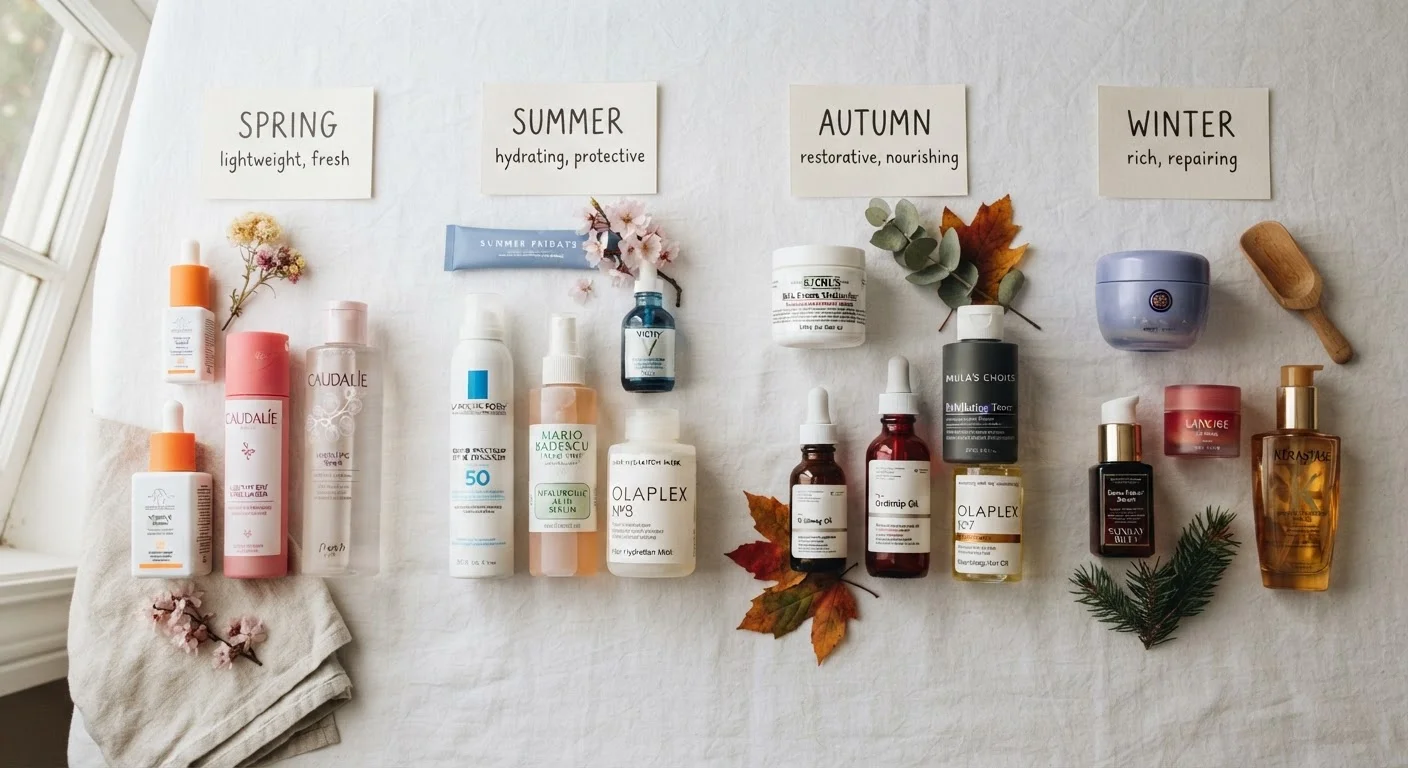
Summary
22 items · 20–40 minutes
Why Your Routine Needs a Seasonal Reset
Your skin and hair aren't static — they respond to changes in temperature, humidity, wind, and indoor air quality just as much as they respond to the products you use. What worked flawlessly in July can feel completely wrong by October, and that's not a failure of the products; it's a signal that your environment has shifted.
Humidity levels drop significantly as fall and winter arrive across most of the U.S., which means your skin loses surface moisture faster. Meanwhile, central heating systems push dry air indoors, compounding the effect. In summer, increased humidity, sweat, and sun exposure create a different set of challenges — excess oil, UV damage, and scalp issues tend to peak. Neither season is inherently harder on your skin; they're just different.
A seasonal routine audit takes less than an hour and helps you make targeted, evidence-based tweaks rather than impulse-buying new products that may not address the real issue. For a broader look at how transitions affect your overall self-care approach, the guide to streamlining your beauty routine is a strong companion read.
Skin Assessment
Cleanser & Exfoliation Adjustment
Moisturizer & SPF
Lip & Eye Area
Hair & Scalp
Routine Sustainability Check
How to Use This Checklist
Work through each group in order, starting with your skin assessment before making any product decisions. The assessment group grounds your choices in what your skin is actually doing right now — not what it did last season. From there, each group targets a specific part of your routine.
Items marked must represent the adjustments most likely to have a meaningful impact on your skin or hair health. Should items are strongly recommended and worth prioritizing if time and budget allow. Nice to have items are enhancements that add value but won't derail your skin if skipped.
Clean tissue or blotting paper
Used to assess your skin's current oil production before deciding on cleanser and moisturizer adjustments.
Magnifying mirror
Helps you spot early signs of seasonal dryness, flakiness, or congestion that your usual mirror might miss.
Hydrating facial mist
Useful as an interim step while you transition between moisturizer weights during unpredictable shoulder seasons.
Product inventory list (paper or app)
Tracks what you currently own, what's expired, and what seasonal gaps exist — prevents duplicate purchases.
Aim to revisit this checklist at each seasonal transition — roughly four times per year. If you're unsure how to divide your routine tasks across the week to make each session manageable, the weekly vs. daily beauty habits breakdown can help you build a realistic schedule. And if you want to make sure you're applying your products in the right sequence once you've made your seasonal swaps, see our guide to layering skincare products for the correct order of application.
Skin Concerns That Persist Need Professional Attention
This checklist is designed for general routine adjustments tied to seasonal changes — not for diagnosing or treating skin conditions. If you're experiencing persistent rashes, significant breakouts, unusual pigmentation changes, or scalp issues that don't respond to routine shifts, consult a licensed dermatologist. General beauty guidance is not a substitute for professional skin care assessment.
Don't Ditch SPF in Winter
UV radiation reaches your skin even when skies are overcast or temperatures are low. Snow and ice can also reflect UV rays, increasing exposure. Dropping SPF from your morning routine in colder months is one of the most common seasonal missteps. Keep it in year-round.
Over-Exfoliating Is a Real Risk
Layering multiple exfoliating acids or using a physical scrub alongside a chemical exfoliant can compromise your skin barrier, especially in dry or cold weather. If you notice persistent redness, stinging, or peeling, scale back frequency before adding anything new.
Don't overlook your scalp during this process — it's often one of the first places seasonal imbalance shows up, and it's easy to miss until flaking or oiliness becomes noticeable. Our overview of scalp health fundamentals explains what to look for and why it matters for overall hair condition.
This article provides general beauty and self-care information for educational purposes only. It is not a substitute for professional dermatological or medical advice. If you have persistent skin, scalp, or hair concerns, consult a qualified healthcare professional.
The content on this site is for informational purposes only and is not a substitute for professional advice. Always consult a qualified professional for guidance specific to your situation.