

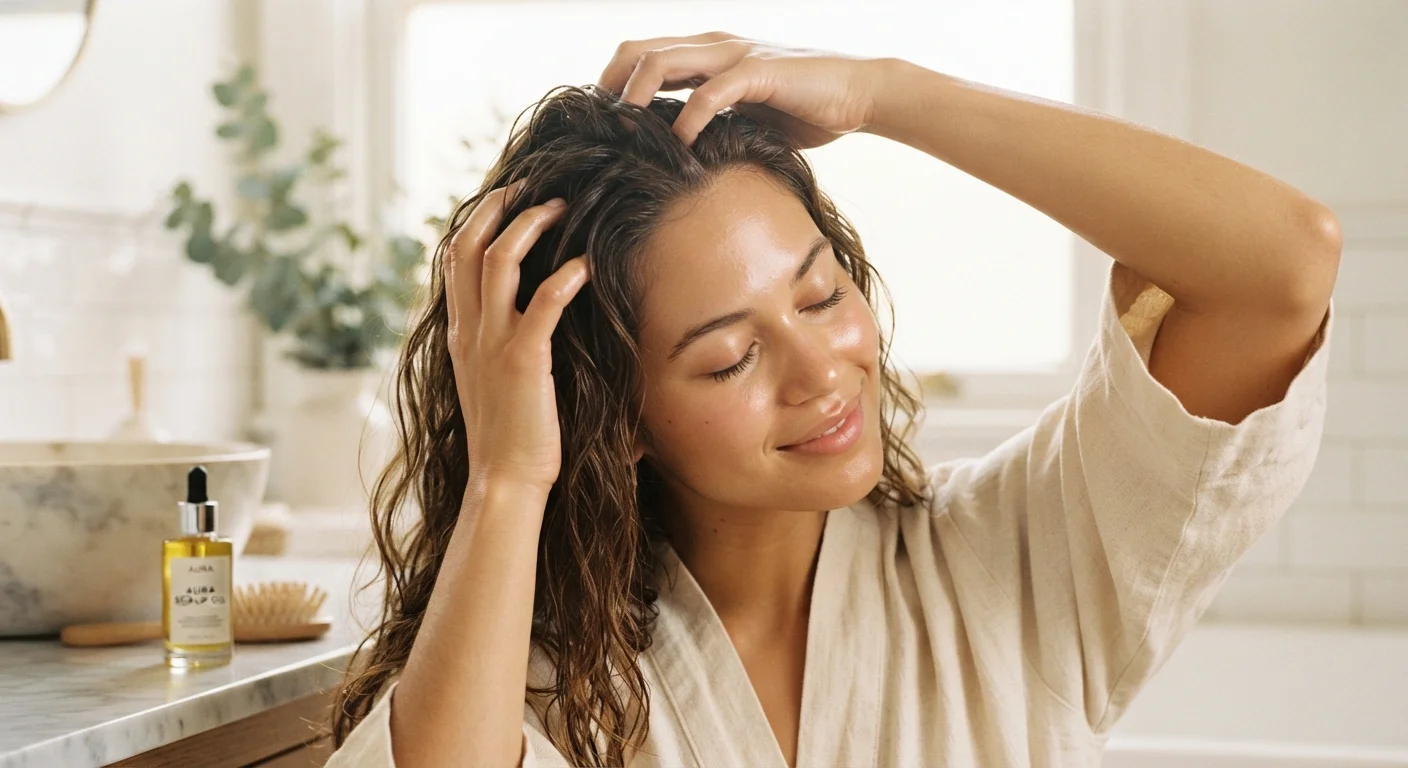
Why the Scalp Deserves a Spot in Your Routine
Most haircare conversations focus almost entirely on the strands — smoothness, shine, split ends. But hair actually begins below the surface, in the follicles embedded in scalp tissue. The condition of that skin determines a great deal about how hair grows and how it behaves day to day.
Think of it this way: even the most thoughtfully chosen shampoo and conditioner can't fully compensate for an irritated, congested, or imbalanced scalp. Yet scalp care is often the step people skip, rush through, or overlook entirely.
If you're building or refining a haircare practice, the scalp is the logical place to start. Our complete haircare routine guide covers how scalp health fits into the bigger picture alongside wash frequency, heat protection, and more.
~50%
Adults who experience dandruff at some point
Dandruff is one of the most common scalp conditions globally, affecting roughly half of adults at some stage, according to dermatology literature.
100,000+
Hair follicles on the average human scalp
The scalp houses a dense concentration of follicles, each anchored in tissue that requires adequate circulation, moisture balance, and cleanliness to function well.
Common Scalp Concerns and What Drives Them
Scalp issues are extremely common and often misunderstood. Here's a look at the most frequent ones:
- Excess oil (sebum): The scalp's sebaceous glands produce oil naturally, but overproduction can leave hair looking greasy quickly. Hormonal shifts, heat, and even over-washing — which strips oil and prompts the glands to compensate — can contribute.
- Dryness and tightness: Insufficient moisture, harsh cleansers, low humidity, or frequent heat styling can leave the scalp feeling tight or uncomfortable. Dry scalp differs from dandruff, though both involve flaking.
- Dandruff and seborrheic dermatitis: Dandruff involves flaking often linked to a naturally occurring yeast on the skin called Malassezia. Seborrheic dermatitis is a more pronounced version involving redness and oilier flakes. Both are manageable but benefit from appropriate cleansers or, in persistent cases, professional guidance.
- Product buildup: Styling products, dry shampoos, and heavy conditioners can accumulate on the scalp over time, potentially clogging follicles and causing irritation. A clarifying wash used periodically can help clear buildup.
It's worth noting that scalp conditions exist on a spectrum. Mild dryness is a different situation than a clinical diagnosis. If symptoms are significant or recurring, a dermatologist — not just a new shampoo — is the right next step.
Everyday Habits That Support a Balanced Scalp
Scalp health isn't typically achieved through a single product or a dramatic routine overhaul. It tends to respond to consistent, gentle habits over time.
Cleansing with intention
How you wash matters as much as how often. Using lukewarm rather than hot water helps avoid stripping the scalp of its natural oils. Massaging shampoo gently into the scalp — rather than piling hair up and scrubbing — reduces mechanical damage and encourages circulation without causing friction.
Giving conditioner the right placement
Conditioner is generally meant for the mid-lengths and ends of hair, not the scalp. Applying it directly to the roots can contribute to buildup and make the scalp feel heavy or congested, particularly for those prone to oiliness.
Allowing the scalp to breathe
Tight hairstyles worn frequently — high ponytails, tight braids — can place tension on follicles over time. Varying styles and allowing the scalp to rest from constant tension is a simple habit with meaningful long-term implications.
Considering seasonal shifts
Humidity, temperature, and indoor heating all affect scalp behavior. What works in summer may not translate to winter. Adjusting your approach seasonally — as outlined in our seasonal beauty routine checklist — can help you stay ahead of changes before they become problems.
Try a Weekly Scalp Massage
Spending two to three minutes massaging your scalp with your fingertips during a wash — or with a dry scalp massager tool — can help stimulate circulation and assist in distributing natural oils. Use gentle circular motions and avoid dragging nails across the skin. It's a low-effort habit that many people find both effective and relaxing.
Keeping It Simple and Sustainable
It's easy for a haircare routine to accumulate steps that add up to more stress than benefit. The goal with scalp care isn't to add a complicated new layer — it's to make the foundation more intentional. A few habit shifts, applied consistently, are generally more effective than a cabinet full of specialized products used sporadically.
For those looking to simplify without losing effectiveness, our guide to streamlining your beauty routine walks through where most routines get overcomplicated and what actually moves the needle.
And if you're structuring your week around beauty tasks, separating daily from weekly habits can help you find a rhythm that's genuinely sustainable rather than aspirational.
This article is for general informational and educational purposes only and does not constitute medical advice. If you are experiencing persistent or severe scalp symptoms, please consult a qualified healthcare provider or dermatologist.
Frequently Asked Questions
Washing frequency depends on your scalp type and lifestyle. Those with oilier scalps may benefit from washing every one to two days, while drier scalp types might do better washing less frequently. There's no universal rule — experimenting with frequency and observing how your scalp responds is a practical starting point.
Flaking and itching can stem from several causes, including dryness, seborrheic dermatitis, sensitivity to hair products, or fungal imbalance. Product buildup is also a common but overlooked contributor. If symptoms are persistent or severe, a dermatologist can help identify the underlying cause.
General nutritional status can influence skin and scalp condition. Adequate intake of nutrients like zinc, iron, and omega-3 fatty acids is associated with skin health broadly. However, diet alone rarely resolves clinical scalp conditions, and individual responses vary significantly.
Some small studies suggest regular scalp massage may support circulation in the area, and many people find it helps distribute natural oils. It's a low-risk habit worth incorporating, though it's not a proven treatment for hair loss or medical scalp conditions.
Consult a dermatologist if you experience significant hair shedding, persistent inflammation, open sores, or flaking that doesn't improve with gentle over-the-counter approaches. These symptoms can signal conditions that benefit from professional diagnosis and treatment.
The content on this site is for informational purposes only and is not a substitute for professional advice. Always consult a qualified professional for guidance specific to your situation.