

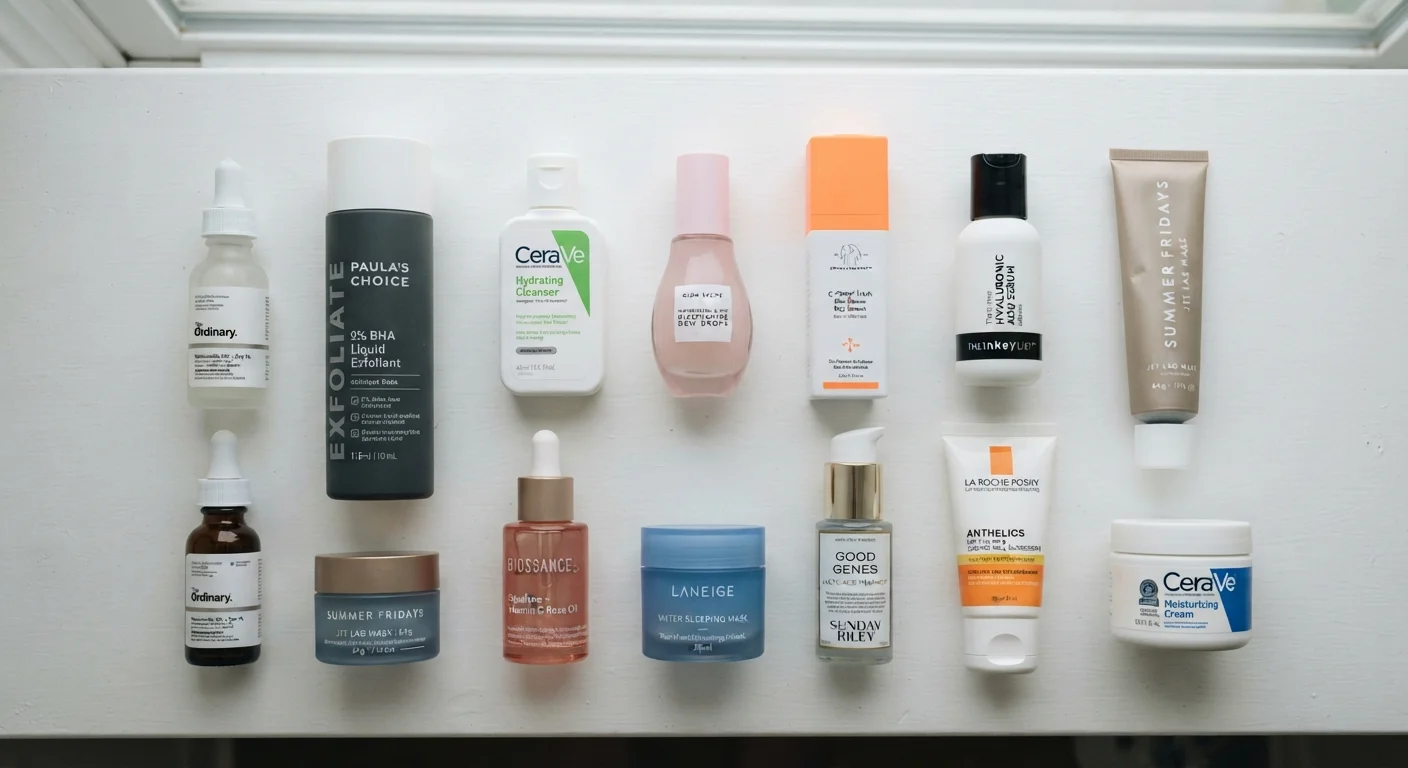
Why Ingredient Conflicts Matter More Than You Think
Building a skincare routine feels empowering — until your skin starts reacting in ways you didn't expect. Redness, peeling, breakouts, or a sudden dullness can all trace back to one culprit: conflicting active ingredients applied at the same time. Actives are the workhorses of skincare — retinoids, exfoliating acids, antioxidants, and acne-fighting agents — but they each have specific pH ranges, stability windows, and interaction tendencies. When the wrong ones meet on your face, the results range from reduced effectiveness to genuine irritation.
The good news is that most conflicts are easy to avoid once you know the patterns. See our guide to layering skincare in the right order for the foundational sequencing rules. Below, we break down the most common ingredient pairing mistakes and exactly how to sidestep them.
Common Ingredient Pairing Mistakes to Avoid
These errors show up frequently in everyday routines — often because skincare marketing encourages loading up on multiple actives without explaining how they interact.
Using retinol and AHA/BHA exfoliants in the same step.
Why it happens: Both are seen as anti-aging and acne-fighting staples, so many people assume layering them doubles the benefit.
Layering benzoyl peroxide directly over or under retinol.
Why it happens: Both target acne, and it's tempting to combine what seem like complementary acne-fighters in one routine step.
Mixing high-concentration vitamin C (L-ascorbic acid) with niacinamide.
Why it happens: Both are marketed as brightening agents, leading people to assume they're naturally complementary. Older formulation research suggested they can form a yellowish compound called nicotinic acid when combined, though newer literature is less conclusive.
Using multiple exfoliating acids (e.g., glycolic and salicylic) simultaneously.
Why it happens: Different acids are marketed for different concerns — glycolic for texture, salicylic for pores — so using both feels like covering all bases.
Applying oil-based serums before water-based actives.
Why it happens: Many people apply products in order of enthusiasm rather than formulation logic — heavier or richer textures feel like they should come last, but oil-based products applied first create a barrier that blocks water-based actives from absorbing.
Don't Ignore Barrier Damage Signs
Persistent stinging, tightness, flaking, or a shiny, almost 'raw' appearance are signs your skin barrier may be compromised — often from over-exfoliating or combining too many actives at once. If these symptoms appear, pause all actives and focus on a gentle cleanser, fragrance-free moisturizer, and SPF until skin recovers. Continuing to apply actives over a damaged barrier can worsen inflammation rather than resolve it.
How Timing Solves Most Pairing Problems
The most practical fix for nearly every ingredient conflict is separating actives by time — specifically, using your AM and PM routines strategically. Vitamin C and SPF-supporting antioxidants belong in the morning; retinoids and stronger exfoliating acids belong at night. This split isn't arbitrary. As our AM/PM routine breakdown explains, morning skin is primed for protection while nighttime is ideal for repair-focused ingredients.
For those managing multiple potent actives, skin cycling offers a structured rotation approach — dedicating specific nights to retinol, acids, and recovery. It's one useful framework, though it isn't the only solution. Even simpler: just don't use two strong actives in the same step. Alternating nights or sessions works just as well for most routines. If your lineup is feeling cluttered, streamlining your routine may be the most impactful move you can make.
~70%
Users reporting unintended skin reactions
A consumer survey published in the Journal of Cosmetic Dermatology found that approximately 70% of respondents had experienced an unintended skin reaction they later attributed to a product combination.
pH 3.5
Optimal pH range for L-ascorbic acid stability
Research on ascorbic acid formulations consistently identifies a pH below 3.5 as necessary for stability — significantly more acidic than many other serums applied in the same routine.
This article is for general informational purposes only and does not constitute medical or dermatological advice. Consult a licensed dermatologist for personalized skincare guidance, especially if you experience persistent irritation or skin reactions.
The content on this site is for informational purposes only and is not a substitute for professional advice. Always consult a qualified professional for guidance specific to your situation.