

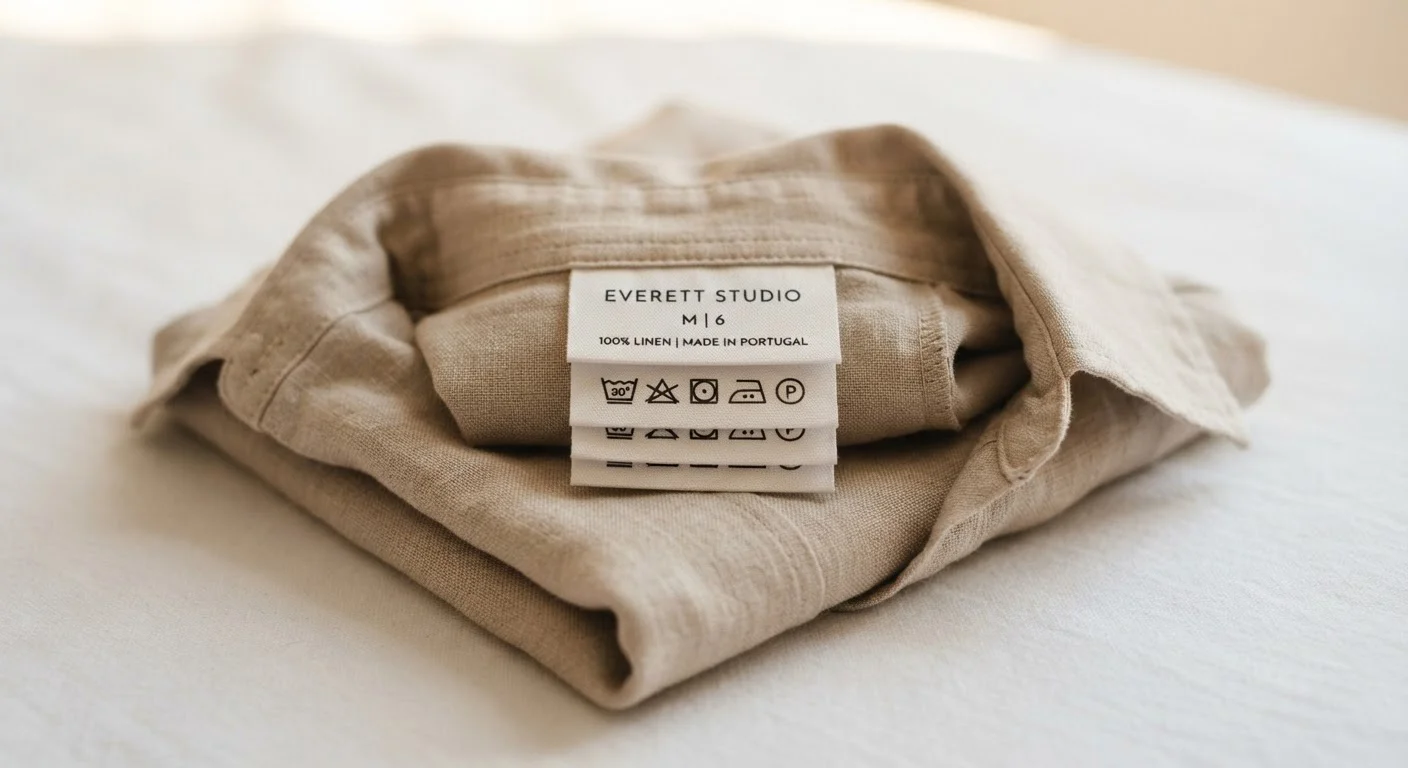
Why Care Labels Actually Matter
Most of us snip out clothing tags the moment we bring something home — but those symbols aren't just decorative stitching. They're standardized instructions that, when followed, can double the lifespan of your clothes and prevent expensive mistakes like a shrunken wool sweater or a bleach-stained blouse.
In the United States, the Federal Trade Commission (FTC) requires garment manufacturers to include permanent care labels with laundering instructions. That means every label you see follows an established system — once you learn the core symbols, you can decode any garment. Think of it like learning to read a dashboard: once you know what the symbols mean, everything clicks. (Speaking of symbols, reading dashboard warning lights follows a surprisingly similar logic.)
| U.S. care label requirement | Mandatory on all textile garments sold in the U.S. (Federal Trade Commission Care Labeling Rule) |
| Symbol standard used | ASTM D5489 (aligned with ISO 3758) |
| Core symbol categories | 5: Washing, Bleaching, Drying, Ironing, Dry Cleaning |
| Temperature dots in ironing symbols | 1 dot = low, 2 dots = medium, 3 dots = high |
| What an X over any symbol means | Do not perform that care process |
The Five Core Symbol Categories
Care labels use five main icon families. Here's what each one covers:
- Washing (tub of water): A plain tub means machine wash. Numbers inside the tub indicate the maximum water temperature in Celsius. One underline beneath the tub means gentle cycle; two underlines mean delicate cycle. An X through the symbol means do not wash.
- Bleaching (triangle): An empty triangle means any bleach is acceptable. A triangle with two diagonal lines means use only non-chlorine bleach. An X through the triangle means do not bleach at all.
- Drying (square): A square with a circle inside means tumble dry. Dots inside the circle signal heat level — one dot for low, two for medium, three for high. Lines inside the square (no circle) indicate flat dry or hang dry options.
- Ironing (iron shape): Dots inside the iron indicate temperature: one dot for low (synthetics), two for medium (wool), three for high (cotton/linen). An X through the iron means do not iron.
- Dry Cleaning (circle): A plain circle means dry clean. Letters inside (like P or F) indicate which solvents the cleaner should use — information relevant to the professional, not you. An X means do not dry clean.
ASTM D5489
The American standard that defines the care symbols used on U.S. garment labels. It aligns closely with the international ISO 3758 standard, so most symbols translate globally.
Delicate cycle
A washing machine setting that uses slow agitation and a slower spin to reduce mechanical stress on fragile or loosely woven fabrics.
Non-chlorine bleach
An oxygen-based bleaching agent that is gentler than chlorine bleach. Safe for most colored and synthetic fabrics where the care label shows a striped triangle.
Dry cleaning
A professional cleaning process that uses chemical solvents rather than water. Required for fabrics like structured wool, silk charmeuse, and some heavily embellished garments.
Lay flat to dry
An instruction to dry a garment horizontally on a clean surface rather than hanging it, which prevents stretching — especially important for knits and heavy wovens.
Common Mistakes — and How to Avoid Them
Even well-intentioned laundering can go wrong. A few patterns come up again and again:
- Ignoring temperature guidance: Hot water shrinks natural fibers like cotton and wool. When a label shows a low-temperature tub symbol, cold or warm water is the right call — not whatever your machine defaults to.
- Over-drying: High dryer heat weakens elastic, fades color, and causes pilling. If a label shows one dot (low heat) or a square with a line (lay flat to dry), trust it — especially for activewear and knitwear.
- Assuming "dry clean" means "dry clean only": Some labels say "dry clean" as a recommendation, while "dry clean only" is a firm instruction. Check the exact wording alongside the circle symbol.
Getting the care right is just one side of clothing longevity — proper fit also extends garment life by reducing stress on seams and fabric. And if you enjoy decoding everyday labels, the same careful reading pays off elsewhere: parsing a food label uses its own set of standardized codes worth knowing.
When Labels Are Missing or Faded
If a care label has been removed or is unreadable, check the fabric content label — it's often sewn nearby or printed on the same tag. Natural fibers like wool, silk, and linen generally need cooler water and gentler handling; synthetics like polyester and nylon tolerate more. When in doubt, cold water and air drying are the safest defaults for any unknown fabric.
The content on this site is for informational purposes only and is not a substitute for professional advice. Always consult a qualified professional for guidance specific to your situation.