

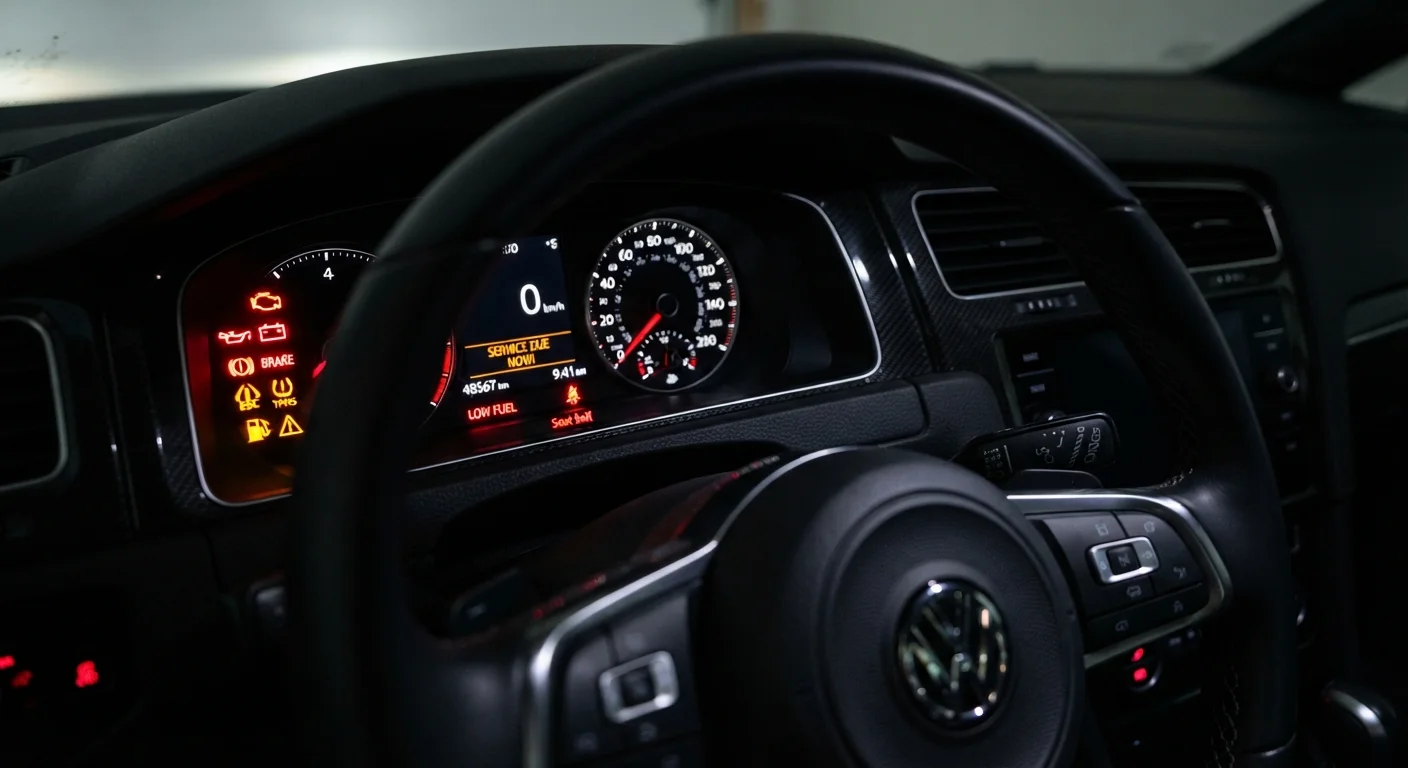
What Dashboard Warning Lights Are Actually Doing
Your vehicle's dashboard warning lights are part of the OBD system - a network of sensors that monitors critical vehicle functions and alerts you when something falls outside normal operating parameters. These lights aren't suggestions. They're the car's way of flagging a problem before it becomes a breakdown or a safety hazard.
Most lights follow a consistent color-coding convention across manufacturers:
- Red - Immediate attention required. Stop driving when safe to do so.
- Amber/Yellow - Caution. The issue may not be urgent, but needs attention soon.
- Green/Blue - Informational. A system is active (e.g., high beams, turn signal).
That said, your owner's manual is always the definitive reference for your specific vehicle. Symbol shapes and meanings can vary between makes and model years.
| Number of OBD fault codes | Thousands of standardized codes across makes (SAE International OBD-II standard) |
| Most common warning light | Check engine light (Reported consistently across US repair shop data) |
| Red light rule | Stop driving as soon as safely possible (General industry guidance across manufacturers) |
| TPMS federal requirement | Mandatory on all US passenger vehicles since 2008 (NHTSA TPMS Final Rule, 2005) |
| Flashing vs. steady CEL | Flashing = active misfire; treat as urgent (OBD-II diagnostic protocol) |
| Owner's manual | Primary reference for your specific vehicle's symbols (Varies by make, model, and year) |
The Most Common Warning Lights and What They Mean
The lights below appear across most vehicles sold in the US. Urgency levels are general guidance - always consult a qualified mechanic when in doubt.
Check Engine Light (CEL)
An amber engine-shaped icon that signals the vehicle's computer has detected a fault in the emissions or engine management system. A steady light means schedule a diagnostic; a flashing light means reduce speed and seek service promptly.
Oil Pressure Warning
A red icon resembling an oil can. Indicates dangerously low oil pressure - not simply low oil level. Stop driving immediately and do not restart until the cause is diagnosed by a mechanic.
TPMS (Tire Pressure Monitoring System)
An amber icon showing a cross-section of a tire with an exclamation point. Alerts you that one or more tires are significantly under-inflated. Check pressure and inflate to the spec on the driver's door jamb sticker - not the number on the tire sidewall.
Battery / Charging System Warning
A red battery icon indicating the vehicle's charging system is not maintaining proper voltage. Could point to a failing alternator, battery, or loose connection. The car may continue running briefly on battery power alone, but electrical systems will begin shutting down.
ABS Warning
An amber light reading 'ABS' that signals a fault in the Anti-lock Braking System. Your standard brakes still function, but the anti-lock feature - which prevents wheel lockup during hard stops - may be disabled until repaired.
Coolant Temperature Warning
A red thermometer icon submerged in liquid. Means the engine is overheating. Pull over safely, shut off the engine, and do not open the radiator cap. Have the vehicle towed if the temperature does not drop quickly.
Stability / Traction Control Light
An amber icon of a car with curved lines beneath it. When flashing, it means the system is actively working to maintain grip - normal in slippery conditions. When illuminated steadily, the system may be turned off or have a fault.
Service Due Reminder
Often displayed as a wrench icon or text message (e.g., 'Oil Life: 15%'). A maintenance interval reminder set by the vehicle's computer. Not an emergency, but should be addressed within the timeframe recommended in your owner's manual.
For a deeper look at what triggers the check engine light specifically - and how to triage it - see what your check engine light is actually telling you. And if dashboard lights are just one of several symptoms you're noticing, the broader driver's symptom reference covers unusual sounds and smells too.
When to Pull Over Immediately vs. When to Schedule Service
Not all warning lights carry the same weight. Misreading urgency is one of the most common - and expensive - mistakes drivers make.
Pull over as soon as safely possible if you see:
- Oil pressure warning (red oil can icon)
- Engine temperature warning (red thermometer in liquid)
- Brake system warning (red circle with exclamation mark or the word BRAKE)
- Battery charge warning combined with electrical symptoms
Continuing to drive with low oil pressure or an overheating engine can cause irreversible engine damage within minutes.
Schedule a service appointment within a few days for:
- Check engine light (steady, not flashing)
- Tire pressure monitoring system (TPMS) alert
- Maintenance due reminder
- Transmission temperature warning
A flashing check engine light is a separate matter - it typically indicates an active misfire that can damage the catalytic converter. Treat a flashing light as urgent.
Don't Rely on the Light Alone
Warning lights illuminate only after a sensor threshold is crossed - meaning an issue may exist before any light appears. A vehicle that seems to be running fine can still have developing problems that regular maintenance catches early. Lights are a backstop, not a substitute for scheduled service intervals.
Many dashboard alerts relate directly to fluid levels. See what's under the hood for a plain-language guide to checking and understanding each reservoir. Keeping up with scheduled service intervals also prevents many warning lights from appearing in the first place - your car's maintenance schedule, explained breaks down what those service intervals actually require.
The content on this site is for informational purposes only and is not a substitute for professional advice. Always consult a qualified professional for guidance specific to your situation.