

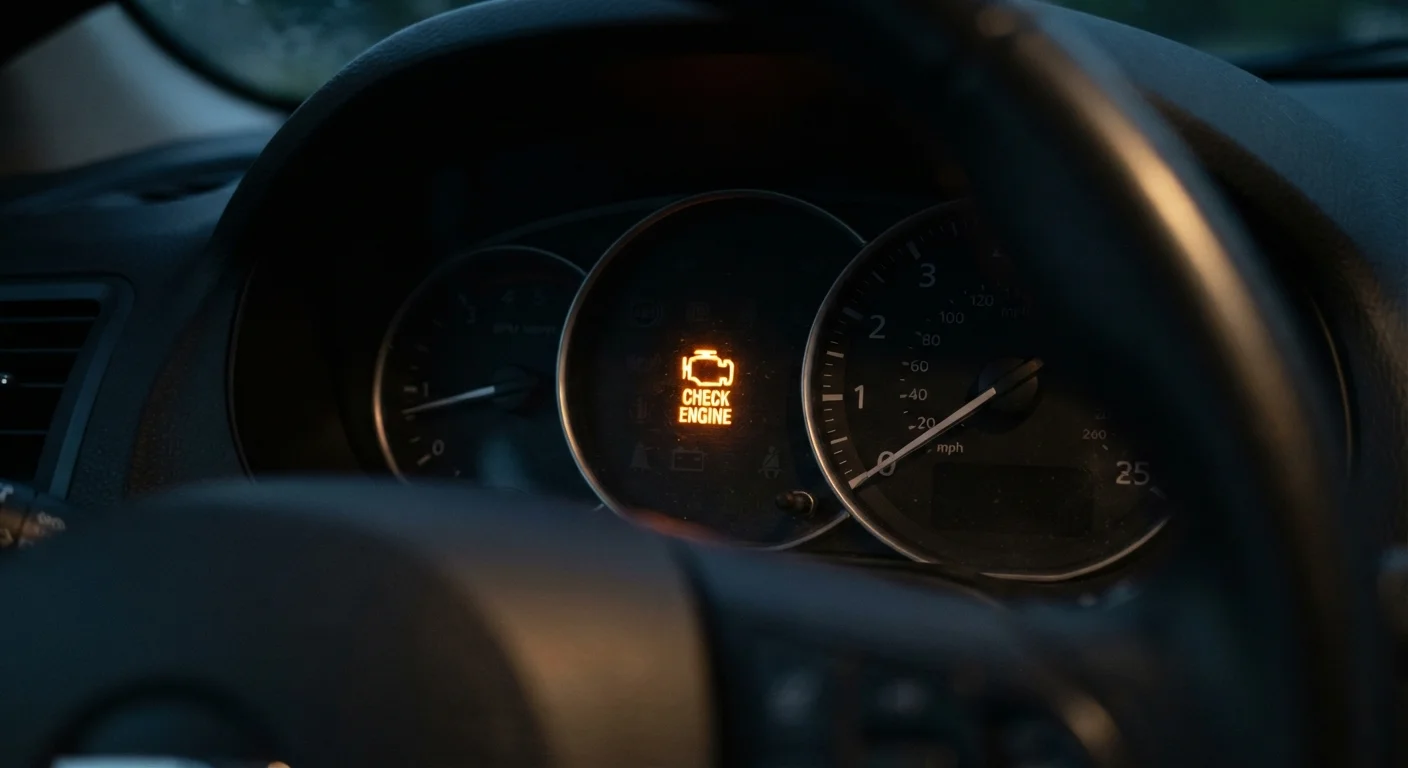
What the Light Actually Means
The check engine light is your car's way of flagging that its self-monitoring system has detected something outside of normal operating parameters. It doesn't pinpoint the exact problem - it simply tells you that the OBD-II system has logged a fault code worth investigating.
The light can appear solid or flashing. A solid light suggests a stored fault that isn't immediately disabling your vehicle. A flashing or blinking light is more urgent - it typically signals an active engine misfire that can damage the catalytic converter if ignored. See our driver's symptom reference guide for a broader look at what other dashboard alerts and warning signs typically indicate.
~40%
Check engine alerts tied to emissions-related faults
Emissions system components - including oxygen sensors and catalytic converters - account for a large share of check engine codes recorded in OBD-II diagnostic studies.
1 in 10
Vehicles on US roads with an active check engine light
Industry estimates have consistently found that a significant portion of vehicles being driven carry an unresolved OBD-II fault code at any given time.
Common Triggers You Should Know
Not every check engine alert is a five-alarm situation. Here are the most frequently seen causes, ranked loosely from minor to more significant:
- Loose or faulty gas cap: An unsealed fuel system triggers an evaporative emissions fault. Tightening or replacing the cap often resolves it.
- Oxygen (O2) sensor failure: These sensors monitor exhaust gases. A failing one affects fuel efficiency and emissions, but the car usually remains drivable short-term.
- Catalytic converter issues: Often a downstream consequence of other ignored problems. Replacement is expensive, making early diagnosis important.
- Mass airflow sensor: Measures the air entering the engine. Failure causes rough idling and reduced fuel economy.
- Spark plugs or ignition coils: Worn plugs cause misfires, which can also trigger the flashing version of the light.
Keeping up with your vehicle's routine service intervals reduces the likelihood of many of these failures. Our maintenance schedule explainer breaks down what each interval actually covers.
How to Respond When the Light Comes On
Your first step is to assess the situation calmly rather than react with alarm. Ask yourself a few quick questions:
- Is the light solid or flashing?
- Is the car running normally, or do you notice rough idling, shaking, loss of power, or unusual smells?
- Did you recently fill up with gas? (A loose cap is a quick check.)
If the light is solid and the car seems fine, schedule a diagnostic scan within the next few days. Many auto parts stores offer free code reads, which can give you a starting point - though a full professional diagnosis provides more reliable guidance on what actually needs repair.
If the light is flashing, or if you notice other symptoms like overheating or a loss of power steering, reduce your speed and get to a mechanic promptly. Continuing to drive under those conditions risks compounding the damage. It's also worth checking fluid levels while you're at it - our guide to reading fluids under the hood walks through what to look for.
Get the Code Read Before Approving Repairs
When a shop diagnoses your check engine light, ask for the specific Diagnostic Trouble Code (DTC) before authorizing any work. This lets you understand what was found, do a quick cross-check, and make an informed decision about the recommended repair - rather than simply approving work without context.
Why Ignoring It Costs More in the Long Run
A check engine light that goes unaddressed doesn't fix itself - and in many cases, a small problem quietly becomes an expensive one. A failing oxygen sensor, for example, causes the engine to run rich (burning excess fuel), which over time degrades the catalytic converter. A catalytic converter replacement can run into the hundreds or even thousands of dollars, while an oxygen sensor swap is a fraction of that cost.
Beyond repair costs, some states require a passing OBD-II diagnostic check as part of emissions inspections. A stored fault code - even from a minor issue - can cause your vehicle to fail, preventing registration renewal until it's cleared.
The check engine light is your car communicating with you. Treating it as useful information rather than background noise keeps both your vehicle and your wallet in better shape.
This article is for general informational purposes only. For diagnosis and repair of your specific vehicle, consult a qualified mechanic or automotive technician.
Frequently Asked Questions
If the light is steady and the car drives normally, it's generally safe to drive short distances to a shop. However, if the light is flashing, the car is running rough, or you notice other warning lights, pull over safely and have the vehicle towed or inspected immediately.
Sometimes. If the triggering condition resolves itself - such as a gas cap being tightened - the light may turn off after several drive cycles. However, the underlying fault code remains stored, and the problem may return. Getting a proper diagnosis is always the better path.
A loose or faulty gas cap is among the most frequent triggers and is easy to fix yourself. Other common causes include a failing oxygen sensor, worn spark plugs, or a faulty mass airflow sensor. A scan tool reading is the only way to confirm the specific cause.
Not always. A solid, non-flashing light typically indicates an issue that should be addressed soon but isn't necessarily an emergency. A flashing light, on the other hand, signals an active engine misfire or another serious condition that warrants immediate attention.
Many auto parts retailers offer free code reads, though these only retrieve the fault code and not a full diagnosis. A professional diagnostic inspection at a repair shop typically costs between $75 and $150, though this varies by location and vehicle type.
The content on this site is for informational purposes only and is not a substitute for professional advice. Always consult a qualified professional for guidance specific to your situation.