

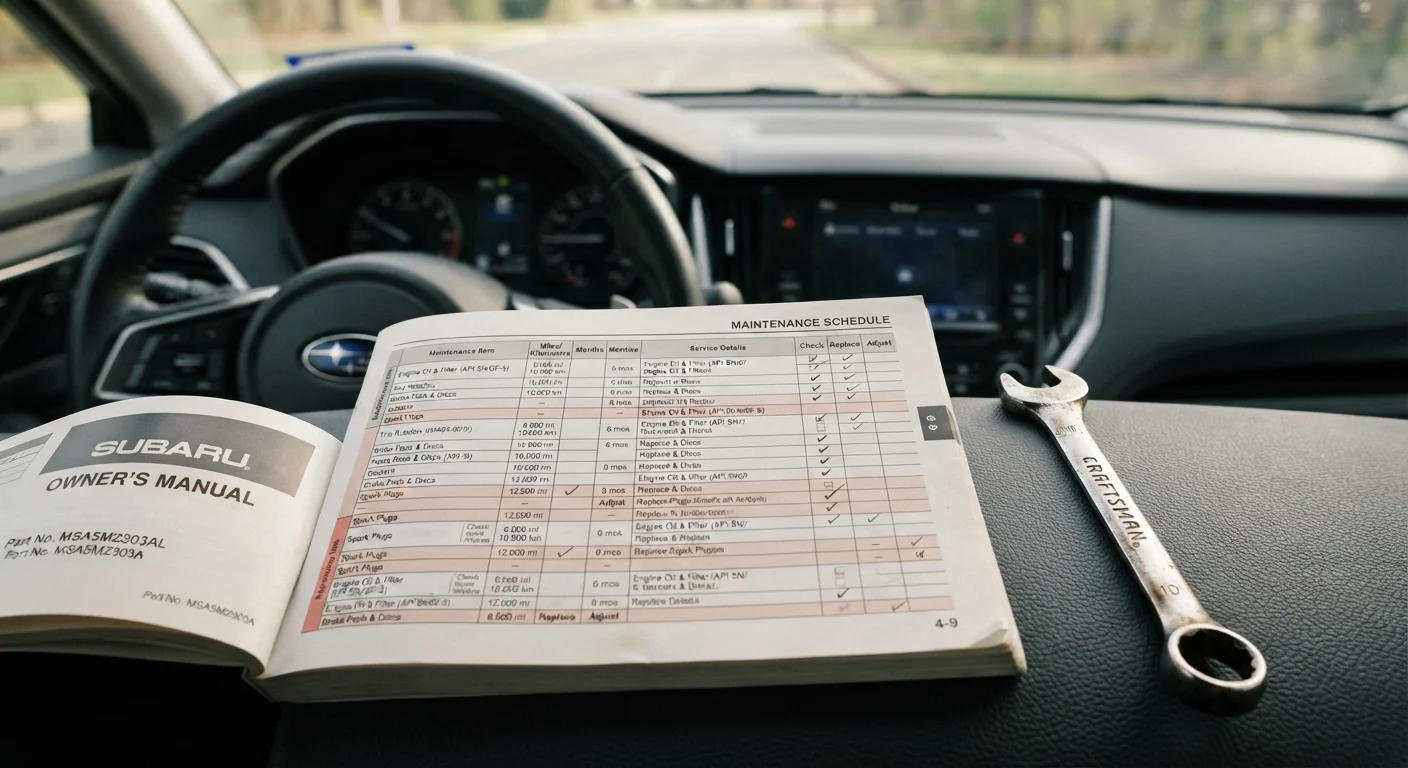
What a Maintenance Schedule Actually Is
Every vehicle that rolls off an assembly line comes with a manufacturer-defined service plan - a list of tasks tied to specific mileage or time milestones. This isn't marketing material; it's engineering guidance based on how components wear under normal operating conditions.
The schedule lives in your owner's manual, typically under a heading like "Scheduled Maintenance" or "Service Intervals." It lays out exactly what needs to be inspected, replaced, or topped off at each interval - and it's specific to your vehicle's engine, transmission, and design. Generic advice from the internet or a quick-lube shop can't replace it.
For broader vehicle ownership context, the Car Ownership Basics hub covers foundational topics including registration, insurance, and ongoing costs.
77%
Of vehicles found in poor maintenance condition
According to the Car Care Council's Vehicle Care surveys, roughly 77% of vehicles on the road need some form of maintenance or repair at any given time.
10,000 mi
Typical synthetic oil change interval for modern engines
Many automakers now specify full synthetic oil change intervals of 7,500-10,000 miles or more, replacing the outdated 3,000-mile rule.
$1,200+
Average cost of a blown head gasket repair
Industry repair data consistently shows that neglecting cooling system maintenance - a scheduled service item - can lead to failures costing well over $1,000 to fix.
How Intervals Work: Mileage vs. Time
Maintenance intervals are almost always expressed two ways: mileage and elapsed time. For example, an oil change might be listed as "every 7,500 miles or 6 months, whichever comes first." That second part matters. If you drive infrequently and your car sits mostly in the driveway, time-based degradation still occurs - motor oil breaks down chemically even without being driven through.
Many newer vehicles also include an oil life monitoring system that calculates when an oil change is actually needed based on temperature, rpm cycles, and driving patterns. This can extend or shorten the interval depending on real-world use - but it's not a substitute for following all other scheduled services.
Don't Rely Solely on the Oil Change Sticker
Quick-lube shops often place a sticker on your windshield recommending your next oil change at 3,000 miles. For many modern vehicles running full synthetic oil, that interval is unnecessarily short. Always cross-reference the sticker with your owner's manual - the manual wins.
What Each Service Milestone Typically Covers
Not all service appointments are created equal. Minor services - common around every 5,000 to 7,500 miles - usually involve an oil and filter change, tire rotation, and a basic inspection. Major services at higher mileage milestones (30,000, 60,000, 90,000 miles) are more comprehensive.
- 30,000 miles: Air filter replacement, fuel filter (on applicable models), brake inspection, and fluid top-offs.
- 60,000 miles: Spark plug replacement on many engines, coolant flush, transmission fluid check, and brake pad assessment.
- 90,000 miles: Timing belt inspection or replacement (if applicable), serpentine belt check, and a full fluid system review.
The guide to reading your vehicle's fluids explains what each reservoir does and what to watch for between service appointments.
Normal vs. Severe Driving Conditions
Most maintenance schedules include two tracks: one for "normal" driving and one for "severe" conditions. Severe doesn't mean reckless - it means operating patterns that put extra stress on components. If you regularly drive in stop-and-go traffic, make frequent short trips, tow a trailer, or live in an area with extreme temperatures or dusty roads, the severe schedule likely applies to you.
Under severe conditions, intervals are shorter across the board. Engine oil degrades faster, brakes wear more quickly, and air filters clog sooner. Check your owner's manual to see how the two schedules differ for your vehicle.
For a season-by-season look at what to inspect and replace throughout the year, see The Seasonal Car Care Checklist for American Drivers.
“The single best thing a driver can do for long-term vehicle reliability is read the owner's manual and follow the maintenance schedule - not the advice on a quick-lube receipt.”
— Automotive Service Excellence (ASE), National certification body for automotive technicians
Keeping Records and Planning Ahead
Tracking completed services protects you in two important ways: it helps you stay on schedule, and it provides documentation if warranty questions arise or when you eventually sell the vehicle. A simple folder with receipts, a spreadsheet, or even a notes app on your phone can serve this purpose.
If you've bought a used car and don't have complete service history, a qualified mechanic can inspect the vehicle and help establish a baseline - identifying what's overdue and what still has life left. From there, following the manufacturer schedule consistently is the most reliable path to long-term reliability. Drivers looking ahead can also explore keeping a high-mileage vehicle on the road longer once they pass the 100,000-mile mark.
For a look at which maintenance tasks are safe to handle yourself versus when to bring in a professional, DIY vs. Shop breaks it down clearly.
Frequently Asked Questions
Check the owner's manual that came with your vehicle - typically in a dedicated maintenance or service section. Many automakers also provide digital versions of owner's manuals on their official websites. The manual is always more reliable than generic mileage rules.
Skipping services can cause premature wear on components like brakes, belts, and the engine itself. It may also void your manufacturer's warranty if a problem arises from a neglected service. Over time, deferred maintenance tends to result in more expensive repairs.
For most modern vehicles, no. Many newer cars using full synthetic oil can go 7,500 to 10,000 miles or more between oil changes. The 3,000-mile rule originated with older engines and conventional oil. Always follow your owner's manual, not the sticker on your windshield.
Severe conditions include frequent short trips under 5 miles, stop-and-go city driving, towing or hauling heavy loads, driving in extreme heat or cold, and operating in dusty or mountainous terrain. These conditions accelerate wear and typically require more frequent service intervals.
Yes, a qualified mechanic can review your vehicle's history and owner's manual to build a practical service plan. This is especially useful if you've purchased a used vehicle and don't have complete records of past maintenance.
Yes. Older and higher-mileage vehicles often need more frequent inspections of wear items like belts, hoses, and seals. Some components have finite lifespans regardless of how well the car has been maintained.
The content on this site is for informational purposes only and is not a substitute for professional advice. Always consult a qualified professional for guidance specific to your situation.