

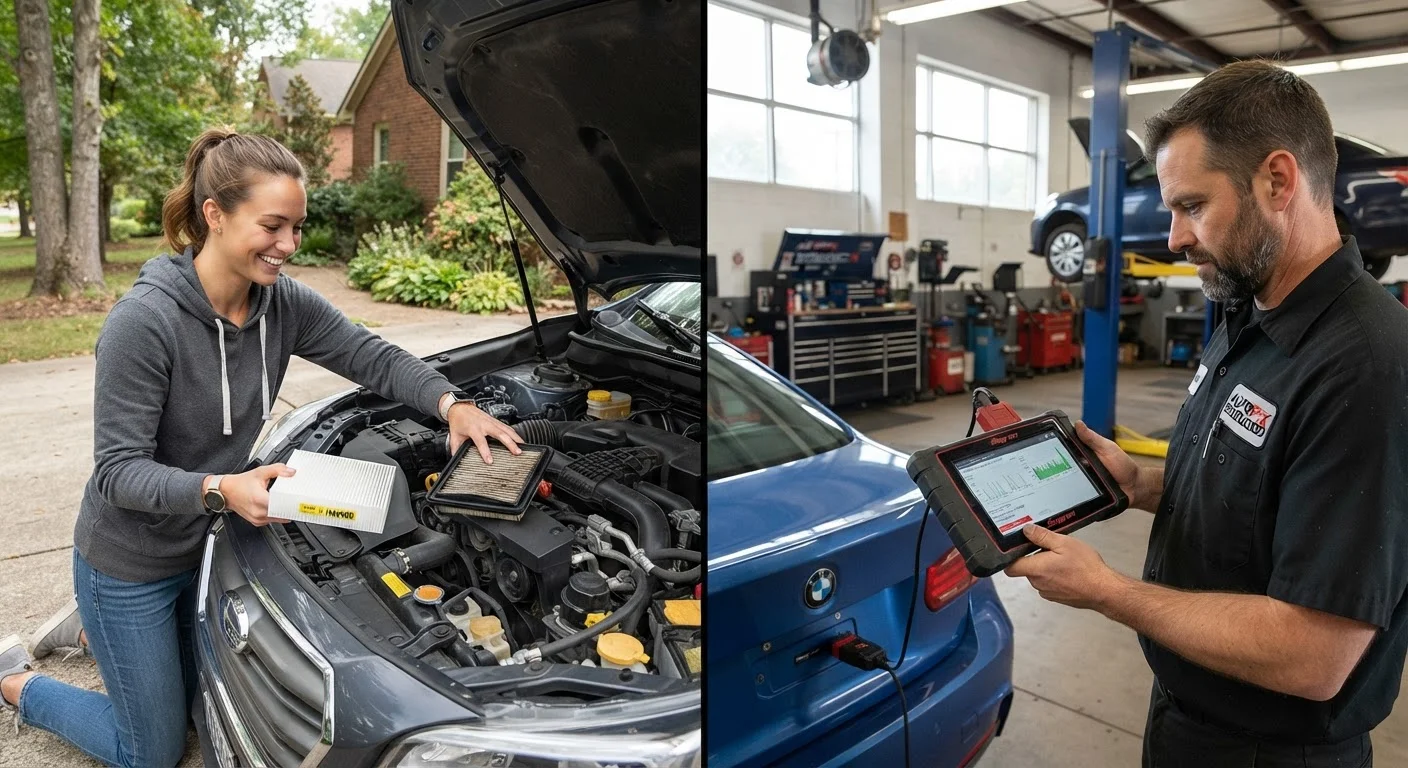
Our Verdict
DIY maintenance makes sense for straightforward, low-risk tasks where mistakes are recoverable and the savings are real. For anything touching safety systems, advanced electronics, or high-pressure components, professional service is generally the smarter call. The key is honest self-assessment: know your tools, your skill level, and what your specific vehicle requires.
| Best for | Recommended |
|---|---|
| Drivers comfortable with basic tools and simple procedures | DIY maintenance |
| Safety-critical or complex electronic repairs | Professional shop |
| High-mileage vehicles needing frequent upkeep on a budget | DIY for routine items, shop for diagnostics |
| New car owners unfamiliar with their vehicle's systems | Professional shop |
Why This Decision Actually Matters
The instinct to handle car repairs yourself is understandable - labor rates at auto shops can run $100-$150 per hour or more, and some jobs genuinely don't justify that cost. But not all repairs are created equal. Getting this call wrong in one direction costs you money unnecessarily; getting it wrong in the other can compromise your safety or leave you with a bigger repair bill than you started with.
A useful framework: ask yourself three questions before touching anything. Do I have the right tools? Do I understand what I'm actually fixing? And if I make a mistake, what are the consequences? The answers will tell you most of what you need to know. For a broader look at staying ahead of expensive repairs, see smart maintenance habits that help extend vehicle life without overspending.
Repairs Most Drivers Can Handle at Home
These tasks are generally well within reach for drivers with basic mechanical interest and a few common tools. They involve accessible components, low safety risk if done incorrectly, and are covered step-by-step in most owner's manuals.
- Engine air filter replacement: Usually a matter of unclipping a housing, swapping the filter, and snapping it back. No tools required on most vehicles.
- Cabin air filter replacement: Typically located behind the glove box or under the dashboard. The job takes under 15 minutes on most models.
- Windshield wiper blades: Straightforward and inexpensive. Fitting instructions are on the wiper packaging.
- Battery terminal cleaning: A wire brush and some baking soda solution handle corrosion effectively. Disconnect the negative terminal first.
- Topping off fluids: Washer fluid, coolant (when cold), and power steering fluid are all visible and accessible under the hood.
- Replacing bulbs: Many exterior bulbs - particularly on older vehicles - can be swapped without tools. Newer vehicles may require partial disassembly.
Start With Your Owner's Manual
Your owner's manual is the most underused resource in most glove boxes. It lists fluid specifications, filter part numbers, and service intervals specific to your vehicle - information that generic advice online often gets wrong. Before attempting any maintenance, confirm the procedure and specs for your exact year, make, and model.
Your owner's manual is the most underused resource in most glove boxes. It lists fluid specifications, filter part numbers, and service intervals specific to your vehicle - information that generic advice online often gets wrong.
Jobs That Generally Belong in a Shop
Some repairs look approachable on video tutorials but carry real risks when things go wrong. Others require specialized tools that simply aren't practical to own for a one-time job.
- Brake system work: Pads can be replaced at home with care, but rotors, calipers, brake lines, and especially ABS components require precision. Improperly installed brakes are a serious safety hazard.
- Airbag and SRS system repairs: These systems involve live explosive charges. Even with the battery disconnected, residual charge can trigger deployment. Leave these entirely to certified technicians.
- Transmission service: Fluid changes on some models are DIY-friendly; internal repairs are not. Transmission work that goes wrong is among the most expensive to fix.
- Fuel system repairs: Working with pressurized fuel lines without the right equipment creates fire and explosion risk.
- Suspension components under load: Spring compression without proper tools can cause serious injury.
- Check engine light diagnostics: Reading the code is easy with a $30 OBD-II scanner. Correctly interpreting and fixing the underlying cause often isn't.
High-Voltage Systems: Don't Guess
Modern vehicles - particularly hybrids and EVs - contain high-voltage systems that can be lethal. Never work on battery packs, inverters, or high-voltage wiring without proper training and equipment, regardless of experience with conventional vehicles. If you're unsure whether your vehicle has high-voltage components in the area you're working, consult a certified technician before proceeding.
Modern vehicles - particularly hybrids and EVs - contain high-voltage systems that can be lethal. Never work on battery packs, inverters, or high-voltage wiring without proper training and equipment, regardless of experience with conventional vehicles.
If you're unsure whether your vehicle has high-voltage components in the area you're working, consult a certified technician before proceeding.
How to Compare DIY vs. Shop for Any Given Job
Use this framework when you're on the fence about a specific repair.
| DIY at Home | Professional Shop | |
|---|---|---|
| Typical cost | Parts cost only | Parts plus $100-$150/hr labor |
| Tools required | Basic hand tools for most tasks | Specialized equipment for diagnostics and complex jobs |
| Safety risk if done incorrectly | Low for routine maintenance | N/A - professional accountability |
| Time investment | Varies; simple jobs take minutes | Usually faster due to experience and equipment |
| Warranty implications | May affect extended warranties; check terms | OEM work typically preserves warranty coverage |
| Best suited for | Filters, fluids, wipers, bulbs | Brakes, suspension, electronics, diagnostics |
Understanding your vehicle's full service schedule also helps you plan which items to DIY and which to bundle into a shop visit. Decoding your maintenance schedule is a good starting point. And if you're managing an older vehicle, high-mileage maintenance priorities can help you decide where to focus your energy.
Setting Yourself Up for DIY Success
If you're going to handle maintenance at home, a modest investment in tools and preparation pays off quickly. A basic socket set, torque wrench, jack stands (never rely on a floor jack alone), and an OBD-II scanner cover a wide range of jobs. Always use jack stands rated for your vehicle's weight, work on level ground, and wear eye protection when working under the car.
One often-overlooked step: look up the specific procedure for your year, make, and model - not just the general repair type. Differences between model years and trim levels can make a seemingly simple job much more involved. The seasonal car care checklist is a practical companion for tracking what to inspect and when throughout the year.
This article is for general informational purposes only. Automotive repair involves real safety risks. When in doubt about any repair, consult a qualified, licensed mechanic before proceeding.
The content on this site is for informational purposes only and is not a substitute for professional advice. Always consult a qualified professional for guidance specific to your situation.