

Why Consistent Maintenance Is a Money-Saving Strategy
It might seem counterintuitive, but spending on routine maintenance is how drivers avoid spending on major repairs. A neglected vehicle doesn't just break down more often - it deteriorates faster, loses reliability, and can become unsafe. The pattern is predictable: skip a small service, absorb a much larger bill later.
This isn't about keeping a spotless car. It's about protecting a significant financial asset. For most American households, a vehicle is one of the largest purchases they'll make, and how it's maintained directly affects how long it remains useful and what it costs to keep on the road.
The good news is that the most impactful maintenance habits aren't complicated or expensive on their own. They're consistent. See our car maintenance hub for a broad overview of what regular upkeep actually involves.
Follow your owner's manual service intervals, not guesswork or habit.
Manufacturer-specified intervals are based on engineering data for your specific vehicle. Using generic rules of thumb - like a fixed mileage interval that doesn't match your manual - can lead to over-servicing or, more commonly, under-servicing. Either wastes money or leaves you exposed.
Check tire pressure monthly and before long trips.
Underinflated tires wear unevenly, reduce fuel efficiency, and increase blowout risk. Pressure changes with temperature - a tire can lose about 1 PSI for every 10°F drop in ambient temperature - so seasonal swings matter. Proper tire care also extends tread life significantly.
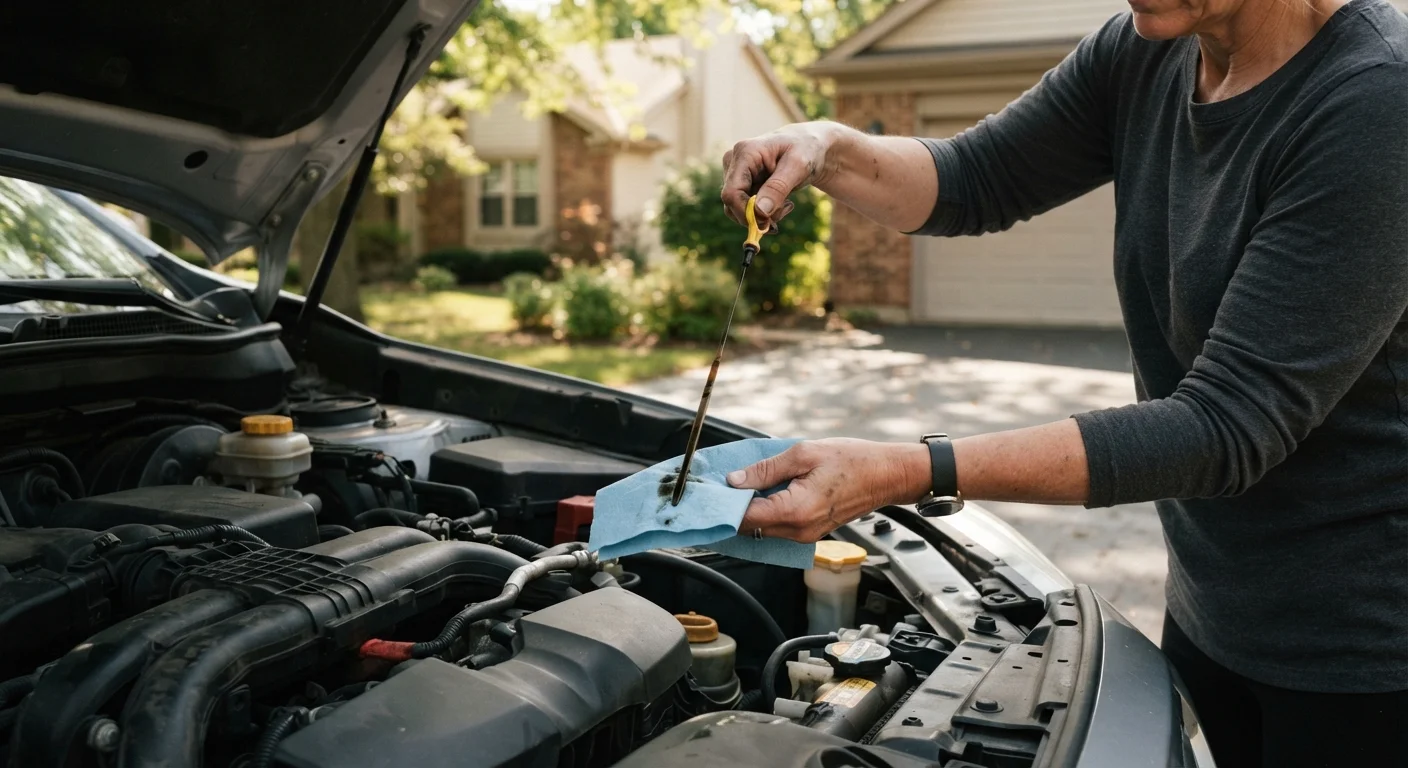
Never skip or significantly delay oil changes.
Oil lubricates, cools, and cleans engine components. As it degrades, it becomes less effective at all three functions, leading to increased friction and wear. Engine repairs caused by oil neglect are among the most expensive a driver can face. Why skipping oil changes costs more than you think makes the full case.
Address unusual sounds, warning lights, or handling changes promptly.
A squealing brake, a check-engine light, or a new vibration in the steering wheel are signals - not nuisances to ignore until a scheduled service. Early diagnosis is almost always less expensive than the failure it might prevent. Brake warning signs are particularly misunderstood.
Set aside a dedicated monthly maintenance fund.
Vehicle maintenance costs are predictable in aggregate even when the timing of individual services varies. Treating maintenance as a fixed monthly budget line - rather than an unexpected expense - removes the financial pressure that leads people to defer services. Budgeting basics can help frame how to build this habit.
Quick Wins You Can Act on This Week
Some of the most valuable maintenance steps require no appointment and minimal cost. They're the kind of checks that take ten minutes in a driveway but catch problems before they become repairs.
For a deeper look at what each service milestone actually covers, Your Car's Maintenance Schedule, Explained breaks down the numbers in your owner's manual in plain language.
Building Habits That Prevent the Biggest Repair Bills
Expensive repairs rarely come out of nowhere. Engine damage, transmission failures, and brake system overhauls are usually the downstream result of deferred maintenance - the automotive equivalent of what happens when small home repairs get postponed.
~$1,200
Average annual vehicle maintenance cost per driver
According to AAA research, the average American driver spends roughly this amount annually on routine vehicle upkeep - a fraction of what major neglect-related repairs can cost.
200,000+
Miles well-maintained vehicles regularly achieve
Industry data consistently shows that consistent, scheduled maintenance is the primary factor distinguishing vehicles that last well beyond 150,000 miles from those that don't.
Driving habits also matter more than most owners realize. Hard acceleration, late braking, and overloading a vehicle all accelerate component wear. Smooth, predictable driving is genuinely easier on the mechanical systems underneath you.
For vehicles with significant mileage already on the clock, specific care priorities apply. Keeping a High-Mileage Vehicle on the Road Longer covers what changes - and what stays the same - once you cross 100,000 miles.
Know When to Involve a Professional
Some maintenance tasks - fluid top-offs, filter checks, tire pressure - are well within reach for most drivers. Others, including brake system work, suspension repairs, and anything involving the fuel or electrical systems, should be handled by a qualified mechanic. DIY vs. Shop outlines a clear way to think through the distinction. When in doubt, an inspection from a trusted shop is money well spent.
This article provides general vehicle maintenance information for educational purposes. For repairs involving safety-critical systems, consult a qualified mechanic. Cost estimates vary by vehicle make, model, location, and service provider.
The content on this site is for informational purposes only and is not a substitute for professional advice. Always consult a qualified professional for guidance specific to your situation.