

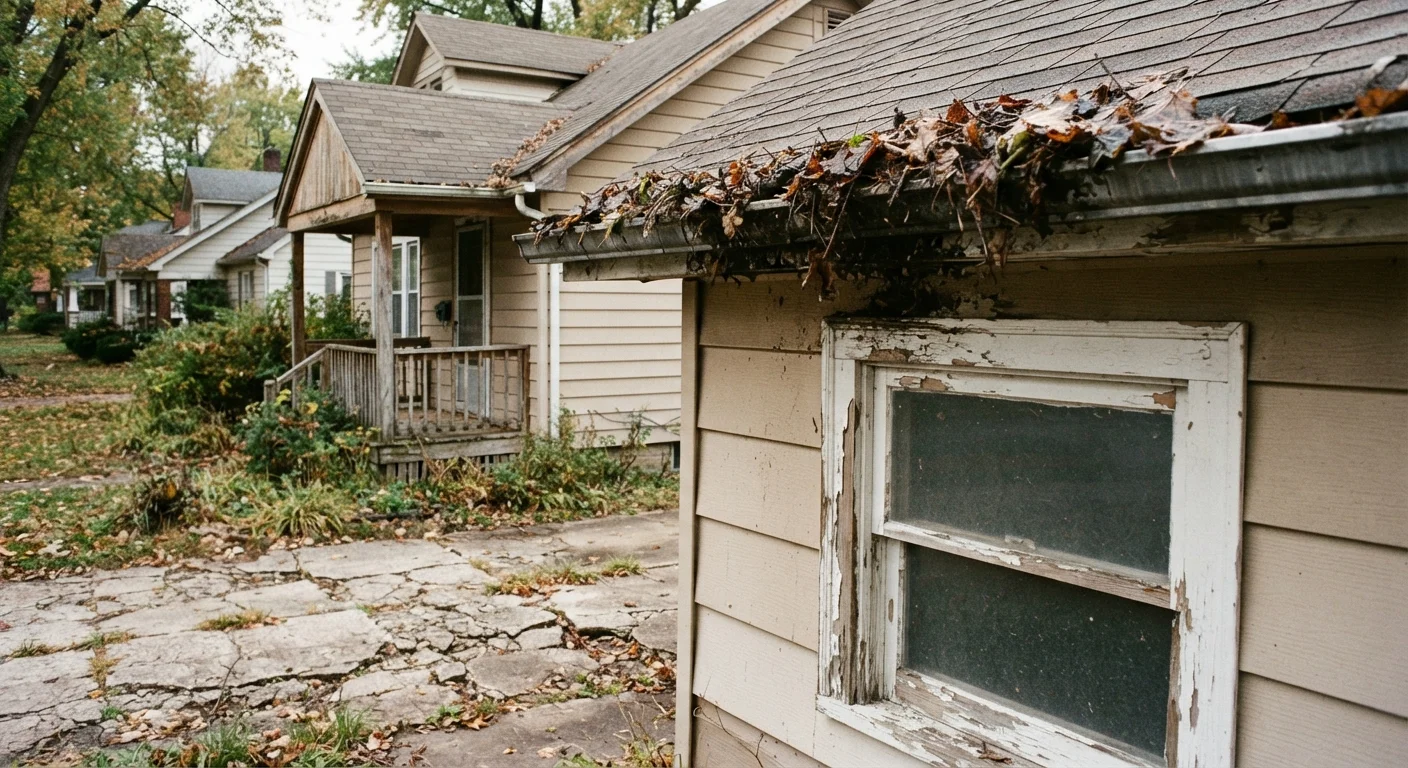
Why Small Problems Rarely Stay Small
Most deferred maintenance starts with good intentions. A homeowner notices a slow drip under the bathroom sink or a hairline crack in the driveway caulk and makes a mental note to get to it later. Life gets busy, the symptom seems minor, and weeks become months. This is where the real cost begins — not in the original defect, but in what that defect enables over time.
Home systems are deeply interconnected. A clogged gutter, for example, isn't just an aesthetic problem. When water can't drain properly, it backs up against fascia boards, seeps under roofing material, and eventually finds its way into wall cavities. What started as a $150 gutter cleaning can become a $4,000–$8,000 repair involving rotted wood, damaged insulation, and mold remediation. Water is the most common catalyst for this kind of escalation, but it's far from the only one.
HVAC filters left unchanged force the system to work harder, shortening equipment lifespan. A small roof flashing gap lets moisture into the attic over several seasons. Foundation cracks that admit water worsen with freeze-thaw cycles. In each case, the damage compounds — and the window for an inexpensive fix closes quietly.
1–2%
Recommended annual home maintenance budget
Many home professionals suggest setting aside 1–2% of a home's value each year to cover routine upkeep and prevent deferred maintenance from accumulating.
~90%
Of home water damage linked to preventable causes
Industry estimates suggest the large majority of residential water damage incidents involve issues — such as failed seals, clogged gutters, or unaddressed leaks — that routine maintenance could have caught earlier.
10x
Cost multiplier for ignored structural water damage
Home inspection professionals frequently observe that water intrusion damage left unaddressed for a year or more can cost ten times or more to remediate than if caught and treated early.
The Real Financial Toll
Deferred maintenance carries a financial cost that most homeowners underestimate until they're facing it directly. Home professionals commonly suggest budgeting 1–2% of a home's purchase price per year for routine maintenance — so for a $350,000 home, that's $3,500–$7,000 annually. When that money isn't spent on upkeep, the liability doesn't disappear; it accumulates.
At resale, deferred maintenance becomes highly visible. Home inspectors flag it, appraisers discount for it, and buyers use it as negotiating leverage — often demanding price reductions that exceed what the repairs would have cost. Insurance can be affected too: policies typically exclude damage attributed to neglect, meaning a homeowner who deferred roof repairs and then experienced storm damage may find their claim partially or fully denied.
The comparison to vehicle ownership is instructive. Just as skipping routine car upkeep leads to avoidable engine damage — as explored in our article why skipping oil changes costs more than you think — skipping home maintenance trades small, manageable expenses for large, unpredictable ones.
“Deferred maintenance is really deferred cost — the bill doesn't go away, it just gets bigger and arrives at the worst possible time.”
— Home inspection industry consensus, Widely cited principle among licensed home inspectors and real estate professionals
Prioritizing What to Address First
Not all deferred maintenance carries equal urgency. A practical framework organizes tasks by the potential for secondary damage and safety risk — not just by how visible or bothersome they are.
- Address immediately: Active water leaks, roof damage, electrical faults, foundation movement, and HVAC failures affecting habitability.
- Address within 1–3 months: Clogged gutters, cracked caulking around windows and doors, aging water heater showing signs of corrosion, and deteriorating weatherstripping.
- Schedule within 6–12 months: Exterior paint, deck sealing, driveway crack filling, and routine appliance servicing.
For homeowners who have accumulated a backlog, a room-by-room audit is a practical starting point. Our room-by-room home maintenance calendar offers a seasonal breakdown that helps ensure nothing critical gets overlooked going forward.
Start with a Written Backlog List
If you've inherited a backlog of deferred tasks, write every known issue down in one place before deciding what to do. Seeing the full list helps you prioritize by risk and cost — and prevents the most urgent items from being crowded out by more visible but less critical ones. Share the list with any contractor you hire so they can flag related concerns during a visit.
Building Habits That Prevent the Backlog
The most effective remedy for deferred maintenance is a system that makes staying current feel manageable rather than overwhelming. A few practical habits make a significant difference over the life of a home.
Maintain a home log. Record completed repairs, inspection dates, appliance model numbers, and service history. This documentation is useful during insurance claims, resale, and contractor conversations — and it surfaces aging systems before they fail.
Walk the property seasonally. A 20-minute exterior inspection each season catches issues like new cracks, pest entry points, and drainage problems before they develop. Interior checks — looking under sinks, around the water heater, and at the attic — take similar time for similar returns.
Set aside a dedicated maintenance fund. Even modest, consistent contributions to a dedicated account smooth out the financial shock of necessary repairs. Resources on budgeting basics can help structure this as a line item rather than an afterthought.
When maintenance does fall behind, knowing which jobs are safe to handle yourself and which require a licensed professional is critical. Our guide on DIY home repairs outlines how to assess scope and risk honestly. For a broader introduction to managing a home's systems and budget, managing a home as a first-time owner is a useful starting point.
This article is for general informational purposes only and does not constitute financial, legal, or professional home inspection advice. Consult a qualified contractor, home inspector, or licensed professional for guidance specific to your property and circumstances.
Frequently Asked Questions
The cost varies widely depending on which systems are neglected and for how long. A ignored roof leak that damages insulation, drywall, and framing can run several thousand dollars — versus a $200–$400 patch if caught early. Accumulated deferred maintenance across multiple systems can reduce a home's value by tens of thousands of dollars at resale.
Roof damage, plumbing leaks, HVAC issues, and foundation cracks should be addressed promptly because they affect structural integrity or habitability. Electrical problems also fall into the never-delay category due to fire risk. Clogged gutters, while less dramatic, are a common source of water intrusion that compounds quickly.
Generally, no. Standard homeowners insurance covers sudden and accidental damage — not damage resulting from neglect or gradual deterioration. Insurers may deny claims where deferred maintenance is found to be a contributing cause. Always review your specific policy and consult a licensed insurance professional with questions about your coverage.
Focus first on anything involving water, structural integrity, or safety systems — these have the highest potential for costly secondary damage. After that, address mechanical systems like HVAC and water heaters by age and service history. A room-by-room seasonal checklist can help ensure nothing is overlooked consistently.
Not always. Financial hardship, lack of awareness, or inheriting problems from a previous owner are common reasons maintenance falls behind. The important thing is to accurately assess what exists, prioritize by risk, and develop a realistic plan — without shame or pressure toward unsafe DIY attempts.
The content on this site is for informational purposes only and is not a substitute for professional advice. Always consult a qualified professional for guidance specific to your situation.