

The Hidden Arithmetic of Cheap Basics
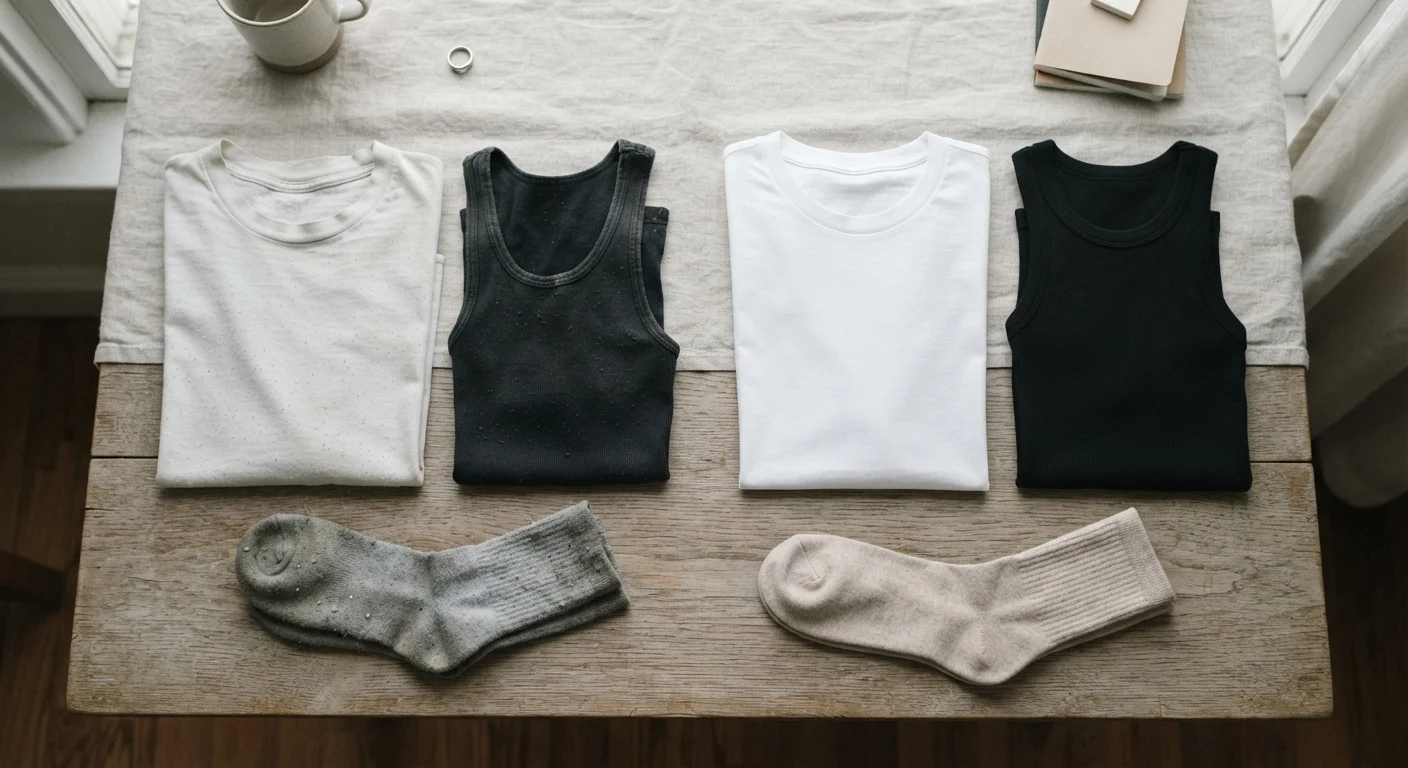
There's real appeal in filling out your wardrobe for as little as possible. But with basics — the everyday tees, tanks, socks, and layering pieces that carry your outfits — price and value don't always move together. Fabric that pills, hems that unravel, and fits that distort after a few washes all have a cost that the original price tag never reflects.
The principle of cost-per-wear (total price divided by the number of times you actually wear an item) is the more honest measure. Basics that hold their shape, color, and structure across dozens of washes consistently deliver a lower cost-per-wear than cheaper alternatives that don't survive the season. This same logic applies in other financial decisions too — our article on why cheaper premiums don't always mean better value explores a nearly identical dynamic in a different context.
Price Tag ≠ True Cost
A $6 white tee that pills after three washes and gets replaced four times a year costs $24 annually. A $22 version that holds up for two-plus years costs less overall — and looks better every day in between. When shopping basics, calculate cost-per-wear, not just sticker price.
Mistakes That Turn Bargains Into Budget Busters
Most shoppers don't set out to waste money — but several common errors quietly inflate the real cost of building a wardrobe. Here's what to watch for.
Judging value by purchase price alone rather than cost-per-wear.
Why it happens: The upfront savings feel immediate and concrete, while future replacement costs are easy to ignore or forget.
Ignoring fabric content labels and buying based on appearance alone.
Why it happens: Many garments look and feel similar in the store, making it hard to predict how they'll perform after repeated washing.
Buying in bulk when individual items don't fit well.
Why it happens: Multi-packs and volume deals create a sense of efficiency and savings, so shoppers stock up before testing the fit or wear quality.
Neglecting care instructions and washing basics incorrectly.
Why it happens: Inexpensive garments often come with care labels that go unread, and convenience-washing everything on hot or high heat is a common habit.
Treating basics as disposable and replacing them reactively rather than intentionally.
Why it happens: When individual pieces are cheap, it feels easier to toss and replace than to invest thoughtfully — creating a cycle of constant, low-quality purchasing.
For anyone balancing style goals with real financial constraints, linking smart closet-building to broader money management habits can help. Resources like the Budgeting Basics hub offer practical frameworks for thinking about spending priorities across the board.
What Quality Actually Looks Like in a Basic
You don't need to spend a lot to buy well — but you do need to know what to look for. When evaluating a basic before purchase, consider these signals:
- Fabric weight: Heavier knits generally pill less and maintain shape longer than ultra-thin ones.
- Seam construction: Double-stitched or reinforced seams signal a garment built to last through repeated washing.
- Colorfastness: Rub a damp white cloth against the fabric — significant dye transfer is a warning sign.
- Recovery: Gently stretch the fabric and release. Quality basics snap back; poor ones stay distorted.
These indicators work regardless of where you're shopping. A well-made basic from an affordable retailer will still outperform a cheaply constructed one from a pricier brand. The goal is informed selection, not a bigger budget.
~$1,700
Average annual U.S. clothing spend per person
According to the U.S. Bureau of Labor Statistics Consumer Expenditure Survey, American households spend a significant share of discretionary income on apparel each year.
60%
Decline in garment use over 15 years
Research from the Ellen MacArthur Foundation found that the average number of times a garment is worn has decreased roughly 60% compared to 15 years ago, reflecting the rise of fast fashion cycles.
The content on this site is for informational purposes only and is not a substitute for professional advice. Always consult a qualified professional for guidance specific to your situation.