

Why These Two Concepts Matter More Than Trend
Most people have experienced it: an outfit that looked great on the hanger or in a photo that just doesn't work in the mirror. More often than not, the culprit isn't the individual pieces — it's the relationship between them. That's where proportion and silhouette come in.
Trends cycle through every season, but the visual logic behind a great outfit stays constant. Understanding these two concepts is the foundation of the fashion basics every confident dresser relies on — not a list of rules to memorize, but a framework for making faster, smarter decisions at the closet every morning.
7 seconds
Time it takes to form a first impression of an outfit
Research on visual perception consistently shows that clothing silhouette and shape are processed within the first few seconds of viewing a person.
3 zones
Visual sections most outfits divide into
Fashion stylists commonly break down an outfit's proportion into upper body, lower body, and a third anchoring zone such as footwear or outerwear.
Breaking Down Proportion
Proportion is all about ratios. When you get dressed, you're dividing your visual frame into sections — typically upper body, lower body, and sometimes a third zone defined by footwear or outerwear. How those sections compare in volume, length, and visual weight determines whether the outfit reads as balanced or chaotic.
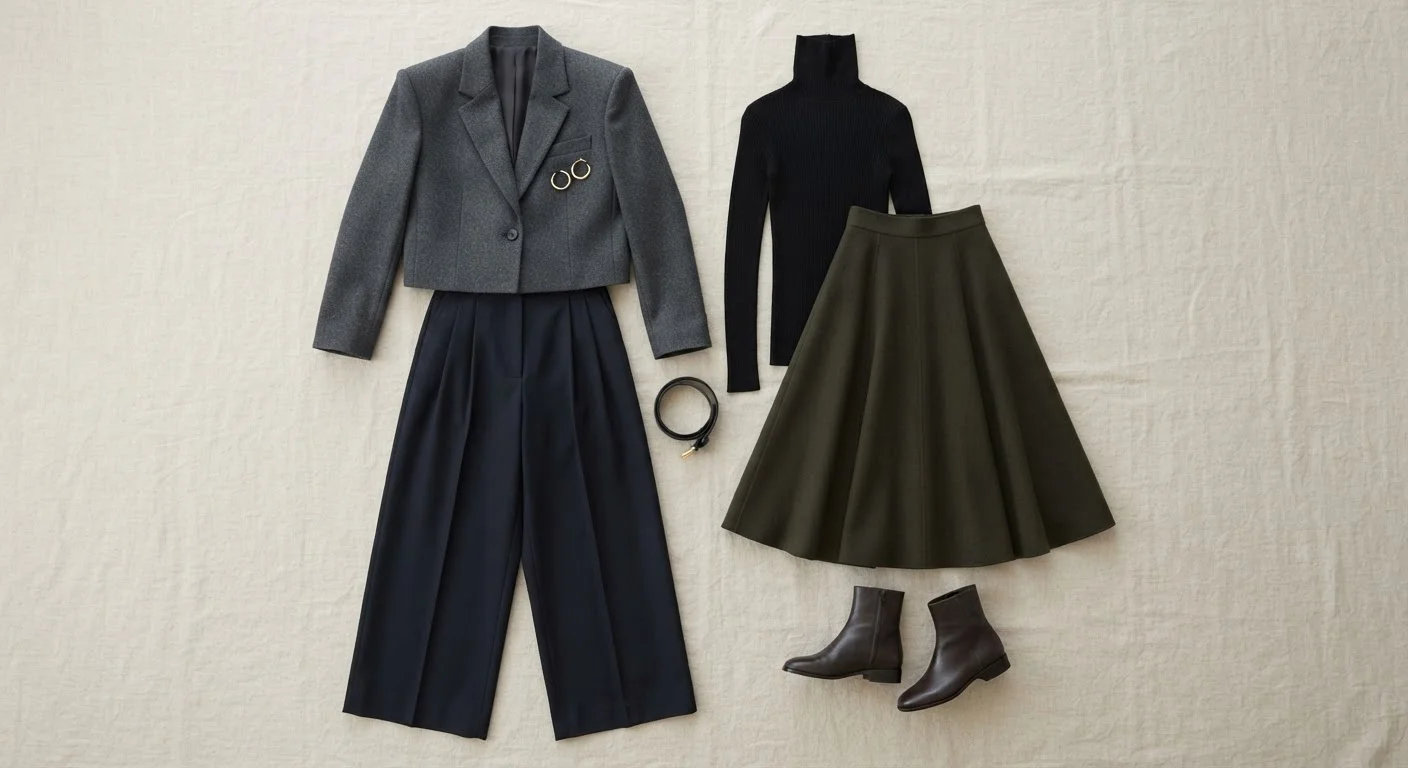
The most reliable starting point is the fitted-plus-voluminous principle: anchor one part of your outfit in something close to the body, and let the other part breathe. Wide-leg trousers paired with a tucked-in fitted blouse. An oversized blazer worn over slim straight-leg jeans. This contrast keeps the eye moving without tipping into imbalance.
Tucking — fully, partially, or with a French tuck — is one of the simplest tools for adjusting proportion on the fly. It defines the waist without requiring a different garment, immediately changing how the eye reads the top-to-bottom ratio.
Try the Mirror Test Before You Leave
Before finalizing any outfit, take a full-length look from a distance and note the overall outline first — before focusing on details. Ask yourself if the silhouette feels intentional and whether the volumes feel balanced. This two-second check catches proportion mismatches that are easy to miss up close.
Understanding Silhouette
If proportion is the internal architecture of an outfit, silhouette is the exterior structure. Step back and squint at any look — the outline that remains is the silhouette, and it communicates mood and intention before a single detail is noticed.
Common silhouettes include:
- Column or straight-line: elongated and streamlined, minimal contrast between top and bottom widths.
- A-line: fitted at the top and flaring toward the hem, creating a triangular shape.
- Hourglass: defined waist with volume both above and below.
- Oversized or boxy: relaxed volume throughout, often with a deliberately unconstructed feel.
None of these is more flattering than another in any universal sense — each creates a different effect, and the right choice depends on the occasion, your personal aesthetic, and how you want to feel in the clothes. As explored in our guide on how accessories shape an outfit, even a well-chosen belt or structured bag can shift a silhouette meaningfully.
Putting It Into Practice
The best way to develop a feel for these concepts is to observe rather than memorize. When an outfit feels off, ask two questions: Are the volumes balanced? Does the overall outline feel intentional? Those two questions surface the fix faster than any checklist.
Seasonal dressing adds another layer — heavier fabrics and layering change silhouette in ways lightweight summer pieces don't. Our guide on styling approaches for different seasons covers how to maintain proportion when you're adding layers without adding visual bulk.
Start with what you already own. Pull out three outfits you reach for repeatedly — chances are they all follow a proportion principle you've been applying intuitively. Making that instinct conscious is exactly how styling gets easier over time.
Frequently Asked Questions
Proportion refers to how different sections of an outfit — top, bottom, footwear — relate in size and volume to each other and to your frame. Silhouette is the total outline the whole outfit creates. Think of silhouette as the big picture and proportion as the internal balance that shapes it.
Yes. Proportion is about visual balance, which is relevant regardless of body size or shape. The goal is not to conform to any ideal but to wear combinations that feel intentional and harmonious to you. Different proportions create different effects, and personal preference always takes priority.
Petite frames often benefit from avoiding extreme volume contrasts that can overwhelm the eye, while taller frames can carry more dramatic silhouettes with ease. That said, these are tendencies rather than rules — experimenting with different combinations is the most reliable way to find what works for your specific proportions.
Absolutely. A wide belt cinched at the waist creates an hourglass silhouette from a looser garment. A structured bag adds visual weight to one side of an outfit. Accessories function as architectural elements that redirect the eye and shift overall shape.
The fitted-plus-voluminous rule is the most beginner-friendly: pair one close-fitting piece with one roomier piece. Slim trousers with an oversized sweater, or a fitted top with wide-leg pants, both follow this principle and tend to look balanced almost automatically.
The content on this site is for informational purposes only and is not a substitute for professional advice. Always consult a qualified professional for guidance specific to your situation.