

What Personal Style Is (and Isn't)
Personal style gets conflated with fashion, aesthetic boards, and aspirational wardrobes — but it's actually something quieter and more practical. At its core, personal style is the repeatable visual identity you project through your clothing and grooming choices. It's what makes people say "that's so you" when you walk in wearing something new.
It is not about owning the right things, tracking every trend, or fitting a particular body type. Those are external pressures, not style itself. Style is internal: it's a set of preferences you've identified, refined, and chosen to lean into consistently. Explore the broader landscape of fashion basics if you're building from the ground up.
Style Is Not the Same as Taste
Taste is about recognizing what's beautiful or well-made — it's more universal and can be trained. Style is personal: it's the specific choices you make about how to present yourself. Someone can have excellent taste and still dress in a way that feels disconnected from who they are. The goal is alignment between the two.
How Personal Style Actually Develops
Nobody is born with a polished aesthetic. Style develops through a cycle of observation, experimentation, and editing — and it takes time. Here's what that process actually looks like in practice:
- Observe what draws you in. Save images, notice what you admire on others, and pay attention to what you reach for repeatedly in your own closet. These patterns are data.
- Experiment deliberately. Try silhouettes, colors, and proportions outside your comfort zone — even if just at home. You'll discover preferences you didn't know you had.
- Edit ruthlessly. Style clarity comes from subtraction. Removing what doesn't feel like you makes what does feel like you much more visible.
This process is iterative. Your style at 25 will look different at 40, and both can be equally intentional and valid. For ideas on how seasons affect this process, see our piece on adapting your wardrobe year-round.
Start With Your Closet, Not a Mood Board
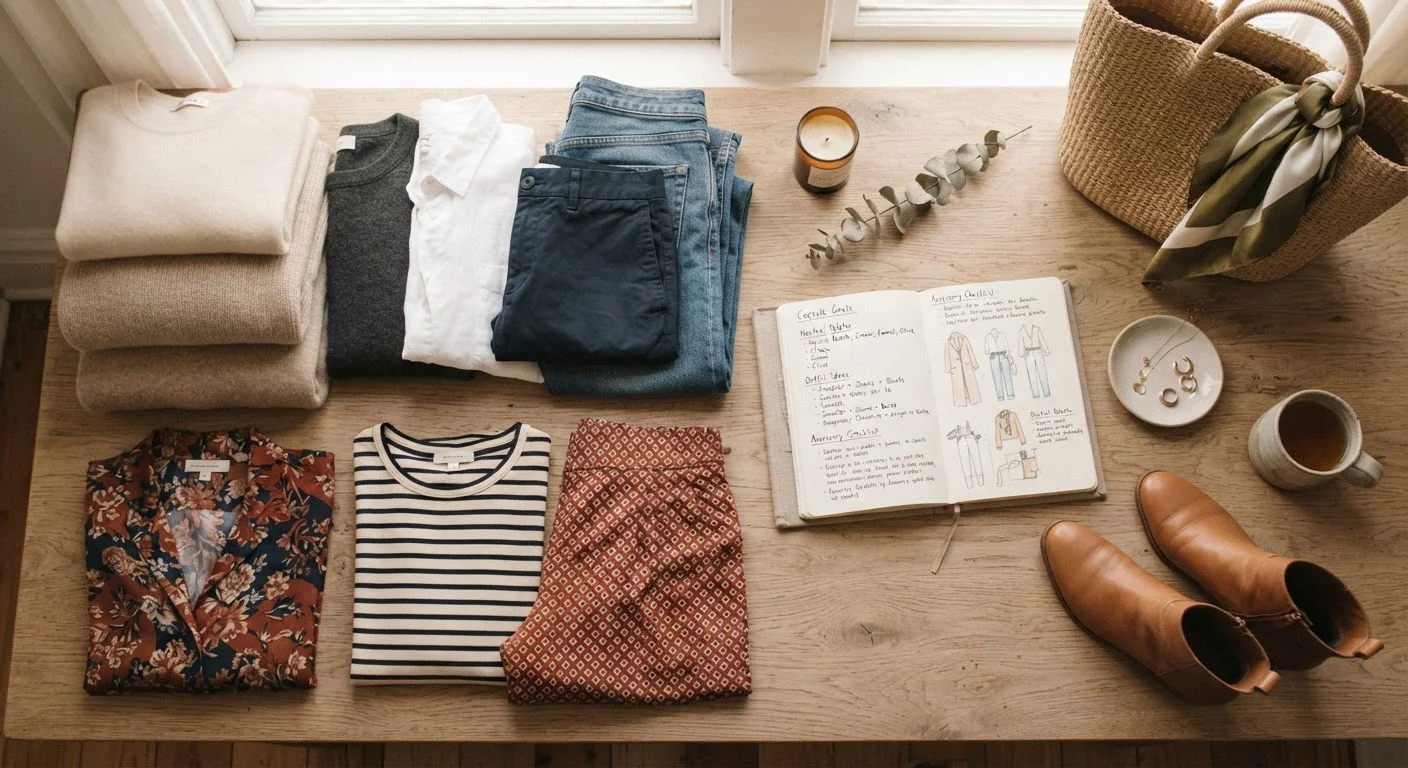
Before browsing inspiration online, spend time with what you already own. Pull out the pieces you reach for most and look for patterns — color, silhouette, texture, occasion. Those patterns are the seed of your personal style. Building outward from what already works is faster and more reliable than starting from scratch.
The Building Blocks: What Actually Shapes Your Style
Personal style isn't formed in a vacuum. It's shaped by a handful of real, concrete factors:
- Lifestyle and context
- A teacher's style needs differ from a freelance designer's. Dressing for your actual life — not your fantasy life — is what makes style feel effortless rather than performative.
- Color preferences
- Most people naturally gravitate toward a palette. Identifying yours simplifies getting dressed and makes a wardrobe feel cohesive without much effort.
- Proportion and fit
- Fit is the single biggest determinant of whether an outfit looks intentional. Understanding what proportions work for your frame helps you make decisions quickly and confidently.
- Occasion range
- A well-developed style flexes across contexts — work, casual, formal — without feeling like you're wearing a costume in any of them.
Accessories play a bigger role in shaping your visual identity than most people expect. Our guide on accessorizing without overdoing it walks through how to use them as a style tool rather than an afterthought.
~30%
Of wardrobe items regularly worn
Research on wardrobe habits consistently suggests most people regularly wear only a fraction of what they own — underscoring the value of intentionality over volume.
7 seconds
Time to form a first impression
Studies on social perception suggest first impressions form within seconds, and appearance — including dress — plays a measurable role in that initial read.
Trends vs. Style: Using One Without Losing the Other
Trends aren't the enemy of personal style — but they can dilute it if you follow them uncritically. A trend is a collective moment in fashion; your style is your individual through-line. The most effective approach is to treat trends as options, not obligations.
Ask: does this trend align with colors, silhouettes, or textures I already gravitate toward? If yes, it's worth experimenting with. If it feels like a departure from everything you actually like, it's probably not for you — regardless of how visible it is right now.
Understanding how personal style and fashion trends diverge makes it much easier to engage with current fashion without losing your own voice in the process.
Frequently Asked Questions
Absolutely — and it usually does. Your style naturally evolves as your life circumstances, tastes, and body change. What matters is that it continues to feel like an authentic reflection of who you are at each stage.
No. Personal style is about intentionality, not spending. Many people with a strong sense of style shop secondhand, wear basics strategically, or invest in a few well-chosen pieces. See our <a href="/style-beauty/style-tips/dressing-well-on-a-tight-budget-principles-that-hold-up">guide to dressing well on a budget</a> for practical principles.
Fashion trends are seasonal and collective; personal style is individual and enduring. You can borrow from trends to refresh your look, but your core style reflects your own preferences, not what's currently on the runway. Our article on <a href="/style-beauty/fashion-basics/the-difference-between-personal-style-and-fashion-trends">the difference between personal style and fashion trends</a> digs deeper into this.
That's a completely normal starting point. Begin by noting what you're drawn to — in store windows, on others, in images you save. Patterns will emerge naturally. Experimentation without pressure is the most reliable path forward.
Body shape can inform practical fit and proportion choices, but it doesn't dictate what you're allowed to wear. Style guidance around body shape is most useful when it helps you feel comfortable — not when it restricts you. Our piece on <a href="/style-beauty/style-tips/dressing-for-your-body-shape-what-the-advice-actually-means">dressing for your body shape</a> unpacks those rules clearly.
Very few. A coherent personal style is often more visible in a small, intentional wardrobe than in a packed closet. A handful of pieces that work together, fit well, and suit your life can communicate style more clearly than dozens of unrelated items.
The content on this site is for informational purposes only and is not a substitute for professional advice. Always consult a qualified professional for guidance specific to your situation.