

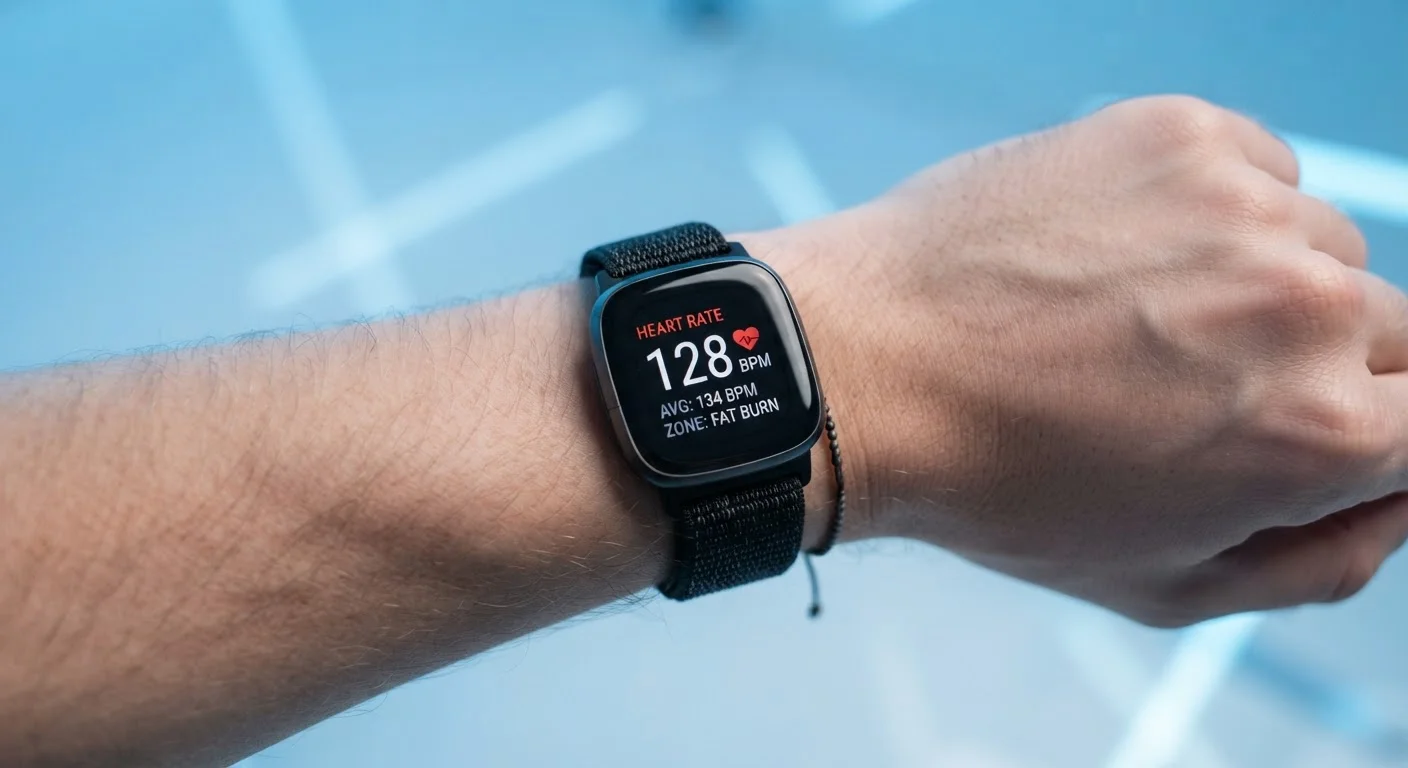
What Fitness Trackers Actually Sense
Every fitness tracker contains a small collection of physical sensors. The most common are an accelerometer, which detects movement and orientation, and an optical heart rate sensor that shines LED light through your skin to detect blood flow pulses — a method called photoplethysmography (PPG). Many devices also include a GPS chip, a gyroscope, an altimeter for elevation, and in newer models, a SpO2 sensor to estimate blood oxygen saturation.
These sensors produce raw electrical signals. That raw data is then handed off to software — and this is where the line between measurement and estimation begins. Understanding which side of that line a metric falls on tells you how much weight to put on it.
20–30%+
Typical calorie estimate error range
Multiple independent studies comparing consumer wearables to indirect calorimetry have found energy expenditure errors frequently exceed 20%, with some devices and activities showing larger gaps.
~3 bpm
Average heart rate error at rest
Optical wrist sensors typically fall within a few beats per minute of reference measurements during low-intensity or resting conditions, though accuracy declines during vigorous exercise.
10–15%
Step count variability between devices
Research comparing identical walks across different consumer wearables shows meaningful step count variation due to differing hardware and proprietary counting algorithms.
Measured vs. Estimated: A Critical Distinction
Steps are measured — or close to it. Your accelerometer detects the rhythmic motion of walking and translates arm or wrist movement into a step count. It isn't perfect (carrying groceries can trigger false counts), but it's tied directly to physical signal detection rather than modeling.
Heart rate is measured with a caveat. The optical sensor detects pulse waves reliably when you're sitting still or walking at a moderate pace. During high-intensity intervals, sprinting, or activities involving significant wrist flexion, motion artifacts corrupt the signal and accuracy drops. For casual tracking this is usually fine; for precision athletic training, it matters.
Calories burned are estimated — and this is where many users are surprised. No wearable can directly measure how much energy your body expends. Instead, the device feeds your heart rate, movement intensity, age, weight, sex, and height into an algorithm trained on population averages. Studies have found consumer fitness trackers can deviate from laboratory-measured energy expenditure by a substantial margin on certain activities. Think of the calorie number as a useful ballpark, not an invoice.
For more on how specification figures from tech devices can diverge from real-world results, see our piece on how gadget spec sheets can mislead.
Get More Accurate Calorie Data
To improve the accuracy of your tracker's calorie estimates, ensure your personal profile (weight, height, age) is kept current in the companion app. Also, select the correct activity type before a workout — most apps give better estimates when they know you're cycling versus walking, for example.
Sleep Tracking: Inference, Not Measurement
Sleep stage data — light, deep, and REM — is one of the most popular fitness tracker features and one of the least understood. Your wearable cannot observe your brain. Instead, it uses changes in movement and heart rate variability to infer what sleep stage you're likely in, based on patterns observed in population-level research.
Clinical sleep studies, known as polysomnography, attach electrodes to a patient's scalp to measure actual brain wave activity. That is impossible from a wrist device. The result is that consumer sleep data can be a useful general guide — spotting nights of unusually restless sleep, for example — but it should not be treated as a diagnostic tool.
SpO2 Sensors Are Not Medical Devices
Many newer fitness trackers include a sensor that estimates blood oxygen saturation (SpO2). These consumer sensors are not calibrated or regulated as medical devices and should not be used to monitor health conditions such as sleep apnea or respiratory illness. If you have concerns about your blood oxygen levels, speak with a healthcare provider who can use validated clinical equipment.
If you're exploring how physical activity and recovery connect to your overall wellbeing, ways exercise influences mood and the limits of that relationship is worth reading alongside this guide.
How to Use Tracker Data Wisely
The most valuable thing a fitness tracker offers isn't any single number — it's personal trend data over time. A one-day calorie estimate tells you little. Six weeks of data showing your resting heart rate gradually declining as your fitness improves tells you something genuinely meaningful.
A few practical principles help you get more from the data:
- Calibrate expectations by activity type. Step counts and resting heart rate are more reliable than calorie burn during swimming or cycling, where movement patterns differ from walking.
- Look for trend direction, not precise values. If your average sleep duration is trending up after habit changes, that's actionable — the exact minute count matters less.
- Cross-reference with how you feel. Data that contradicts your physical experience is a signal to investigate, not automatically trust the device.
It's also worth remembering that common fitness myths often thrive when people over-index on single metrics. Consistent movement and recovery matter more than hitting a perfect number on a dashboard. For a broader view of fitness fundamentals, the Fitness & Exercise hub covers approachable strategies for everyday Americans.
This article is for informational purposes only and is not medical advice. Consult a qualified healthcare professional before making decisions about your health based on wearable device data.
Frequently Asked Questions
Wrist-based optical heart rate sensors are generally accurate within a few beats per minute during rest or low-intensity activity. Accuracy drops noticeably during high-intensity exercise when wrist movement introduces noise into the signal. Chest strap monitors remain the gold standard for precision during vigorous workouts.
No fitness tracker measures calories burned directly. The number displayed is an estimate based on your movement data, heart rate, and personal profile inputs like age, weight, and height. Research suggests consumer wearables can deviate from laboratory-measured calorie expenditure by 20–30% or more, depending on activity type.
Sleep stage data from wearables is an algorithmically derived estimate, not a clinical measurement. Trackers infer light, deep, and REM sleep from movement and heart rate patterns. A hospital-grade polysomnography sleep study, which monitors brain waves, remains the only validated method for precise sleep staging.
Consumer-grade SpO2 sensors give a rough indication of blood oxygen saturation but are not calibrated or approved for medical monitoring. Skin tone, device fit, and movement can all affect accuracy. If you have concerns about your blood oxygen levels, consult a healthcare professional who can use a validated pulse oximeter or clinical testing.
Each manufacturer uses different accelerometer hardware and proprietary algorithms to count steps, which causes variation between devices. Factors like how tightly the device fits, your walking style, and where the sensor is placed on the body all influence the final count.
Fitness trackers are consumer wellness tools, not medical devices. Their data is useful for tracking personal trends over time but should not replace professional diagnosis or clinical monitoring. Always consult a qualified healthcare provider for any health concerns or before making significant changes to your activity or health routine.
The content on this site is for informational purposes only and is not a substitute for professional advice. Always consult a qualified professional for guidance specific to your situation.