

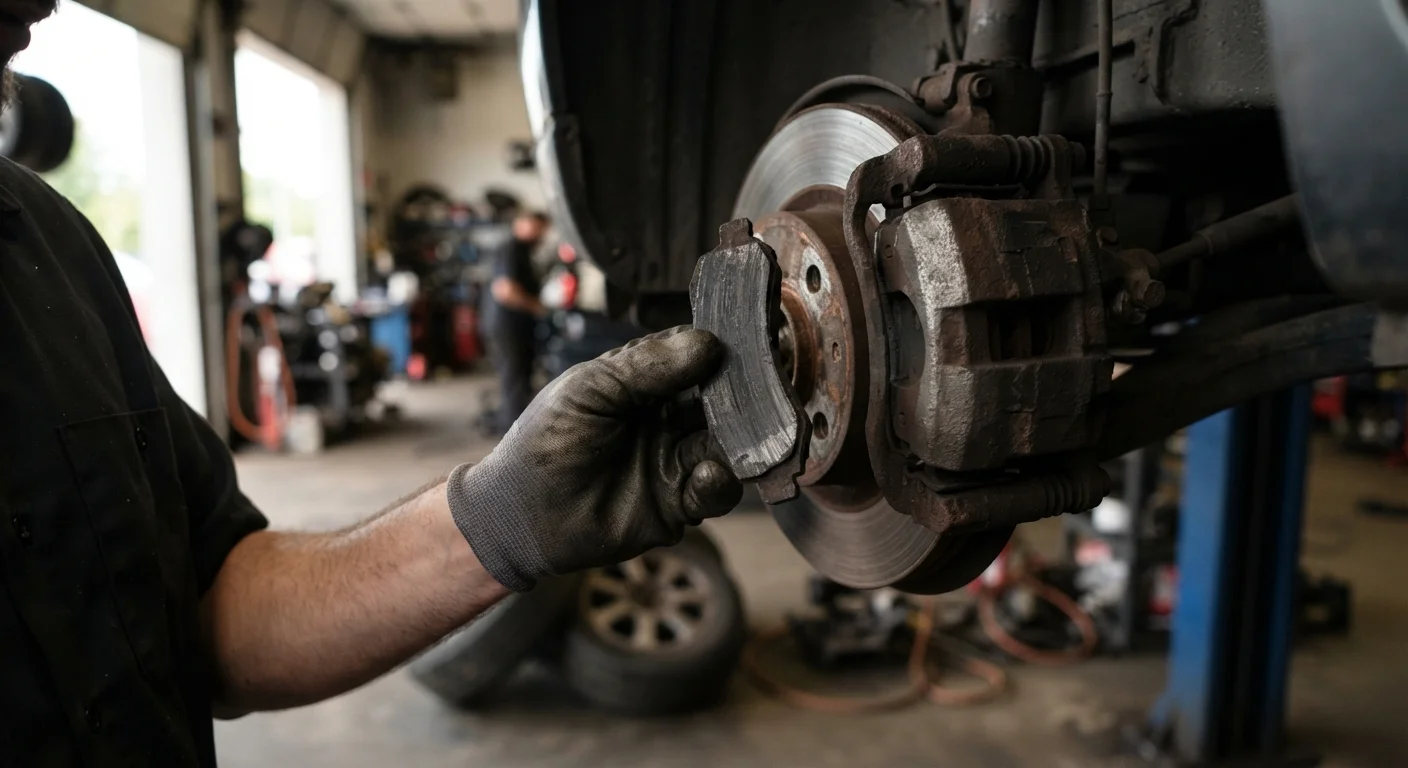
Why Brake Myths Are a Safety Problem
Brakes are your vehicle's most critical safety system - and yet they're surrounded by more misinformation than almost any other maintenance topic. Drivers who act on faulty assumptions may delay needed repairs, skip inspections, or apply the wrong fix entirely. Understanding what's actually true about brake maintenance can mean the difference between a controlled stop and a dangerous situation.
This article corrects the most common brake misconceptions using straightforward, evidence-grounded explanations. Whether you handle your own basic vehicle checks or rely entirely on a mechanic, knowing the facts helps you ask better questions, recognize warning signs sooner, and make smarter decisions. For a broader picture of smart vehicle upkeep, see our guide to keeping a car running well without overspending.
Myth
Brake pads last a predictable number of miles - usually around 50,000 - so I don't need to check them more often.
Fact
Brake pad lifespan varies enormously based on driving style, terrain, and vehicle weight. Some pads wear out well before 25,000 miles; others last beyond 70,000.
The 50,000-mile figure gets repeated often, but it's a rough average drawn from a wide range of real-world conditions. A driver who commutes in stop-and-go city traffic, frequently tows a trailer, or drives mountain roads will wear pads far faster than someone doing mostly highway miles. Vehicle weight is also a significant factor - heavier vehicles demand more braking force and accelerate pad wear accordingly. Regular visual inspections (or asking your mechanic to check pad thickness at each tire rotation) is a far more reliable approach than depending on mileage estimates.
Myth
If my brakes squeal, they're dangerously worn and I need to pull over immediately.
Fact
Squealing can indicate several conditions - many of them not immediately dangerous - but it should always be investigated, not ignored.
Brake pads often include a small metal wear indicator that produces a high-pitched squeal when pads are getting low. That's a deliberate warning system, not a sign of imminent failure. However, squealing can also result from brake dust, morning moisture, or low-quality pad material. The important thing is context: intermittent squealing that goes away is different from persistent grinding or a loud scraping sound, which often indicates metal-on-metal contact and a more urgent problem. When in doubt, get an inspection - but don't assume a brief squeal means your brakes are about to give out.
Myth
As long as the brake pads are replaced, the rotors don't need attention unless they're visibly damaged.
Fact
Rotors wear alongside pads and should always be inspected - and often resurfaced or replaced - at the same time.
Rotors develop grooves, scoring, and thickness variations over time. Installing new brake pads on worn or uneven rotors causes the fresh pads to wear unevenly and faster, reducing stopping effectiveness and shortening the life of the new parts. Mechanics typically measure rotor thickness against manufacturer minimums - if rotors are below spec, they must be replaced. Even if they're within spec, resurfacing (machining the rotor surface smooth) is sometimes recommended to ensure proper contact with new pads. Skipping rotor evaluation is a common shortcut that often leads to repeat brake work sooner than necessary.
Myth
Brake fluid lasts the life of the vehicle - it only needs to be checked if something goes wrong.
Fact
Brake fluid is hygroscopic, meaning it absorbs moisture from the air over time. Degraded fluid raises the risk of brake fade and corrosion inside the braking system.
Most vehicle manufacturers recommend replacing brake fluid on a set schedule - commonly every two years or as specified in the owner's manual - regardless of how the brakes feel. As fluid absorbs moisture, its boiling point drops. Under heavy braking, this moisture can vaporize, creating air bubbles in the brake lines that reduce pedal firmness and stopping power - a condition known as brake fade. A mechanic can test brake fluid moisture content quickly and inexpensively. This is one of the most commonly skipped maintenance items and one of the easiest to address proactively.
Myth
A firm brake pedal means my brakes are in good shape.
Fact
Pedal feel reflects hydraulic pressure, not the physical condition of brake pads, rotors, or calipers.
A pedal can feel firm even when pads are worn thin, rotors are deeply grooved, or a caliper is sticking and causing uneven braking. Conversely, a slightly soft pedal may not indicate imminent failure - it might reflect normal variation or early fluid degradation. Pedal feel is one data point, not a full picture. Relying on it as your primary safety check can give you false confidence. Physical inspection of brake components provides information that no amount of pedal-testing can replicate.
What to Do When Something Seems Off
If your vehicle exhibits any unusual brake behavior - extended stopping distances, pulling to one side, grinding noises, or a spongy pedal - have it inspected by a qualified mechanic promptly. Don't wait for a scheduled service interval. Brakes are not a component where a wait-and-see approach is appropriate.
Grinding Noises Require Immediate Attention
A grinding or metal-scraping sound when braking typically means brake pads have worn through completely, and the metal backing plate is contacting the rotor directly. This significantly degrades stopping power and can cause rapid rotor damage. Do not defer this inspection - have the vehicle checked by a qualified mechanic as soon as safely possible.
Routine brake inspections - typically recommended during tire rotations or at least once a year - give mechanics a chance to catch wear before it becomes a safety issue. Paired with good tire fundamentals, this habit pays dividends. See tire pressure and tread basics for the other half of the road-contact equation.
22%
Crashes linked to brake-related vehicle factors
According to NHTSA's Large Truck Crash Causation Study data, brake problems are among the most frequently cited vehicle-related crash factors in federal safety research.
2 years
Typical brake fluid replacement interval
Many vehicle manufacturers specify brake fluid replacement every two years; always verify your vehicle's owner's manual for the correct interval.
This article is for general informational purposes only and does not constitute professional mechanical or safety advice. Always consult a qualified mechanic for vehicle-specific concerns.
The content on this site is for informational purposes only and is not a substitute for professional advice. Always consult a qualified professional for guidance specific to your situation.