

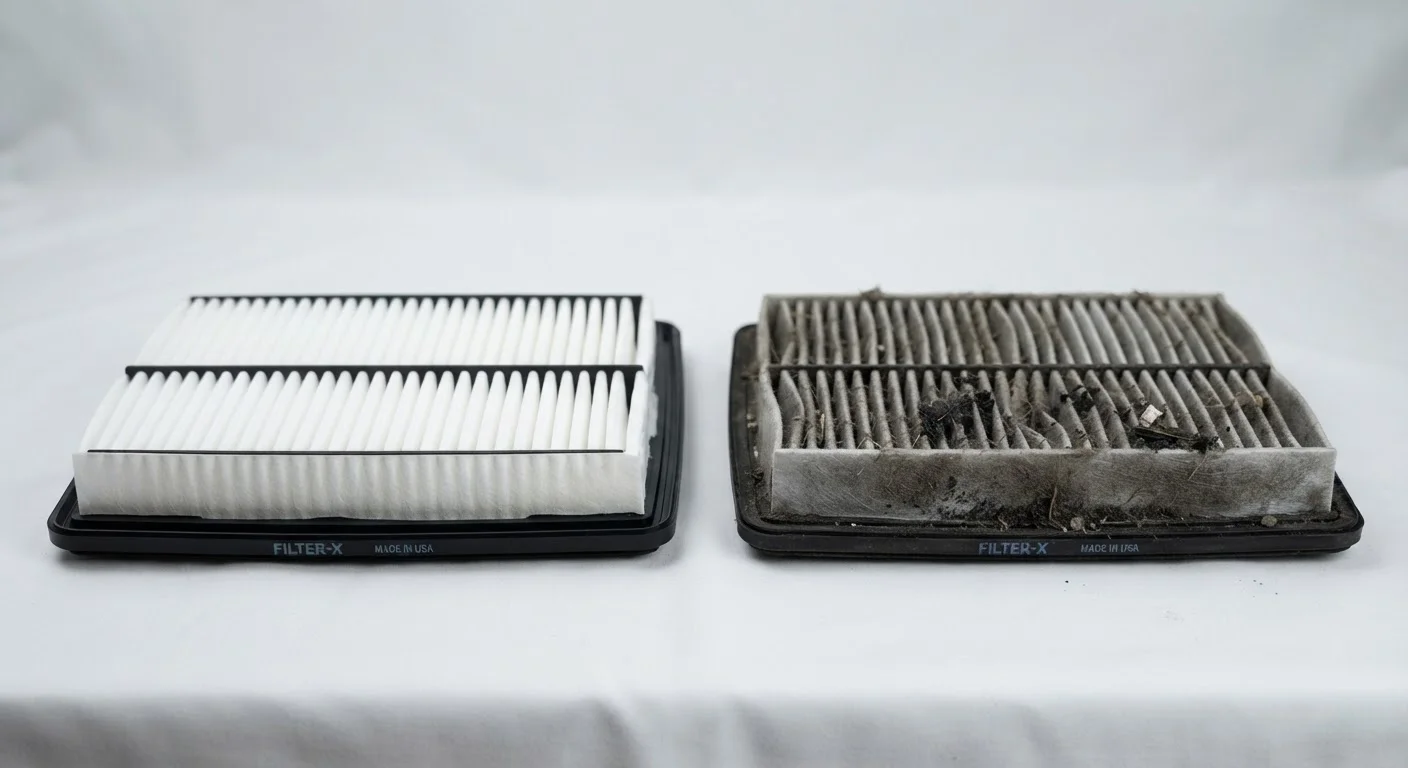
Two Filters, Two Jobs
Most drivers know their car has an air filter - but many don't realize there are actually two of them, each serving a completely different purpose. The engine air filter protects your engine from dust, dirt, and debris. The cabin air filter cleans the air that flows through your heating, ventilation, and air conditioning (HVAC) system into the passenger compartment.
Both filters quietly do essential work, and both degrade over time. Understanding the difference - and knowing how to spot when each needs replacing - is a core part of keeping a vehicle in good shape. For a broader look at routine upkeep, see smart maintenance habits that help extend vehicle life without overspending.
How Engine Air Filters Work
Your engine needs a precise mixture of air and fuel to combust properly. Before that air reaches the engine, it passes through the engine air filter - typically a pleated paper or synthetic element housed in a plastic airbox near the top of the engine bay.
The filter traps particles like dust, pollen, insects, and road grit that would otherwise enter the engine and cause premature wear to cylinders, pistons, and other internal components. A clean filter allows adequate airflow; a clogged one restricts it, forcing the engine to work harder.
Hold the engine air filter up to a light source when inspecting it - if light passes through relatively clearly, it likely has more service life left. If it's uniformly dark and packed with debris, it's time to swap it.
Visual inspection is a reliable quick check that doesn't require any equipment and takes less than two minutes with the airbox open.
If you live in an area with heavy seasonal pollen, consider checking your cabin air filter in early spring - it may look fine by mileage but be loaded with pollen that significantly restricts airflow.
Pollen can saturate a cabin filter faster than typical road dust, and high-pollen seasons are precisely when passengers most benefit from clean filtration.
Over time, reduced airflow from a dirty engine filter can affect throttle response and, in some cases, fuel economy - though the magnitude varies by vehicle and how severely restricted the filter has become.
How Cabin Air Filters Work
The cabin air filter sits between the outside air intake and your car's HVAC blower. It captures pollen, dust, mold spores, and fine particulates before they circulate through the vents and into the cabin. Many modern cabin filters also include an activated carbon layer designed to reduce odors from exhaust and other external sources.
A neglected cabin filter can noticeably reduce airflow from your vents and allow more pollutants into the passenger space - something worth considering if anyone in your vehicle has allergies or respiratory sensitivities. This parallels concerns about indoor air quality at home, where filtration often goes overlooked.
Cabin Filters Weren't Always Standard
Cabin air filters became common on mainstream vehicles in the late 1990s and early 2000s. If you drive an older vehicle, it may not have one at all. Check your owner's manual or ask a mechanic to confirm whether your car includes this component before scheduling a replacement service.
When to Replace Each Filter
Replacement intervals vary by vehicle and driving environment, so your owner's manual is the most reliable starting point. General guidelines used across the industry:
- Engine air filter: Every 15,000-30,000 miles under normal conditions. If you regularly drive on unpaved roads or in dusty or high-pollution areas, inspect more frequently.
- Cabin air filter: Every 15,000-25,000 miles, or roughly once a year for average drivers.
These are general benchmarks. Your owner's manual may specify different intervals - and those numbers take precedence. Decoding your maintenance schedule can help you read those intervals correctly.
15,000-30,000 mi
Typical engine air filter replacement interval
General industry guideline; your owner's manual may specify a different interval based on your vehicle's design and intended use.
~1 year
Common cabin filter replacement frequency
Many manufacturers recommend annual replacement for average drivers, with more frequent changes in high-dust or high-pollen environments.
Signs a Filter Needs Attention
You don't always have to wait for a mileage milestone. Several symptoms can indicate a filter is due for inspection or replacement:
Engine Air Filter Warning Signs
- Reduced acceleration or sluggish throttle response
- Noticeably decreased fuel economy (though many factors influence this)
- A check engine light in some vehicles with mass airflow sensor issues related to airflow restriction
- Visible dirt or debris when you remove and inspect the filter
Cabin Air Filter Warning Signs
- Weak airflow from vents even at high blower settings
- Musty or stale odors when the HVAC system runs
- Increased dust accumulation on dashboard surfaces
- Louder-than-usual blower motor noise
Don't Ignore a Musty HVAC Smell
A persistent musty odor from your vents isn't just unpleasant - it can indicate mold or mildew growth in the HVAC system, not just a dirty filter. If replacing the cabin air filter doesn't resolve the smell, have a mechanic inspect the evaporator and drain for moisture buildup.
DIY vs. Shop Replacement
Both filters are among the more accessible maintenance items on most vehicles. The cabin air filter is often located behind the glove box or under the dashboard and can be reached without any tools on many cars. The engine air filter sits in the airbox and typically requires removing a few clips or screws.
That said, vehicle designs vary. On some models, access is more involved. If you're unsure, a quick search of your vehicle's year, make, and model will usually surface straightforward instructions - or your owner's manual will show the filter locations.
Inspect Before You Replace
Before paying for a filter replacement, ask to see the old filter or look at it yourself if doing the work at home. A lightly gray filter may have useful life remaining, while a uniformly dark, debris-packed one clearly needs to go. Inspection takes seconds and prevents unnecessary spending.
If you prefer to have a shop handle it, filter replacement is generally a low-cost service item. Just be aware that some shops may recommend replacement earlier than necessary. Asking to see the old filter before authorizing replacement is a reasonable and common practice.
Air filter maintenance fits naturally into a broader seasonal rhythm. The seasonal car care checklist is a useful reference for timing filter checks alongside other routine inspections throughout the year.
This article is for general informational purposes only. Always consult your vehicle's owner's manual and, when in doubt, a qualified mechanic for maintenance decisions specific to your car.
The content on this site is for informational purposes only and is not a substitute for professional advice. Always consult a qualified professional for guidance specific to your situation.