

Why Form Matters More Than You Think
It's tempting to measure workout quality by how much you lift or how fast you move - but technique is the real foundation of effective, sustainable exercise. When form breaks down, your body compensates in ways that shift load onto joints and connective tissue not built for it. Over time, this leads to nagging pain, plateaus, and sometimes acute injuries that sideline progress entirely.
Form errors aren't limited to beginners. Even seasoned gym-goers can develop ingrained habits that quietly undermine their results. If you're new to working out, building correct mechanics from day one saves considerable trouble later. And if you've been training for years, a periodic honest assessment of your technique can be just as valuable as adding another workout to your week. Understanding the fitness myths that hold people back is a useful companion to addressing form.
The Most Common Form Errors - And How to Fix Them
The following mistakes appear regularly across all fitness levels and exercise types. Each one is correctable with awareness and deliberate practice.
Rounding the lower back during deadlifts or squats.
Why it happens: Lifters often prioritize completing the rep over maintaining spinal position, especially as fatigue sets in or the weight exceeds their current strength.
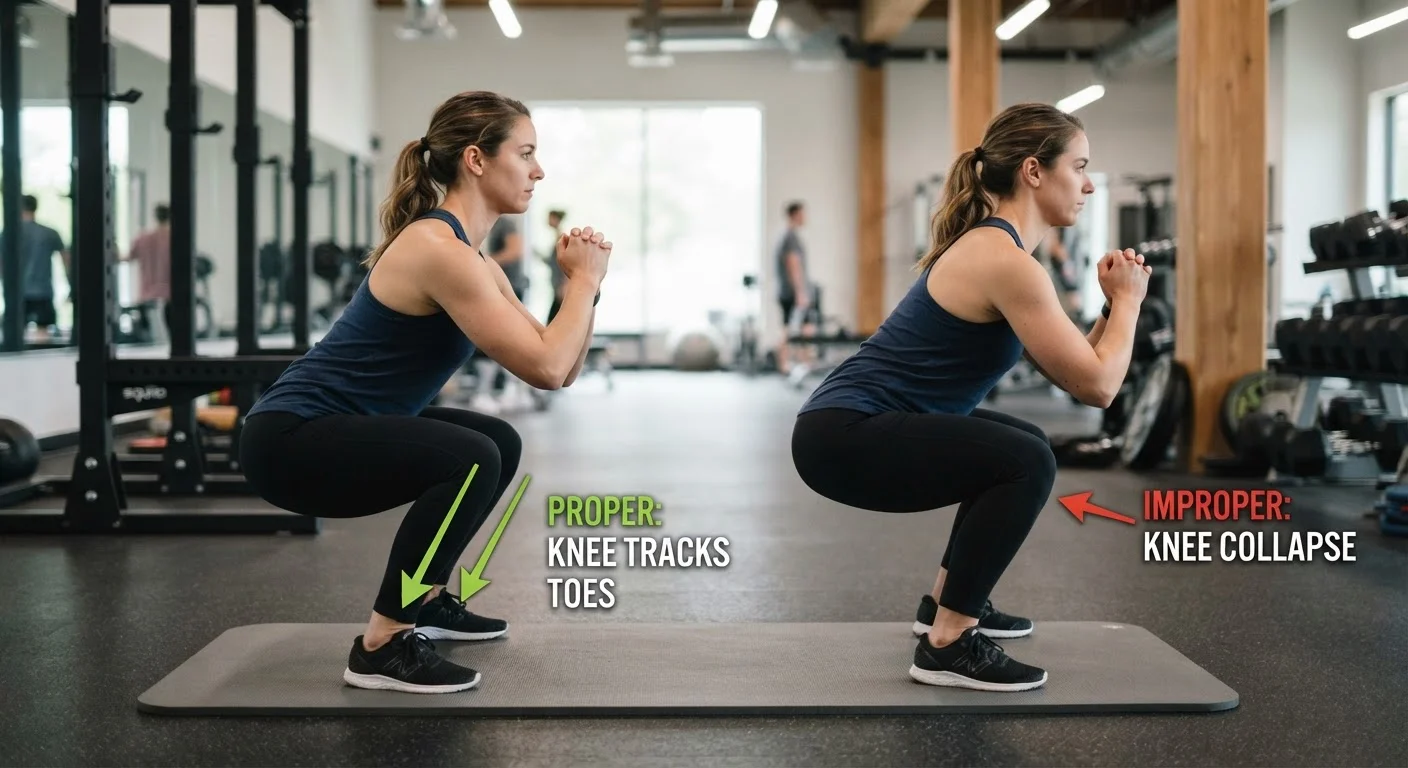
Letting the knees cave inward during squats and lunges.
Why it happens: Weak hip abductors and glutes often allow the knees to drift toward each other under load, a pattern sometimes reinforced by incorrect foot positioning.
Using momentum rather than muscle to complete repetitions.
Why it happens: When the resistance is too heavy or the set is too long, swinging the body or bouncing the weight becomes a shortcut to finish the rep.
Holding the breath during resistance exercises.
Why it happens: Many people instinctively brace by holding their breath, unaware that improper breath-holding can spike blood pressure and reduce core stability over time.
Overarching the lower back during overhead pressing or plank variations.
Why it happens: Insufficient core engagement and tight hip flexors are common culprits, causing the lumbar spine to hyperextend to compensate.
Positioning the neck incorrectly during floor exercises.
Why it happens: During moves like push-ups or planks, people often crane the neck upward or let the head drop, breaking the straight line from head to heel.
Stop If Something Feels Wrong
Sharp, shooting, or joint-specific pain during an exercise is a signal to stop immediately - not push through. Muscle fatigue and mild discomfort are part of training; pain in joints, tendons, or the spine is not. Consult a qualified healthcare professional before resuming that movement.
If you experience sharp, sudden, or persistent pain during exercise, stop the activity and consult a qualified healthcare professional before continuing. Pain is not a normal part of correct technique.
Building Better Habits Over Time
Correcting form is not a one-time fix - it's an ongoing practice. A few strategies that support lasting improvement:
- Film yourself occasionally. A brief video from the side or front reveals what mirrors may miss, especially during compound movements like squats and deadlifts.
- Work with a qualified trainer. Even a handful of sessions with a certified fitness professional can recalibrate your mechanics significantly. This is especially worthwhile when learning new tools like free weights or resistance bands.
- Match your plan to your actual level. A realistic weekly workout schedule should include adequate rest and progressive challenge - not just more volume.
- Age thoughtfully. Movement needs and recovery shift across a lifetime. How exercise goals evolve with age is worth understanding as you structure your training.
~70%
Gym injuries linked to technique errors
Research published in exercise science literature consistently finds that a large majority of non-contact training injuries involve some element of poor movement mechanics.
3x
Greater muscle activation with controlled tempo
Studies on resistance training tempo suggest that slowing down repetitions - particularly the eccentric phase - can meaningfully increase muscle fiber recruitment compared to fast, momentum-driven reps.
This article is for general informational purposes only and does not constitute medical or fitness advice. Consult a qualified healthcare or fitness professional before beginning or modifying any exercise program, particularly if you have existing health conditions or concerns.
The content on this site is for informational purposes only and is not a substitute for professional advice. Always consult a qualified professional for guidance specific to your situation.