

Start here
Why Emergency Preparedness Matters for Every Home
Build your kit
Building Your Emergency Supply Kit
Make a plan
Creating a Household Emergency Plan
Scenario prep
Preparing for Specific Common Emergencies
Stay ready
Keeping Your Preparedness Plan Current
Why Emergency Preparedness Matters for Every Home
Most households go years without a serious emergency — which is exactly why it's easy to put off preparing for one. But emergencies by definition arrive without warning: a winter storm knocks out power, a gas leak forces evacuation, a flood makes roads impassable. The households that come through these events with the least disruption are those that prepared before anything happened.
Emergency preparedness isn't about fear or worst-case thinking. It's practical home management. The same mindset that leads you to change smoke detector batteries or keep a first aid kit under the sink applies here — just extended a little further. As part of a broader home safety foundation, emergency readiness protects every person and pet in your household.
Emergency Kit
A pre-assembled collection of supplies — water, food, first aid items, and documents — that your household can use when normal resources are unavailable.
Go-Bag
A portable bag packed in advance so you can leave your home quickly in an evacuation. It contains essentials for at least 72 hours away from home.
Shelter in Place
Staying inside your home during an emergency rather than evacuating, often because going outside is more dangerous than remaining indoors.
Emergency Alert System
A free, government-operated notification service that sends warnings about severe weather, public safety threats, and other emergencies via text, radio, or TV.
Carbon Monoxide
A colorless, odorless gas produced by fuel-burning equipment that can be deadly when it builds up indoors. Detectors are the only reliable way to know it's present.
Building Your Emergency Supply Kit
Your kit doesn't need to be elaborate. Start with the basics and build from there over time.
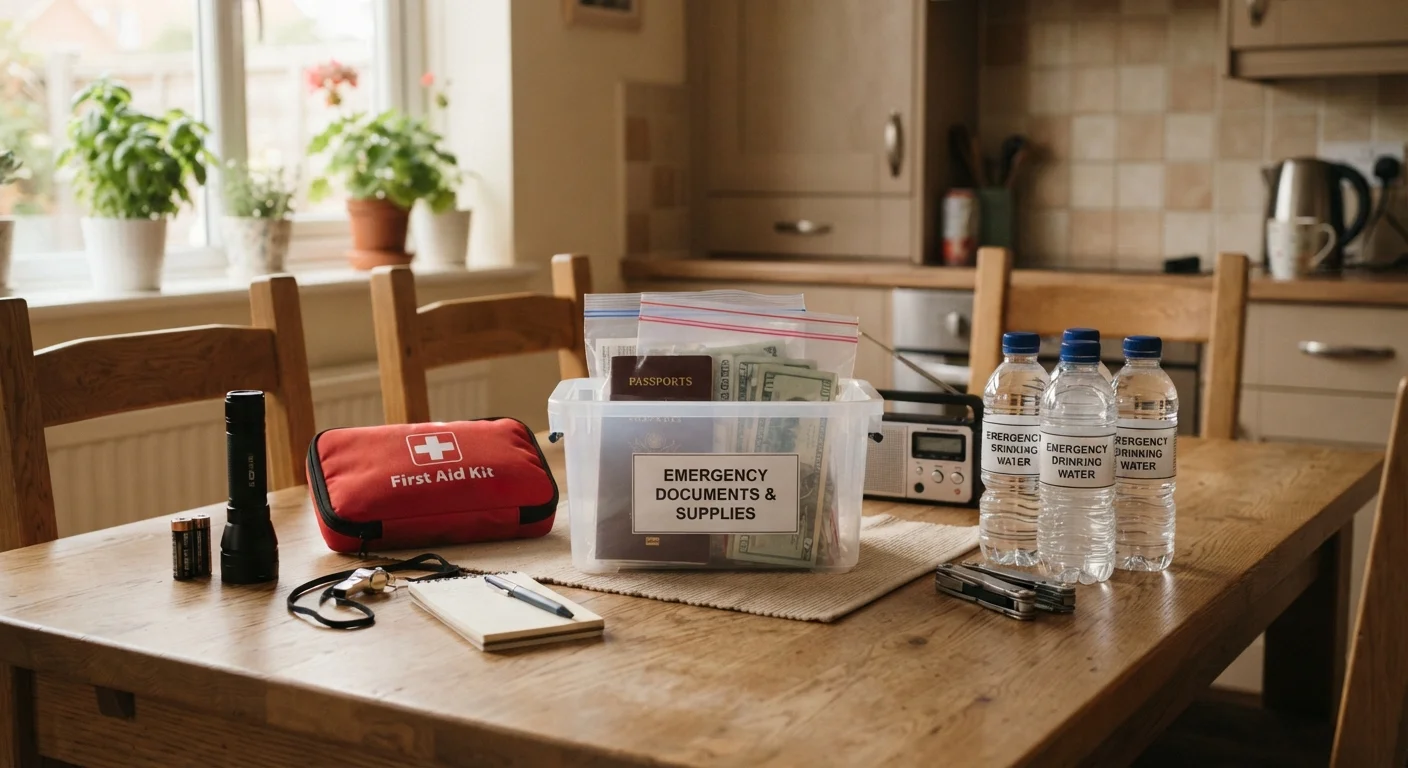
- Water: Store at least one gallon per person per day for a minimum of three days. Include enough for pets.
- Food: Non-perishable items like canned goods, nut butters, dried fruit, and crackers. Aim for a three-day minimum, longer if your region is prone to extended outages or severe weather.
- Flashlight and batteries: Keep extras. Battery-powered or hand-crank radios also let you receive emergency alerts without Wi-Fi.
- First aid kit: Include bandages, antiseptic, any prescription medications (with a small rotating reserve), and a list of known allergies.
- Important documents: Copies of IDs, insurance policies, and financial account information in a waterproof container.
- Cash in small bills: ATMs and card readers may be offline during power outages.
- Phone charger and backup battery bank: A charged power bank can be the difference between reachable and unreachable during an extended outage.
A well-maintained household inventory can also help you track what you own and ensure nothing critical goes missing after an emergency.
Build Your Kit Gradually
You don't have to buy everything at once. Add a few items each week — a case of water, an extra flashlight, a first aid kit — and your kit will be complete within a month without a large upfront cost. Store everything together in a clearly labeled, easy-to-reach container.
Creating a Household Emergency Plan
A kit without a plan leaves gaps. Your household emergency plan should answer three questions for every person in your home: Where do we go? How do we communicate? What do we do if we're separated?
Communication
Choose an out-of-state contact that all household members can reach if local lines are congested. Text messages often go through when voice calls don't. Make sure every family member — including older children — has this number memorized or written down.
Meeting Points
Designate two meeting spots: one near your home (the end of the driveway, a neighbor's yard) for situations like a house fire, and one farther away (a school, a community center) if the neighborhood is inaccessible.
Evacuation Routes
Map at least two ways out of your home from every room. Practice these routes with everyone in the household, including children. Our fire escape planning guide walks through exactly how to do this step by step.
Special Needs and Pets
Account for anyone with mobility limitations, medical equipment needs, or language barriers. Prepare a pet kit separately and identify pet-friendly shelters in your area ahead of time.
Don't Assume Kids Know the Plan
Adults often assume children will follow along in an emergency, but stress and panic can cause confusion. Practice your meeting spots and communication steps with children explicitly so the actions become habit. Even young children can learn a household meeting point and a contact phone number.
Preparing for Specific Common Emergencies
While the core kit and plan cover most situations, a few adjustments help you handle the emergencies most common in American households.
Power Outages
Keep a manual can opener with your food supplies. Never run a generator, grill, or camp stove indoors — carbon monoxide poisoning is a leading cause of emergency-related deaths. If you rely on electrically powered medical equipment, register with your utility provider in advance for priority restoration notification.
Severe Weather
Know the difference between a watch (conditions are favorable for a severe event) and a warning (an event is imminent or occurring). Identify the safest interior room on your home's lowest floor for tornado shelter. Sign up for local emergency alert systems — most counties offer free text or email alerts.
Household Fires
Install smoke detectors on every level of your home and test them monthly. A fire extinguisher in the kitchen is a practical first layer of defense for small fires. A room-by-room home safety audit can help you spot fire hazards you may have overlooked.
Extended Displacement
If you must leave your home for an extended period, understand what your homeowner's or renter's insurance covers for temporary housing. Keep policy information in your emergency kit so it's accessible when you need it most.
Keeping Your Preparedness Plan Current
A plan that's two years out of date may be worse than no plan, because it creates false confidence. Build a habit of reviewing your kit and plan at least annually — linking the review to a predictable date (the start of hurricane season, a daylight saving time change, a birthday) makes it easier to remember.
- Replace expired food, water, and medications.
- Update contact numbers and document copies if anything has changed.
- Confirm that meeting places and evacuation routes still make sense — a new construction project or a family move may require adjustments.
- Walk through the plan with everyone in your household, not just adults.
Emergency readiness is part of the larger work of managing a home responsibly. It's not a one-time project — it's an ongoing commitment that protects the people and things you care about most.
This article provides general safety information for educational purposes only. For guidance specific to your region, consult your local emergency management agency. This is not a substitute for professional advice in medical, legal, or financial matters.
Frequently Asked Questions
General guidance from emergency management agencies is one gallon of water per person per day, with a minimum three-day supply for evacuation and up to two weeks for sheltering in place. Don't forget to account for pets. Store water in food-grade sealed containers and replace it periodically.
Keep copies of identification documents, insurance policies, medical records, and emergency contacts in a waterproof container or portable folder. Digital backups stored in a secure cloud account provide an extra layer of protection if physical copies are lost.
Yes. Renters face the same emergency risks as homeowners. Know your building's evacuation routes, your landlord's emergency contact information, and whether your renter's insurance covers displacement. A personal kit and communication plan are equally important whether you rent or own.
Prepare a pet emergency kit with food, water, medications, a carrier, and vaccination records. Identify pet-friendly shelters or hotels in advance, since not all emergency shelters accept animals. Practice putting your pet in a carrier so the process is calm when it counts.
A go-bag is a pre-packed bag you can grab quickly if you need to evacuate immediately. It should contain water, non-perishable snacks, a flashlight, spare batteries, first aid supplies, important documents, cash in small bills, a phone charger, and any necessary medications.
Review your plan at least once a year, and after any major household change — a new baby, a move, a change in medical needs, or the addition of a pet. Check your kit's expiration dates at the same time and replace anything expired or depleted.
The content on this site is for informational purposes only and is not a substitute for professional advice. Always consult a qualified professional for guidance specific to your situation.